
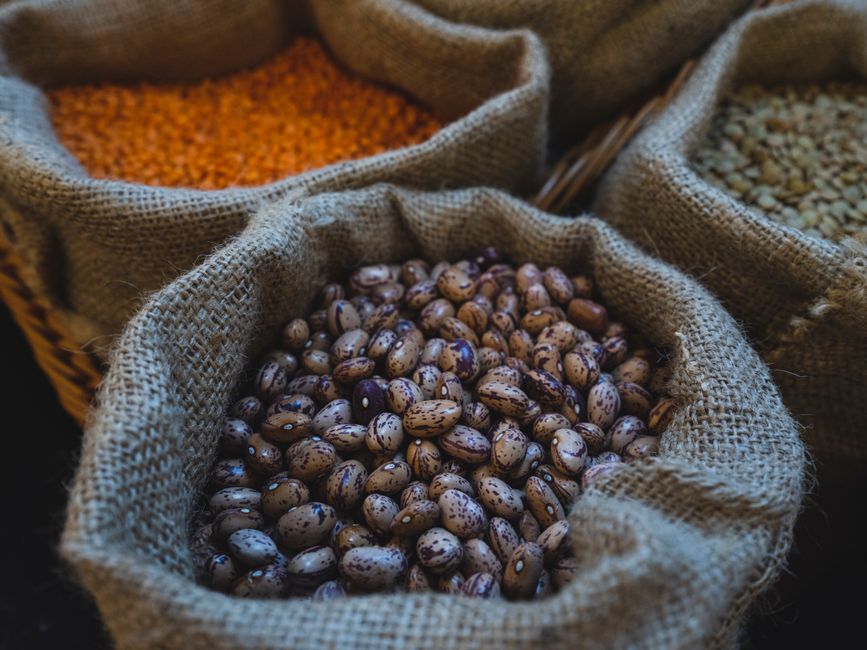
Pinto beans give you gas because they contain certain complex sugars your small intestine cannot digest. These sugars travel undigested into your large intestine, where bacteria ferment them. That fermentation produces gas. You can reduce the problem by preparing dry beans properly, eating smaller portions, and giving your gut time to adjust.
Why Do Pinto Beans Give You Gas?
The gas comes from carbohydrates called oligosaccharides. The main ones in beans are raffinose and stachyose. Humans lack the enzyme — alpha-galactosidase — needed to break these sugars down in the small intestine.
So they pass through intact. When they reach the colon, bacteria that can digest them do so through fermentation. Hydrogen, carbon dioxide, and in some people methane are produced as byproducts. That is the gas you feel.
This is not a sign that something is wrong with you or with the beans. It is normal digestive physiology. The same process happens in most healthy people who eat beans, though the amount of gas varies a lot from person to person.
One detail worth knowing: the gas-producing sugars are water-soluble. That matters for preparation, which we will get to.
Does Soaking Beans Reduce Gas?
Soaking helps, but not as much as many people assume. Some oligosaccharides leach into the soaking water, so discarding that water removes a portion of them. The effect is real but partial.
Here is the practical part. Use a large volume of water — roughly three to four times the volume of the beans. Soak for at least several hours, or overnight. Then pour off the soaking water and rinse the beans before cooking. Do not cook beans in their soaking water.
Some people add a pinch of baking soda to the soak water. This may soften beans faster, but the evidence that it meaningfully reduces gas is limited. It is a common kitchen practice, not a proven gas-reduction method.
Does Cooking Method Matter?
Yes, and this is where the biggest gains are. Cooking beans thoroughly breaks down starches and softens fiber, making the whole bean easier to digest. Undercooked beans are harder on your gut than well-cooked ones.
Simmer until the beans are fully tender. If they are still firm in the center, keep cooking. Canned beans are already fully cooked, which is one reason some people tolerate them better than beans they cook themselves.
If you use canned beans, drain and rinse them. Rinsing removes some of the liquid that contains leached sugars, and it also reduces added sodium. This is a small step with a modest benefit.
A less obvious point: the gas you experience is not only about the beans. It is also about your gut bacteria. The same serving of beans can cause noticeable gas in one person and almost none in another. That difference is largely about which bacteria live in your colon and how adapted they are to beans.



Can You Build Tolerance to Beans Over Time?
Yes. This is one of the more reliable ways to reduce bean-related gas. Your gut bacteria adapt to what you regularly feed them.
If you rarely eat beans and then eat a large bowl, you will likely notice gas. If you start with a small amount — a few tablespoons — and increase slowly over weeks, many people find the gas diminishes.
Start with a small serving once a day or every other day. Increase gradually as tolerated. There is no fixed timeline that applies to everyone, and no clinical guideline sets an exact schedule. Go by how you feel.
This adaptation is why people in cultures where beans are a daily staple often report far less gas than people who eat them occasionally. Their gut bacteria are simply set up for it.
What About Beano and Other Products?
Beano contains alpha-galactosidase, the same enzyme humans lack. It is designed to break down raffinose and stachyose before they reach your colon. Taken with the first bite of a bean meal, it may reduce gas for some people.
The evidence for enzyme supplements is mixed. Some studies suggest benefit; others show little difference. Response varies between individuals. If you want to try it, follow the label directions, and treat it as something that may help rather than something that will definitely work.
Other over-the-counter gas remedies, such as simethicone, work differently. Simethicone helps merge small gas bubbles into larger ones, which may make gas easier to pass. It does not stop gas from being produced in the first place. Whether it helps with bean-related gas specifically is not well established.
Be cautious with any product marketed as a guaranteed fix. No supplement has been shown to eliminate bean gas entirely.
Which Beans Cause the Most Gas?
Oligosaccharide content varies by bean type. In general, dried beans and legumes tend to cause more gas than most other foods, but the differences between bean varieties are not dramatic.
Here is a general comparison of how common legumes tend to rank for gas production:
| Food | Typical gas potential |
|---|---|
| Dried pinto beans | Moderate to high |
| Dried black beans | Moderate to high |
| Chickpeas | Moderate to high |
| Lentils | Moderate |
| Canned beans, drained and rinsed | Lower than dried |
| Green beans | Low |
These rankings are general. Individual responses vary widely, and no single food affects everyone the same way.
When Is Bean Gas a Sign of Something Else?
Gas from beans is normal. But gas that comes with other symptoms may not be about the beans at all.
Talk to a doctor if you notice:
- Persistent bloating or pain that does not improve
- Diarrhea or constipation that lasts
- Blood in your stool
- Unintended weight loss
- Gas and bloating that started recently and continues
These can have many causes, including conditions unrelated to diet. They are worth evaluating rather than assuming beans are the issue.
Some people have digestive conditions such as irritable bowel syndrome, where beans and other high-fiber foods trigger symptoms more easily. If you have a diagnosed digestive condition, your doctor or a dietitian can help you figure out what works for you.
Do Pinto Beans Have Health Benefits Worth the Gas?
Yes. Pinto beans are a strong source of plant protein and fiber. They also provide folate, iron, and potassium. For most people, the nutritional value outweighs the inconvenience of gas, especially once tolerance builds.
The fiber in beans also feeds beneficial gut bacteria. That fermentation is the same process that produces gas — but it is also part of why beans are linked to digestive and metabolic health in population studies. The gas and the benefit come from the same mechanism.
If you are increasing beans in your diet, do it gradually and drink enough water. Fiber without adequate fluid can make constipation worse rather than better.
Frequently Asked Questions
Why do pinto beans give me gas but not other foods?
Pinto beans contain oligosaccharides like raffinose and stachyose that your small intestine cannot break down. These sugars ferment in your colon, producing gas. Most beans and many legumes do this, but you may notice it more with beans than with foods you eat regularly.
Does rinsing canned beans reduce gas?
Rinsing canned beans removes some of the liquid containing leached sugars, so it may reduce gas slightly. It also lowers sodium. The effect is modest, not a complete solution.
How long does it take to stop getting gas from beans?
There is no fixed timeline, and it varies by person. Many people notice improvement within a few weeks of eating small, regular servings and gradually increasing the amount.
Is it bad to eat beans if they give me gas?
No. Gas from beans is a normal response to fermentable fiber, not a sign of harm. If gas comes with pain, diarrhea, blood in your stool, or weight loss, see a doctor to rule out other causes.
