
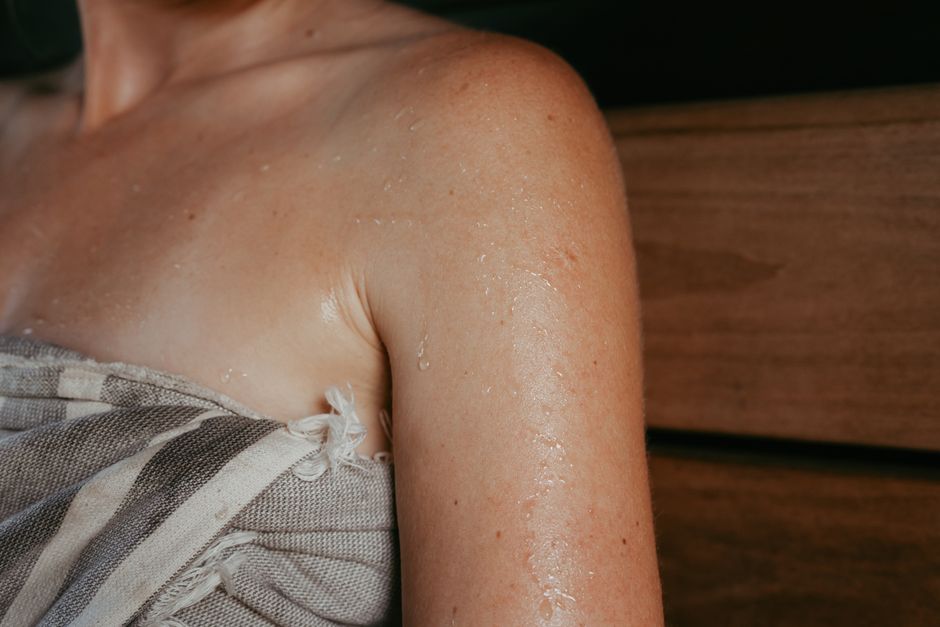
Facial sweating that happens quickly and heavily is usually a normal response to heat, exercise, or stress, but when it happens easily or without an obvious trigger, it often comes down to a high number of highly active sweat glands on your face or a sensitive nervous system response. The medical term for excessive sweating is hyperhidrosis, and when it specifically affects the face, it is called craniofacial hyperhidrosis. This is a real, recognized condition, not just a sign that you are out of shape or anxious.
Why Does My Face Sweat So Much More Than the Rest of My Body?
Your face has a dense concentration of eccrine sweat glands. These are the glands responsible for producing watery sweat that cools you down. Because they are packed tightly across your forehead, upper lip, nose, and scalp, your face can produce a visible amount of sweat very quickly.
The trigger is your autonomic nervous system. This is the part of your nervous system that runs automatically, without you thinking about it. When your brain detects a rise in core body temperature, it sends a signal through these nerves to the sweat glands. In people with craniofacial hyperhidrosis, that signal is simply stronger and more sensitive than average. The glands respond to a smaller temperature change, and they produce more sweat in response to that signal.
This is not a circulation problem or a sign of poor fitness. It is a difference in how your nervous system is wired and how your glands respond to it.
Why Do I Sweat So Easily On My Face Causes Explained
The causes of easy facial sweating break down into two main categories: primary and secondary. Primary craniofacial hyperhidrosis has no underlying medical cause. It is a condition on its own, often running in families, and it usually starts in childhood or adolescence. The sweat glands themselves are normal in number and structure, but the nerve signals that activate them are overactive.
Secondary hyperhidrosis is caused by another condition or factor. This type often starts later in life and may involve sweating all over the body, not just the face. Common causes include an overactive thyroid, low blood sugar, menopause, certain medications, and infections. If your facial sweating started suddenly in adulthood, or if you also have night sweats, unexplained weight loss, or fatigue, a medical evaluation is warranted.
Spicy foods are a well-documented trigger for facial sweating. This is called gustatory sweating. The same nerves that control salivation also connect to the sweat glands on your face, scalp, and neck. When you eat hot peppers or other spicy foods, that nerve pathway fires, and you sweat. This is a normal response, not a disorder.
Is It Anxiety or a Physical Problem?
Stress and anxiety do cause facial sweating. The fight-or-flight response activates the same sympathetic nervous system that controls sweating. When you are nervous, your heart rate rises, your palms may get clammy, and your face can flush and sweat.
However, anxiety is rarely the whole story. Many people who sweat easily on the face report that the sweating itself makes them anxious, which then makes them sweat more. This creates a feedback loop. The initial trigger may have been heat or exertion, but the anxiety about sweating in public amplifies the response.
It is also possible to sweat from anxiety without feeling particularly anxious. The physical response can happen before you are consciously aware of the emotion. This is why treating facial sweating as purely a psychological issue often fails. The physical mechanism is real and deserves direct attention.





What Are the Treatment Options for Facial Sweating?
Treatment depends on severity. For mild cases, over-the-counter clinical strength antiperspirants can be applied to the forehead and hairline. These contain aluminum chloride, which temporarily plugs the sweat duct. The face is sensitive, so irritation is possible. Patch testing on a small area first is a reasonable approach.
Prescription-strength antiperspirants contain a higher concentration of aluminum chloride. A dermatologist can prescribe these, and they are often the first medical step. They work well for some people, but facial skin irritation limits their use for many others.
Iontophoresis is a treatment where a low electrical current is passed through water into the skin. It is FDA-cleared for hands and feet, and some dermatologists use it off-label for the face with specialized devices. The evidence for facial use is more limited than for hands and feet, but some patients report meaningful improvement.
Botulinum toxin injections, commonly known as Botox, are a well-established treatment for axillary hyperhidrosis, meaning underarm sweating. They are also used off-label for the face. The toxin blocks the chemical signal from the nerve to the sweat gland, stopping production at that site. The effect lasts several months, and repeat injections are needed. This is a procedure performed by a dermatologist or plastic surgeon, and it is generally well tolerated.
Oral medications called anticholinergics can reduce sweating throughout the body. They work by blocking acetylcholine, the neurotransmitter that activates sweat glands. These medications can be effective, but they also cause dry mouth, blurred vision, and constipation because they block the same chemical in other parts of the body. They are typically reserved for severe cases that do not respond to other treatments.
When Should You See a Doctor About Facial Sweating?
You should see a doctor if facial sweating interferes with your daily life, social interactions, or work. This is a quality-of-life issue, and it is legitimate to seek help for it.
You should also see a doctor if the sweating pattern changes suddenly. If you have never sweated much on your face and then develop heavy facial sweating in your 40s or 50s, that is a reason for an evaluation. The same applies if you have night sweats that soak your clothes or sheets, unexplained weight loss, or persistent fatigue.
A primary care doctor can run basic blood tests to check thyroid function and blood sugar. If those are normal, a referral to a dermatologist who specializes in hyperhidrosis is a reasonable next step. The International Hyperhidrosis Society maintains a list of physicians with special interest in this condition, though you should always verify current credentials and availability.
Can Diet or Lifestyle Changes Reduce Facial Sweating?
Some dietary triggers are well documented. Caffeine and alcohol can increase sweating in some people. Spicy foods are a direct trigger for gustatory sweating. Identifying and avoiding your personal triggers can help, but it will not eliminate sweating entirely for most people with hyperhidrosis.
Keeping your core body temperature down helps. Cool environments, fans, and cold water on the wrists and neck can help. Wearing breathable fabrics and staying hydrated also help your body regulate temperature more efficiently.
There is no high-quality evidence that any specific supplement or herbal remedy reduces excessive sweating. Products marketed for this purpose are not supported by clinical trials. If you are considering a supplement, discuss it with a doctor first, especially if you take other medications.
Frequently Asked Questions
Is excessive facial sweating a sign of a serious health problem?
Usually not, but sudden onset in adulthood, especially with night sweats or weight loss, should be evaluated by a doctor.
Can you permanently stop facial sweating?
No treatment permanently eliminates facial sweating, but Botox injections and prescription antiperspirants can provide months of significant reduction.
Does losing weight reduce facial sweating?
Weight loss can reduce overall sweating, but craniofacial hyperhidrosis is driven by nerve sensitivity, not body fat, so it may not fully resolve the issue.
What is the fastest way to stop facial sweating on the spot?
Washing your face with cool water and moving to a cooler environment provides immediate temporary relief, but it does not change the underlying sweating response.
