
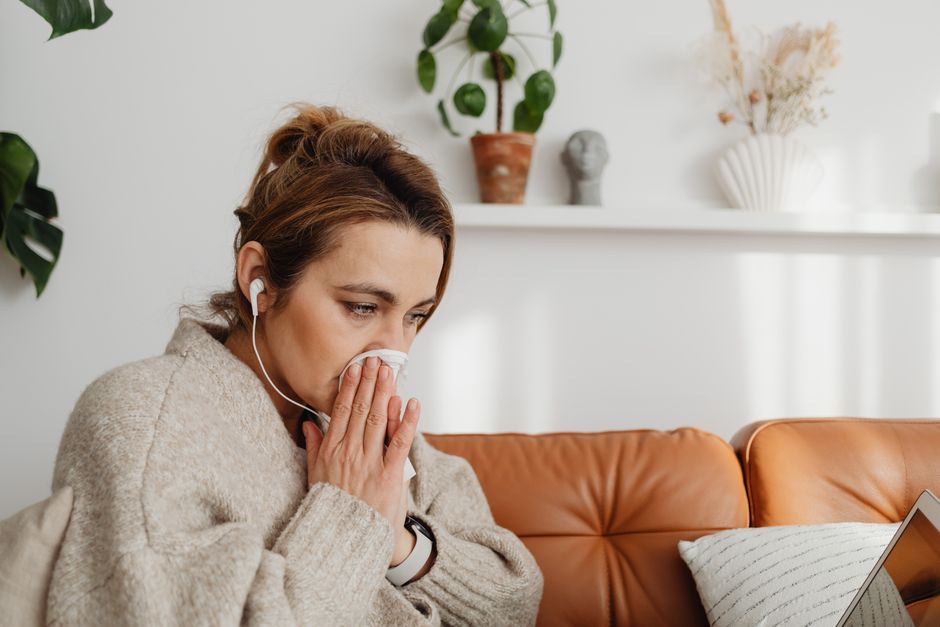
Sneezing while eating is surprisingly common, and it usually comes down to your body’s reflexes reacting to what is happening in your nose and mouth. For most people, it is a harmless quirk of anatomy, not a sign of a serious health problem. The two most frequent reasons are nasal congestion that gets worse when you chew, or a specific nerve reflex triggered by a full stomach.
Why Does Eating Make Me Sneeze?
Your nose and mouth share the same space at the back of your throat. When you chew and swallow, you are moving muscles and tissues that sit right next to your nasal passages. This movement can shift mucus or trigger a nerve response that ends in a sneeze.
Think of a sneeze as a pressure release valve. Your body uses it to clear irritation from the nasal lining. Eating creates new pressure changes in your head and throat, and sometimes that pressure change is enough to set off the reflex.
Another factor is temperature. Hot soup, spicy food, or a steaming bowl of pasta can cause the blood vessels inside your nose to expand. That swelling can make your nose run or feel stuffy, which leads to sneezing as your body tries to clear the passage.
What Is Sneeze When Full and Why Does It Happen?
Some people sneeze specifically when their stomach is full. This has a medical name: snatiation. The word combines “sneeze” and “satiation,” which means fullness. It is a real, documented reflex, though it is not widely known.
Snatiation appears to run in families, which suggests a genetic component. The theory is that the stretch of a full stomach sends a signal through the vagus nerve, and in some people that signal accidentally triggers the sneeze reflex instead of stopping at the stomach. The result is one or two sneezes shortly after a satisfying meal.
This is not harmful. It is simply a wiring quirk. People who have it usually sneeze once or twice after every large meal, and they have no other symptoms. If this sounds like you, there is no reason to change how you eat.
Can Food Allergies Cause Sneezing While Eating?
Yes, but the sneezing is usually part of a larger allergic response. If you have a true food allergy, sneezing will rarely happen alone. You would typically also notice itching in your mouth, hives, swelling, or stomach discomfort.
More commonly, sneezing during a meal comes from oral allergy syndrome. This happens when your immune system mistakes certain raw fruits and vegetables for pollen. Your mouth and throat may itch, and you may sneeze or get a runny nose. The symptoms usually appear within minutes of eating the raw food.
If sneezing is your only symptom and it happens with nearly every meal, an allergy is unlikely. Allergies tend to be specific to certain foods, not to eating in general. If you suspect a food allergy, especially if you have any throat tightness or difficulty breathing, seek medical attention rather than trying to figure it out on your own.




Why Does My Nose Run When I Eat Spicy Food?
Spicy food is a different story. The capsaicin in chili peppers activates the same nerve receptors that detect physical heat and pain. Your nose responds by producing extra mucus, which is your body’s attempt to flush out the irritant.
This is called gustatory rhinitis. It is not an allergy. It is a nerve-driven response to a chemical irritant. The sneezing and runny nose usually stop shortly after you finish eating the spicy food.
Some people also get this response from very hot beverages or from strong-smelling foods like horseradish or wasabi. These foods stimulate the trigeminal nerve, which runs through your face and connects to your nasal passages. The nerve sends a signal that your brain interprets as irritation, and your nose responds by running.
What Is a Hot Food Sneezing Reflex?
Some people sneeze when they eat very hot foods, even if the food is not spicy. The heat alone can be enough. When you eat something hot, the temperature change in your mouth sends a signal through the same nerve pathways that serve your nose.
This is closely related to the way cold air can make you sneeze. Your nasal lining is sensitive to temperature shifts. A sudden change, whether from hot soup or a cold drink, can trigger a sneeze in sensitive individuals.
This reflex is more common in people who already sneeze when they step from a warm building into cold outdoor air. That response has a name too: the photic sneeze reflex, though that one is triggered by bright light. The shared theme is that your nervous system is highly responsive to sudden changes in your environment.
Is Sneezing While Eating a Sign of a Problem?
For the vast majority of people, no. Sneezing during or after meals is a normal reflex. It does not indicate an illness and it does not require treatment.
You should pay attention if the sneezing comes with other symptoms. Persistent nasal congestion that lasts for weeks, facial pain or pressure, or sneezing that happens every time you eat a specific food could point to something worth investigating. A doctor can help determine whether you have allergies, chronic sinusitis, or another condition.
If you sneeze and also feel your throat closing, have trouble breathing, or develop swelling in your face or lips, that is a medical emergency. Do not wait to see if it passes. Call for emergency help immediately.
For everyone else, there is no need to worry. The reflex is harmless and often simply a sign that your nervous system is doing its job a little too enthusiastically.
Can I Stop Sneezing When I Eat?
If the sneezing is triggered by a full stomach, the simplest approach is to eat smaller meals. Snatiation is a response to stomach stretch, so eating less at each sitting may reduce or stop the sneezes. Some people find that eating more slowly also helps.
If spicy or hot foods are the trigger, avoiding those foods is the only reliable way to prevent it. There is no medication approved specifically for gustatory rhinitis, though some doctors prescribe a nasal spray that contains a medication called ipratropium. This spray reduces nasal discharge but does not stop the sneeze reflex itself.
For people with oral allergy syndrome, cooking the raw fruit or vegetable often solves the problem. The heat breaks down the proteins that your immune system reacts to. Peeling the food can also help, since the proteins are often concentrated in the skin.
If the sneezing is occasional and mild, you can simply accept it. There is no health benefit to suppressing a sneeze, and trying to hold one in can actually cause injury. Let the sneeze happen naturally.
When Should I See a Doctor About Sneezing While Eating?
See a doctor if the sneezing is accompanied by symptoms that suggest an allergy or a sinus issue. These include itchy eyes, a persistent runny nose, facial pressure, or sneezing that lasts for weeks rather than happening only at meals.
You should also seek medical advice if the reflex started recently after years of eating without sneezing. A sudden change in your body’s responses can sometimes signal an underlying condition that deserves attention.
If you have tried avoiding trigger foods and the sneezing continues regardless of what you eat, a doctor can help you sort out whether something else is going on. Chronic sinusitis, nasal polyps, or a deviated septum can all cause sneezing that is not tied to specific foods.
Most people who sneeze while eating do not need any medical care. But if the symptom is bothering you, or if you are unsure whether it is normal, a conversation with your primary care doctor is a reasonable step.
Frequently Asked Questions
Why do I sneeze after eating a big meal?
This is a reflex called snatiation, where a full stomach triggers the sneeze nerve. It is harmless and often runs in families.
Can sneezing while eating mean I have a food allergy?
Usually not, unless you also have itching, hives, or swelling. Sneezing alone during meals is more likely a nerve reflex than an allergy.
Why does spicy food make me sneeze?
Capsaicin in spicy food irritates your nasal nerves, and your body responds by producing mucus and sneezing. This is called gustatory rhinitis and is not an allergy.
Is sneezing while eating dangerous?
No, it is a normal reflex for most people. Seek emergency care only if sneezing comes with throat swelling or trouble breathing.
