
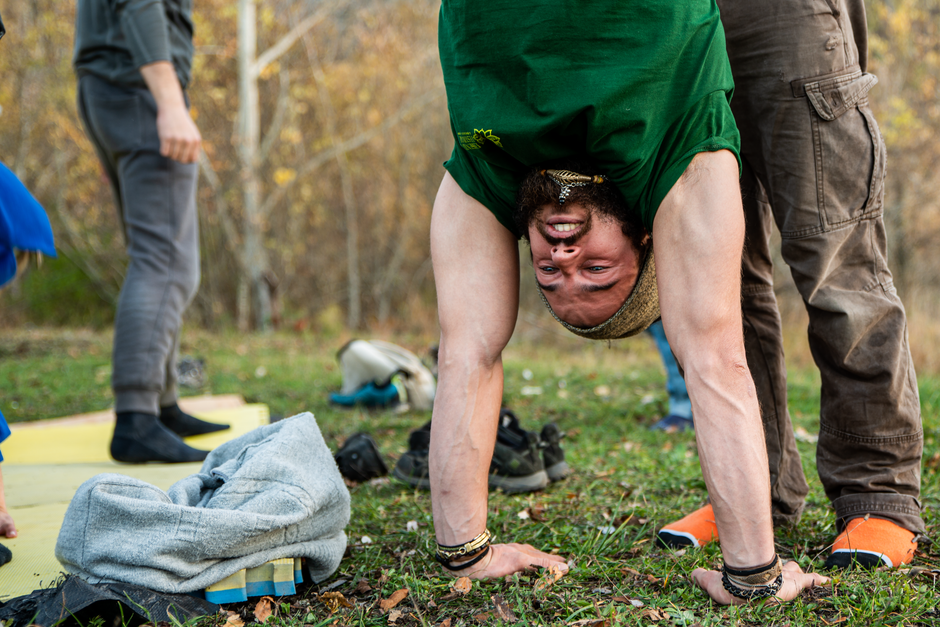
If you have ever stared at a photo of yourself and thought, “That does not look like me,” you are not alone. The face you see in the mirror is not the face everyone else sees. That inverted image in photos looks strange because your brain has memorized a flipped version of your own face. This is a normal visual and psychological phenomenon, not a sign that you are unattractive or that something is wrong with your appearance.
Why Does My Face Look Different Inverted?
The short answer is familiarity. You see your reflection in a mirror far more often than you see yourself in photos. Every time you look in the mirror, you see your face reversed left-to-right. Over years of daily grooming, shaving, or applying makeup, your brain builds a strong memory of that specific mirrored version of your face.
When you see an unflipped photo, your brain is looking at a version of your face it has rarely seen. The left side of your face appears where your brain expects the right side to be. This mismatch makes the image look off, even if the photo is perfectly clear and accurate.
This is not a visual illusion in the eye. It is a memory bias in the brain. Your eyes process the photo normally. Your brain simply prefers the version it has practiced recognizing for years.
What Is the Mere-Exposure Effect?
Psychologists have a name for this preference: the mere-exposure effect. Research consistently shows that people prefer things they have seen more often. The more familiar a stimulus is, the more positively people rate it, even when they cannot explain why.
This applies directly to your face. You have seen your mirrored reflection thousands of times. You have seen your unflipped face in photos only occasionally. Your brain rates the familiar mirrored version as more attractive simply because it is familiar.
This effect is not about objective beauty. It is about recognition. A stranger seeing your photo sees the same face they would see if you stood in front of them. They do not experience the same weirdness because they have no stored memory of your mirrored face to compare against.
Why Do I Look Weird Inverted The Real Explanation
The real explanation is that your mirrored face is a reversed copy of your true appearance, and your brain treats that reversed copy as the real you. Your face is not perfectly symmetrical. Nobody’s face is. Small differences between the left and right sides — the way one eyebrow arches, the slight tilt of your lips, the part in your hair — are normal.
When your face is flipped, all those asymmetries reverse direction. A mole on your left cheek appears on the right. Your hair parts on the opposite side. Your brain notices these reversed details as errors, even if you cannot consciously identify what looks wrong.
This is why the inverted version feels so jarring. Your brain is not just seeing a different face. It is seeing a face that violates its internal map of how you look. The more asymmetrical your face is, the more dramatic the difference will appear to you.





Do Other People See Me Inverted or Normal?
Other people see you the normal, unflipped way. When someone looks at you in person, they see your face as it truly is. When they look at a standard photo of you, they see the same unflipped version. The image you find strange is the one everyone else recognizes as you.
Your mirror reflection is the reversed version. That is the image that looks familiar to you but unfamiliar to everyone else. If you showed a friend a mirrored photo of yourself, they would likely say it looks slightly off, just as you feel about unflipped photos.
This means your true appearance, as seen by the world, is the photo version you dislike. The face you see in the mirror every morning is not the face your friends and family see. It is a reversed approximation of it.
Is the Mirror or the Camera More Accurate?
Neither is perfectly accurate in every way. A mirror gives you a real-time, high-resolution reflection of your face, but it is reversed. A standard photo gives you the correct orientation, but it is a flat, two-dimensional image captured in a single moment.
Camera lenses can distort your face in other ways. A wide-angle lens on a phone camera, held close to your face, can enlarge your nose and forehead while shrinking your ears. This is a lens distortion effect, not a true representation of your facial proportions.
Professional photographers often use longer focal lengths and stand farther away to reduce this distortion. The distance between the camera and your face matters more than most people realize. A selfie taken at arm’s length will always look different from a portrait taken several feet away.
So when you think a photo looks weird, there may be two separate things happening. One is the inversion effect your brain creates. The other is genuine lens distortion from close-range camera use.
How Can I See Myself the Way Others See Me?
You can flip your own photos to see the version your brain prefers. Most phone photo editors have a mirror or flip tool. When you flip an unflipped photo horizontally, it becomes the mirrored version you are used to seeing. This is often the image that feels most natural to you.
To see the version others see, you would need to flip your mirror reflection. You can do this by holding two mirrors at a right angle. A double mirror reflection flips the image twice, canceling out the reversal and showing you your true face. This is a simple trick that surprises many people the first time they try it.
Keep in mind that this does not change how attractive you are. It only changes which version your brain recognizes. Both versions are the same face. Neither is more real or more accurate than the other in terms of beauty.
Why Do Some People Look Better in Photos Than Others?
Some people genuinely photograph better than others, and this is not just about facial symmetry. People who are expressive and animated often photograph poorly because a still image captures one fleeting expression that may not represent their typical look. Someone with a very mobile face may look stiff or odd in a single frame.
Lighting also plays a major role. Soft, even lighting flatters most faces. Harsh overhead lighting creates shadows under the eyes and nose, which can make anyone look tired or older. The same person can look dramatically different under different lighting conditions.
Facial structure also matters. People with more defined bone structure, such as prominent cheekbones or a strong jawline, tend to photograph well because their features create natural shadows and depth. Softer facial features may photograph as flat or washed out in certain lighting.
None of this means you look bad in person. It means photography is a technical skill that involves angles, lighting, and timing. A bad photo of you is not evidence that you look bad. It is evidence that the conditions were not ideal.
Should I Be Concerned About My Inverted Photo Appearance?
No. This is a completely normal perceptual quirk that affects nearly everyone. There is no medical condition associated with disliking your inverted photo image. It does not indicate low self-esteem, body dysmorphic disorder, or any psychological problem.
If you find yourself obsessing over your appearance in photos to the point of distress, that is a different matter. Persistent preoccupation with perceived flaws that others cannot see may be worth discussing with a healthcare provider. But the general feeling that your photo looks wrong is universal.
Remember that your friends, family, and coworkers see your unflipped face every day. They do not experience the strangeness you feel. The face you consider weird in photos is the face they already know and recognize as you.
Frequently Asked Questions
Why do I look better in the mirror than in photos?
You are used to seeing your mirrored reflection, so your brain prefers it. The unflipped photo version is less familiar and therefore feels less attractive to you.
Is the mirror image or the photo the real me?
The photo shows your true orientation as others see you. The mirror shows a reversed version that only you are accustomed to seeing.
Can I get used to how I look in photos?
Yes, with repeated exposure your brain can build familiarity with your unflipped face. Looking at unflipped photos of yourself regularly can reduce the strange feeling over time.
Do phone cameras distort my face?
Yes, close-range selfies with wide-angle lenses can enlarge your nose and forehead. Taking photos from farther away with a longer lens setting reduces this distortion.
