
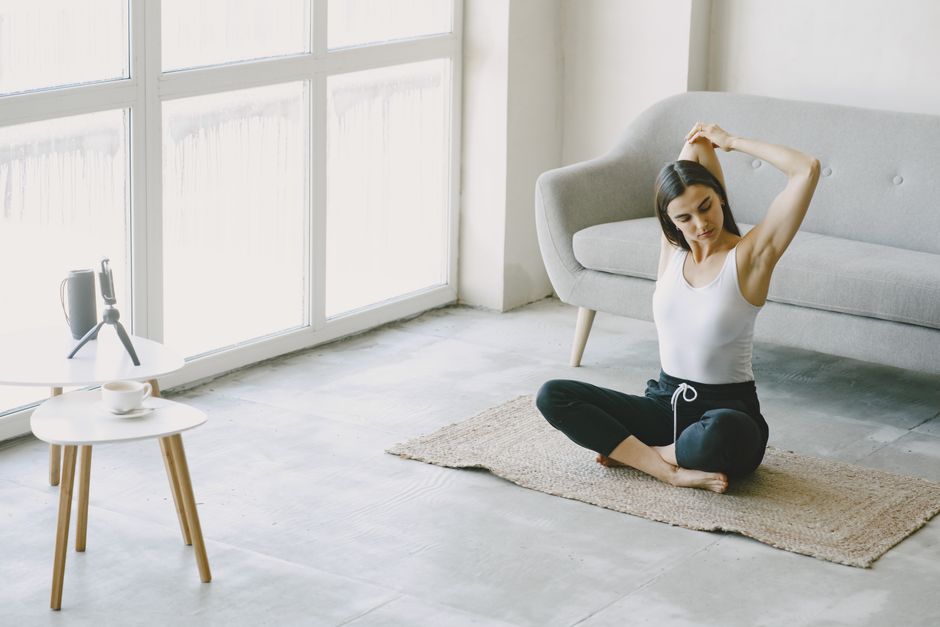
You sink down, cross your legs, and suddenly the world feels different. Many adults find themselves drawn to the floor even when a perfectly good couch is available. This preference is more common than you might think, and it has genuine psychological roots. Sitting on the floor connects you to childhood memories, changes your physical perspective, and can even shift your mental state. The psychology behind it involves a mix of nostalgia, grounding, and a desire for freedom from formal furniture.
Why Do I Like Sitting On The Floor The Psychology?
People like sitting on the floor because it feels authentic and unguarded. Furniture comes with rules about posture and behavior. The floor has none. When you sit on the floor, you choose your own position, and that choice feels like a small act of independence.
Psychologists point to what is called the proprioceptive system — your body’s ability to sense its own position. Sitting low to the ground gives your body more surface contact. That contact provides steady, calming input to your nervous system. For some people, this pressure feels soothing in the same way a weighted blanket does.
There is also a strong link to childhood. Most children spend hours on the floor playing, reading, and building things. Returning to the floor as an adult can unconsciously reconnect you to a time when life felt simpler. The floor becomes a quiet reminder of play and curiosity, not responsibility and deadlines.
What Does Sitting On The Floor Say About Your Personality?
Your seating preference can reveal something about how you relate to the world. People who choose the floor often score higher on measures of openness to experience. They tend to be flexible, casual, and comfortable with less structure in their environment.
Choosing the floor also signals a certain comfort with yourself. You are not concerned with appearing formal or proper. You are willing to get close to the ground, literally lowering yourself to a more humble position. This can reflect confidence — you do not need a raised chair to feel important.
Some psychologists suggest that floor sitters are often deep thinkers. The physical act of settling low can mirror a mental state of reflection. You are not rushing. You are grounding yourself before thinking through a problem.
The Physical Sensation of Grounding
Grounding is a term used in both psychology and body-based therapies. It refers to the feeling of being connected to the physical present moment. Sitting on the floor makes grounding almost automatic because your body has so much contact with a stable surface.
When you sit on a chair, your feet may dangle or rest lightly on the ground. Your body is supported by a narrow base. On the floor, your pelvis, legs, and sometimes your hands are all in contact with the ground. This wider base of support triggers a sense of stability that is both physical and emotional.
Research on interoception — your brain’s awareness of internal body states — suggests that grounding practices can reduce anxiety. Sitting on the floor is not a formal grounding technique, but it produces a similar effect. Your body sends signals of safety to your brain, which can quiet a racing mind.





Cultural and Historical Perspectives on Floor Sitting
In many parts of the world, floor sitting is not a choice — it is the norm. Japanese culture has a long tradition of sitting on tatami mats. Meals are often eaten at low tables with cushions on the floor. In India, sitting cross-legged on the floor for meals is common in many households. These practices are not seen as unusual or childlike. They are simply how people live.
Western cultures moved toward elevated seating more recently in human history. Chairs became symbols of status and civilization. The floor became associated with dirt, pets, and play. This cultural shift may explain why some adults feel a quiet rebellion when they sit on the floor. They are breaking an unspoken social rule.
Anthropologists note that humans spent most of their evolutionary history sitting on the ground. Our bodies adapted to squatting, kneeling, and cross-legged positions long before chairs existed. Some researchers believe that modern furniture is actually a mismatch for our natural movement patterns. This is why floor sitting can feel so instinctively right.
Is Sitting On The Floor Good For Your Body?
There are real physical benefits to floor sitting, but they come with caveats. Sitting on the floor requires more active muscle engagement than sitting in a chair. Your core muscles work to keep you upright. Your hip flexors and ankles may gain flexibility if you sit cross-legged regularly.
Some physical therapists recommend floor sitting as a way to maintain mobility. The range of motion required to get down and get back up is valuable, especially as you age. The ability to rise from the floor without using your hands is actually a marker of physical fitness in older adults.
However, floor sitting is not automatically good for everyone. If you have knee problems, hip issues, or lower back pain, sitting on a hard surface can make things worse. The floor provides no back support, which means your spine must work harder. For people with existing spinal conditions, prolonged floor sitting may lead to discomfort.
Listen to your body. If the floor feels good, enjoy it. If it causes pain, use cushions or limit your time. There is no rule that says you must sit on the floor to be grounded or psychologically healthy.
How To Make Floor Sitting More Comfortable
If you want to sit on the floor more often, a few simple adjustments can make it more enjoyable. Use a cushion or folded blanket under your pelvis. This slight elevation takes pressure off your knees and makes it easier to maintain an upright posture.
Try different positions to find what works for you. Cross-legged is the classic choice, but you can also kneel, sit with your legs to one side, or use a low stool. Change positions regularly to avoid stiffness. A five-minute floor sit can be refreshing, but a two-hour floor sit without movement may leave you sore.
Pay attention to your environment. A soft rug feels different from hardwood or tile. If the floor is cold, add a layer of warmth. If it is hard, add a cushion. The goal is to make the floor a comfortable choice, not a punishing one.
When Floor Sitting Might Not Be The Best Choice
There are situations where choosing the floor may work against you. If you have a condition that affects your balance, getting down to the floor and back up can be risky. Falls are a serious concern for older adults. If you feel unsteady, practice getting up and down with a chair nearby for support.
Pregnant women may find floor sitting uncomfortable or difficult in later stages. The changing center of gravity can make rising from the floor challenging. Always prioritize safety over psychological preference.
If you notice that you avoid chairs entirely, it may be worth examining why. Avoiding furniture could signal discomfort with formal settings or difficulty relaxing in standard environments. This is not a mental health diagnosis, but it can be a useful thing to reflect on if it interferes with your daily life.
Frequently Asked Questions
Is sitting on the floor a sign of anxiety?
Not usually. Sitting on the floor is more often a sign of comfort with yourself and a preference for informal spaces. If you feel anxious, the floor can feel grounding, but the preference alone is not a symptom of anxiety.
Why does sitting on the floor feel more comfortable than a chair?
The floor allows your body to move freely without the posture rules that chairs impose. It also provides more surface contact, which can feel calming to your nervous system.
Can sitting on the floor improve my posture?
It can, if you maintain an upright position while doing it. Floor sitting requires active core engagement, which can strengthen postural muscles. However, slumping on the floor will not improve posture and may cause strain.
How long should I sit on the floor each day?
There is no established guideline for how long to sit on the floor. Listen to your body and change positions regularly. Short periods of five to fifteen minutes are a reasonable starting point for most people.
