
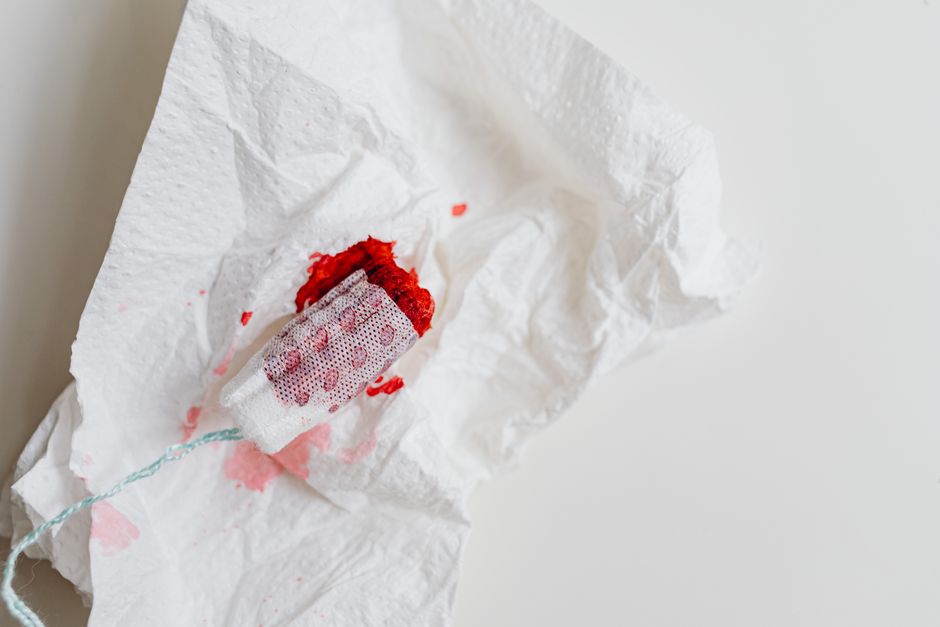
You finished your period days ago. Then you notice blood again — on your underwear, when you wipe, or in the toilet. Bleeding between periods is common, and most of the time it is not dangerous. But it is your body telling you something changed, and it deserves a clear answer rather than a guess.
Doctors call this intermenstrual bleeding. It can come from hormones, from the uterus itself, from the cervix, or occasionally from something that needs treatment. The pattern matters as much as the bleeding: light spotting after sex points somewhere different than heavy flow in the middle of your cycle. Tracking when it happens is the single most useful thing you can do before you see a doctor.
Why Do I Keep Bleeding After My Period?
The most common causes fall into a few groups: hormonal shifts around ovulation, structural growths in the uterus, irritation or infection, and in some cases early pregnancy. Which one applies to you depends largely on your age, your cycle pattern, and whether you use hormonal birth control.
Ovulation bleeding is one of the more straightforward explanations. Around the middle of your cycle, estrogen rises sharply, then dips slightly after the egg is released. That dip can cause a small amount of the uterine lining to shed. The result is usually light spotting — pink or brown, lasting a day or two. It tends to show up roughly 10 to 16 days after the first day of your last period, though cycle timing varies widely from person to person.
If the bleeding does not follow that pattern — if it is heavier, lasts longer, or shows up at random — the cause is more likely structural or hormonal rather than ovulatory. That distinction is why doctors ask so many questions about timing.
What Causes Spotting Between Periods?
Several conditions produce bleeding between periods. None of them can be diagnosed from symptoms alone, but knowing the possibilities helps you describe what is happening accurately.
- Hormonal birth control. Spotting is a common side effect in the first few months of starting a pill, patch, ring, implant, or hormonal IUD. It usually settles, but persistent bleeding should be reviewed.
- Uterine fibroids. Non-cancerous growths in the uterine wall. They can cause heavier periods and bleeding between them, depending on size and location.
- Endometrial polyps. Small growths on the lining of the uterus. Often harmless, but they can cause irregular bleeding.
- Infection. Cervicitis or endometritis — inflammation of the cervix or uterine lining — can cause spotting, sometimes with discharge or discomfort.
- Perimenopause. As estrogen and progesterone fluctuate, cycles become unpredictable. Bleeding patterns often change for years before periods stop.
- Thyroid problems. Both an overactive and underactive thyroid can disrupt the menstrual cycle.
- Pregnancy. Implantation bleeding can occur around the time a period would be due and is often mistaken for one.
This list is not exhaustive, and having one of these conditions does not mean something serious is happening. It means the bleeding has an identifiable source worth checking.
When Is Bleeding Between Periods a Sign of Something Serious?
Postmenopausal bleeding is the one pattern that always warrants prompt evaluation. Any bleeding after 12 consecutive months without a period should be assessed by a clinician — not watched at home. That threshold is well established in gynecologic practice.
For those still menstruating, certain features deserve faster attention:
- Bleeding that soaks through a pad or tampon every hour for several hours
- Bleeding accompanied by severe pain, fever, or unusual discharge
- Bleeding after sex that happens repeatedly
- Irregular bleeding that continues for more than a few cycles
- Any bleeding in pregnancy
These signs do not automatically mean cancer or another serious condition. They mean the cause needs to be identified rather than assumed harmless. Endometrial cancer is uncommon in premenopausal women, but it becomes more likely with age and with certain risk factors such as obesity and chronic anovulation. That is why persistent irregular bleeding in a woman over 45 is typically investigated rather than observed.





Could It Be Ovulation Bleeding?
Ovulation bleeding is real, but it is often over-diagnosed by people trying to explain any mid-cycle spotting. It is typically light, brief, and predictable in timing.
What distinguishes it:
- It occurs near the middle of the cycle, usually 10 to 16 days after the first day of your last period
- It is usually pink or brown, not bright red
- It lasts one to two days at most
- It may come with mild one-sided pelvic discomfort
If your spotting does not fit that pattern, ovulation is an unlikely explanation. Irregular timing, heavier flow, or bleeding that lasts several days points toward another cause.
How Do Doctors Figure Out the Cause?
Evaluation usually starts with a detailed history: cycle length, bleeding pattern, birth control use, pregnancy status, and any recent changes. From there, the workup depends on what the history suggests.
Common steps include:
- A pregnancy test, which is often the first test ordered
- Blood tests for thyroid function, hormone levels, and sometimes anemia
- A pelvic exam to check the cervix and vagina
- Pelvic ultrasound to look at the uterus and ovaries
- Endometrial biopsy if the uterine lining needs to be sampled, typically in women over 45 or those with risk factors
- Hysteroscopy, in some cases, to view the inside of the uterus directly
Not every person needs every test. A young woman with clear ovulation spotting and no other symptoms may need nothing beyond reassurance and monitoring. A woman in her fifties with persistent irregular bleeding needs a more thorough evaluation. The path depends on the individual.
What Treatment Options Exist?
Treatment follows the cause, not the symptom. There is no single fix for bleeding between periods because the reasons vary so widely.
For hormonal causes, adjusting or changing birth control often resolves the bleeding. For thyroid disorders, treating the underlying thyroid problem usually restores normal cycles. Fibroids and polyps may be removed surgically if they are causing significant symptoms, though many small ones require no treatment at all. Infections are treated with the appropriate medication.
Some clinicians recommend a wait-and-see approach for mild, infrequent spotting with no identifiable cause on testing. This is common practice, but it is not the same as an evidence-based recommendation — the decision depends on your age, risk factors, and how the bleeding behaves over time.
What does not work is ignoring a pattern that keeps repeating. Tracking your cycle and bleeding days gives your doctor information that no single appointment can replace.
Does Birth Control Cause Bleeding Between Periods?
Yes, and it is one of the most frequent reasons women report spotting. Breakthrough bleeding is common in the first three to six months after starting a new hormonal method, especially low-dose pills, the implant, and hormonal IUDs.
The mechanism is straightforward: these methods thin the uterine lining, and a thinner lining can shed unpredictably. The bleeding usually decreases over time as the body adjusts.
If spotting continues beyond several months, or if it starts after you have been on the same method for a long time without problems, that change should be evaluated. It may mean the method needs adjusting, or it may point to another cause that developed independently.
What Should You Track Before Seeing a Doctor?
Good records make diagnosis faster. Before your appointment, note:
- The first day of your last period and how long it lasted
- When the bleeding between periods started and how many days it lasted
- How heavy it was — spotting, light flow, or full flow
- The color — pink, brown, or bright red
- Whether it happened after sex, exercise, or a bowel movement
- Any pain, discharge, or other symptoms
- Your current birth control method and how long you have used it
This information often points to the cause before any test is done. It also helps your doctor decide which tests are necessary and which can be skipped.
Frequently Asked Questions
Is it normal to bleed a few days after your period ends?
Light spotting in the days right after a period can be normal, especially if the last days of your period were already light. Bleeding that continues, gets heavier, or recurs every cycle should be checked.
Can stress cause bleeding between periods?
Stress can affect hormone levels and disrupt the menstrual cycle, which may lead to irregular bleeding in some women. The link is plausible but not well quantified, so persistent bleeding should not be attributed to stress without evaluation.
How do I know if it is implantation bleeding or my period?
Implantation bleeding is usually lighter and shorter than a period, often just a few spots of pink or brown. A pregnancy test is the only reliable way to tell the difference.
Should I see a doctor for spotting between periods?
See a doctor if the bleeding lasts more than a couple of cycles, is heavy, happens after sex, or occurs after menopause. Mild one-time spotting often needs no treatment, but a recurring pattern should be assessed.
