
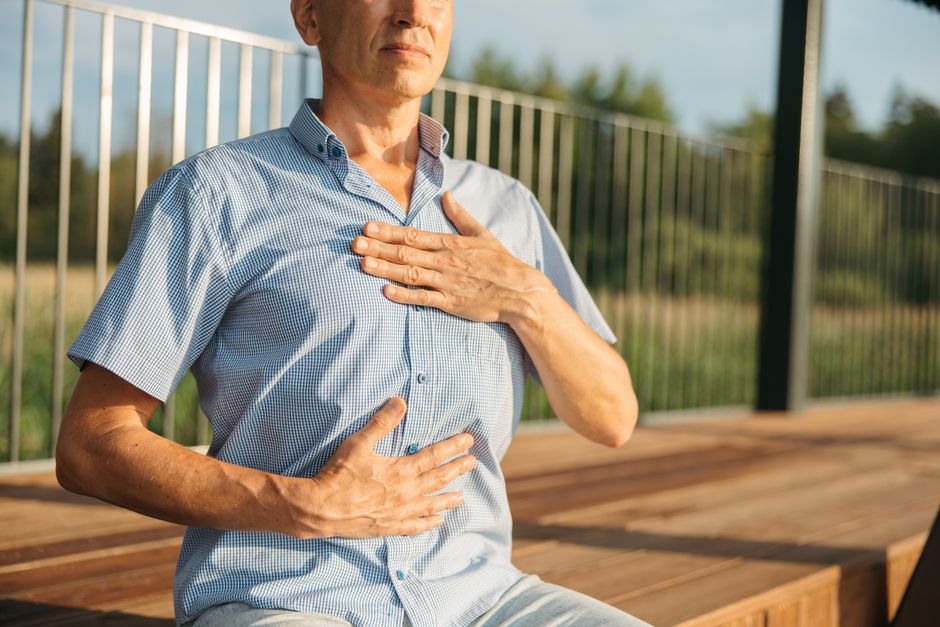
Shortness of breath — the feeling that you cannot get enough air — is one of the most common reasons people visit a doctor. It can come on suddenly or build slowly over months. The cause may be as simple as a stuffy nose or as serious as a heart condition. The right first step is figuring out whether your breathing trouble is new, worsening, or tied to a specific activity. This article covers the most common causes of breathing difficulty and what actually helps relieve them.
What Does Trouble Breathing Feel Like?
People describe breathing trouble in different ways. Some say they feel like they cannot take a deep enough breath. Others feel tightness in the chest or a sense that their throat is closing. Some feel breathless only when walking uphill or climbing stairs.
Doctors call this symptom dyspnea. It is a sensation, not a disease itself. The feeling is your brain’s response to signals from your lungs, heart, and blood vessels that something is off. Understanding what triggers your breathlessness is often the fastest way to identify its cause.
Why Do I Have Trouble Breathing Causes Relief: The Main Culprits
Trouble breathing generally falls into a few broad categories. Lung problems, heart problems, and blood-related issues are the most common. Anxiety and physical fitness levels also play a role.
Lung conditions are the most frequent cause. Asthma narrows the airways, making it hard to push air out. Chronic obstructive pulmonary disease (COPD), often from smoking, damages the air sacs in the lungs. Pneumonia fills those air sacs with fluid. Each of these creates a different pattern of breathlessness.
Heart conditions can also cause breathlessness. When the heart pumps weakly, fluid can back up into the lungs. This is called heart failure. People with this condition often feel breathless when lying flat and wake up gasping at night.
Anemia is a less obvious cause. When your blood does not carry enough oxygen, your brain tells you to breathe faster. Many people with anemia feel breathless during normal activities even though their lungs and heart are healthy.
Anxiety and panic attacks produce a feeling of air hunger that is very real even though no physical blockage exists. Rapid shallow breathing can cause chest tightness and dizziness, which makes the anxiety worse.
When Breathing Trouble Is an Emergency
Some breathing problems require immediate medical care. Do not wait to see if they pass.
- Sudden severe breathlessness that comes out of nowhere
- Breathing trouble with chest pain or pressure
- Blue lips or fingertips
- Confusion or difficulty speaking in full sentences
- Breathlessness after choking or a suspected allergic reaction
These symptoms can point to a blood clot in the lungs, a heart attack, or a severe allergic reaction. Call emergency services. Do not drive yourself to the hospital.





How to Find Relief at Home
For mild or chronic breathlessness, some home strategies can help. These do not replace medical treatment but can make breathing more comfortable.
Pursed-lip breathing is a simple technique that helps people with lung conditions. Breathe in through your nose for two counts. Purse your lips as if you are about to whistle and breathe out slowly for four counts. This keeps airways open longer and helps empty trapped air from the lungs.
Sitting upright helps. Leaning forward with your elbows resting on a table or your knees can ease breathing. Lying flat often makes breathlessness worse.
Cool air helps some people. Opening a window or standing near a fan can reduce the sensation of air hunger. This is not a treatment for an underlying condition, but it can provide temporary comfort.
Medical Treatments Based on the Cause
Treatment depends entirely on what is causing the breathlessness. There is no single remedy.
For asthma, inhalers that open the airways work quickly. Preventative inhalers reduce inflammation over time. Most people with asthma notice clear improvement within minutes of using a rescue inhaler.
For pneumonia, antibiotics treat the infection if it is bacterial. Oxygen therapy helps if blood oxygen levels drop. Rest is essential because the lungs need time to clear fluid.
For heart failure, medications called diuretics remove excess fluid from the body. This reduces the fluid around the lungs and makes breathing easier. Blood pressure medications and other heart drugs are often part of the plan.
For anemia, iron supplements or treating the underlying cause of blood loss usually resolves the breathlessness. This may take several weeks.
For anxiety-related breathlessness, breathing retraining and cognitive behavioral therapy have shown benefit in clinical trials. Slowing the breath down and focusing on longer exhales can break the cycle of rapid shallow breathing.
Why You Should Not Ignore Chronic Breathlessness
Many people dismiss gradual breathlessness as a normal part of aging or being out of shape. This is a mistake. A noticeable decline in your ability to walk, climb stairs, or carry groceries deserves a medical evaluation.
Gradual breathlessness can be the first sign of heart disease, COPD, or interstitial lung disease. Catching these conditions early changes the outcome. Earlier treatment slows disease progression and preserves quality of life.
Your doctor will likely start with a physical exam and a few basic tests. A pulse oximeter measures your blood oxygen level. A chest X-ray looks at your lungs and heart. Spirometry measures how much air you can blow out and how fast. These tests are simple and painless.
Breathing Trouble During Pregnancy
Shortness of breath is common in pregnancy, especially in the third trimester. The growing uterus pushes against the diaphragm, reducing the space for the lungs to expand. Hormones also increase your breathing drive.
This is usually normal and not dangerous. However, sudden severe breathlessness during pregnancy needs urgent evaluation. Blood clots in the lungs and pulmonary embolism are more common during pregnancy and the weeks after delivery.
When to See a Doctor for Breathing Issues
Make an appointment if you have breathlessness that:
- Has lasted more than a few weeks
- Is getting worse over time
- Happens with less activity than before
- Wakes you up at night
- Comes with swelling in your ankles or legs
- Occurs with a persistent cough or wheezing
These signs point to conditions that need treatment. Do not assume it is just age or fitness. Even if it turns out to be nothing serious, the evaluation is worth it.
What the Evidence Does and Does Not Show
There is a lot of marketing around breathing exercises and devices. Some claims are supported by research; many are not.
Breathing exercises like pursed-lip breathing and diaphragmatic breathing have solid evidence for people with COPD. They improve exercise tolerance and reduce breathlessness during daily activities.
Inspiratory muscle training devices — small handheld tools that make you breathe against resistance — have some evidence in specific populations. Athletes and people with COPD may benefit. However, no large human trials have confirmed they help otherwise healthy people with normal breathing.
Be skeptical of supplements that claim to improve lung function. No supplement has been proven to treat asthma, COPD, or heart failure. Some can interact with medications. Talk to your doctor before taking anything for breathing problems.
Frequently Asked Questions
Can anxiety cause real trouble breathing?
Yes. Anxiety and panic attacks cause rapid shallow breathing that feels like air hunger. The sensation is real even though your lungs are structurally normal.
Why do I feel breathless when lying down?
Lying flat makes it harder for your lungs to expand fully and can worsen fluid buildup in the lungs from heart conditions. If this happens regularly, see a doctor for a heart evaluation.
What is the fastest way to relieve shortness of breath?
For mild breathlessness, sit upright, lean slightly forward, and do pursed-lip breathing. If symptoms are sudden, severe, or come with chest pain, call emergency services.
Is shortness of breath always a lung problem?
No. Heart conditions, anemia, anxiety, and poor physical fitness can all cause breathlessness. The cause determines the right treatment.
