
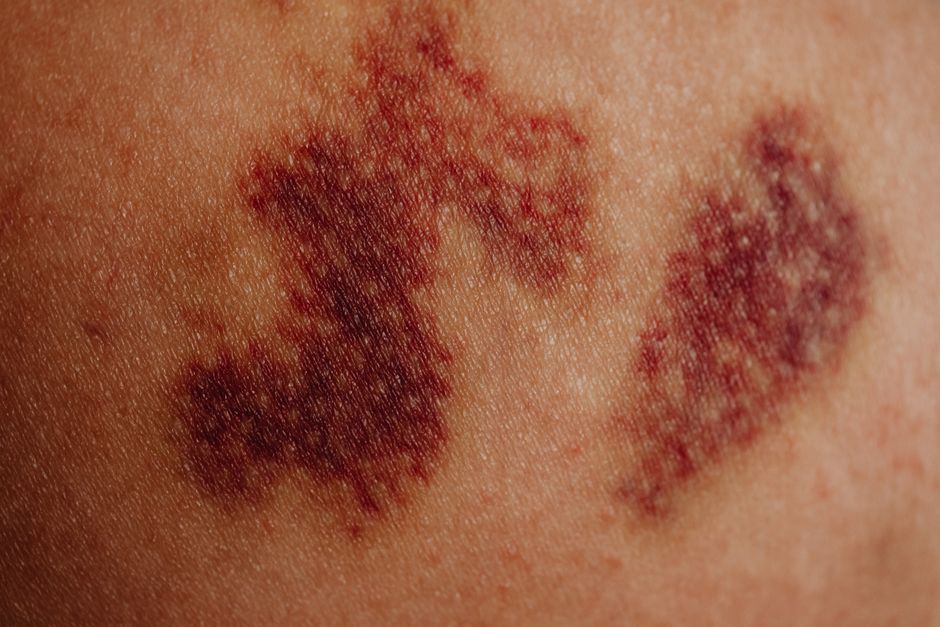
You notice a new bruise on your arm and you have no idea where it came from. This is one of the most common questions in primary care offices. Random bruises on your arms usually happen because you bumped into something and simply do not remember the impact. Minor collisions with door frames, car doors, countertops, and even your own body during sleep can cause bruising without leaving a clear memory of the event. In most cases these bruises are harmless. But sometimes they point to something that needs attention.
What Actually Causes a Bruise
A bruise forms when small blood vessels called capillaries break under the skin. Blood leaks out into the surrounding tissue. The body then works to break down that pooled blood and clear it away.
The color changes you see follow a predictable pattern. Fresh bruises often look red or purple because oxygen-rich blood sits under the skin. Over the next few days the bruise shifts to blue or dark purple. As the body breaks down hemoglobin, the bruise turns green. Then it becomes yellow or brown before fading completely. This process usually takes one to two weeks.
Your arms are especially prone to bruising. The skin there is thinner than on your legs or torso. You also use your arms constantly, which means more opportunities for minor impacts. The backs of your hands and forearms have less fat padding over the blood vessels, so even light contact can leave a mark.
Why You Might Not Remember the Bump
Most people genuinely do not remember the injury that caused a bruise. This is not a sign of memory problems. It is normal.
Many minor impacts happen during routine movement. You brush past a table edge while walking. You bump your arm against a car door while getting out. You roll over in bed and hit the headboard. These events are so minor that your brain does not register them as injuries worth remembering.
Pain is what makes an impact memorable. If a bump does not hurt at the moment it happens, your brain has little reason to store the event. The bruise appears hours later when you notice the discoloration. By then the cause is long forgotten.
Age also plays a role. As you get older, your skin becomes thinner and the fat layer under it decreases. Blood vessels become more fragile. This means older adults bruise more easily from lighter impacts. A bump that would not have left a mark at age 30 can produce a visible bruise at age 60.
When Random Bruises Could Signal a Problem
Most random bruises are harmless. But some patterns deserve attention.
See a doctor if you notice any of the following:
- Bruises that are larger than expected for the impact
- Bruises that keep appearing without any known cause
- Bruises that do not fade within two weeks
- Bruising accompanied by frequent nosebleeds or bleeding gums
- Bruising along with unusual fatigue or paleness
- Bruises that form hard lumps under the skin
These symptoms can indicate a problem with blood clotting, platelet levels, or other underlying conditions. They can also be a side effect of certain medications.
Medications that thin the blood are a common cause of easy bruising. Aspirin, ibuprofen, and prescription blood thinners like warfarin all reduce the blood’s ability to clot. Even over-the-counter supplements such as fish oil and vitamin E can increase bruising in some people. If you take any of these, your bruising is likely related to them.





Medical Conditions Linked to Easy Bruising
Several medical conditions can make bruising more frequent or more severe.
Platelet disorders affect the cells that help blood clot. Low platelet counts can cause small red or purple spots called petechiae, which look like tiny bruises. Larger bruises can also appear. If platelet counts drop significantly, bruising becomes more noticeable.
Clotting factor deficiencies are less common but more serious. Hemophilia and von Willebrand disease are inherited conditions that affect the blood’s ability to clot. People with these conditions often have large bruises from minor injuries and may also experience prolonged bleeding from cuts.
Liver disease can interfere with the production of clotting factors. The liver makes most of the proteins needed for normal blood clotting. When liver function declines, bruising can increase. Other signs of liver problems include yellowing of the skin or eyes, dark urine, and swelling in the legs or abdomen.
Vitamin deficiencies can also contribute. Vitamin C is needed for healthy blood vessels. Vitamin K is required for blood clotting. Severe deficiencies in either can lead to increased bruising. These deficiencies are uncommon in people who eat a varied diet, but they do occur in certain populations.
If you have any of these conditions, you would likely notice other symptoms beyond just bruising. Isolated random bruises are rarely the first or only sign of a serious illness.
What Your Bruise Pattern Can Tell You
Where bruises appear matters. The location can offer clues about the cause.
Bruises on the outer forearms and backs of the hands are typical of everyday bumps. These areas hit door frames, desks, and other objects constantly. This pattern is almost always benign.
Bruises on the upper inner arms or armpit area are less typical. These locations are protected and do not usually bump into things. Unexplained bruises in these areas warrant a closer look.
Multiple bruises in different stages of healing are normal for active people. You may have a yellow bruise from last week and a fresh purple one from today. This simply means you have been bumping into things over time.
Bruises that appear in clusters or in unusual patterns may indicate something else. For example, bruises that look like fingerprints or handprints should be evaluated. So should bruises that appear symmetrically on both arms in the same location.
How to Reduce Random Bruising
You cannot prevent every bruise. But you can reduce how often they happen.
Pay attention to your surroundings. Door frames and furniture edges are common culprits. Moving more slowly through tight spaces can help. So can being aware of how close you are to objects when you walk.
Protect your skin. Long sleeves offer a physical barrier against minor impacts. This is especially helpful for older adults with thinner skin.
Check your medications. If you take blood thinners or anti-inflammatory drugs, talk to your doctor about whether your bruising is within normal range. Do not stop any prescribed medication without medical advice.
Moisturize your skin regularly. Dry skin is more fragile and tears more easily. Well-hydrated skin holds up better against minor impacts.
If you have a condition that increases bruising, protective padding can help. Elbow pads and forearm guards are available for people who bruise very easily. These are not common solutions, but they exist for those who need them.
When to See a Doctor
You do not need to see a doctor for every bruise. Occasional random bruises on your arms are normal and expected.
Make an appointment if bruising becomes noticeably more frequent or severe. Track how many bruises you get in a week and whether the pattern is changing. This information is helpful for your doctor.
Seek medical attention promptly if you have large bruises that appear without any impact at all. This is different from forgetting a minor bump. A bruise that appears spontaneously in the absence of any trauma deserves evaluation.
Go to urgent care or the emergency room if you have bruising along with severe pain, swelling, or signs of bleeding elsewhere. This includes blood in your urine or stool, coughing up blood, or bleeding that does not stop.
Your doctor will likely order blood tests to check your platelet count and clotting function. These simple tests can rule out most serious causes of easy bruising. In many cases, the result is simply that you bruise easily and no treatment is needed.
Frequently Asked Questions
Why do I have bruises on my arms that I don’t remember getting?
Minor impacts that do not cause pain often go unremembered. You likely bumped into a door frame, furniture, or another object without noticing at the moment.
When should I worry about unexplained bruising?
See a doctor if bruises appear without any known cause, grow larger than expected, take more than two weeks to fade, or occur with frequent nosebleeds or bleeding gums.
Can medications cause random bruising?
Yes. Aspirin, ibuprofen, prescription blood thinners, and some supplements like fish oil can increase bruising. Review your medications with your doctor if bruising has increased.
Are random bruises on arms a sign of cancer?
Bruising alone is rarely a sign of cancer. Blood-related cancers can cause bruising, but they also produce other symptoms like fatigue, fever, weight loss, and frequent infections.
