
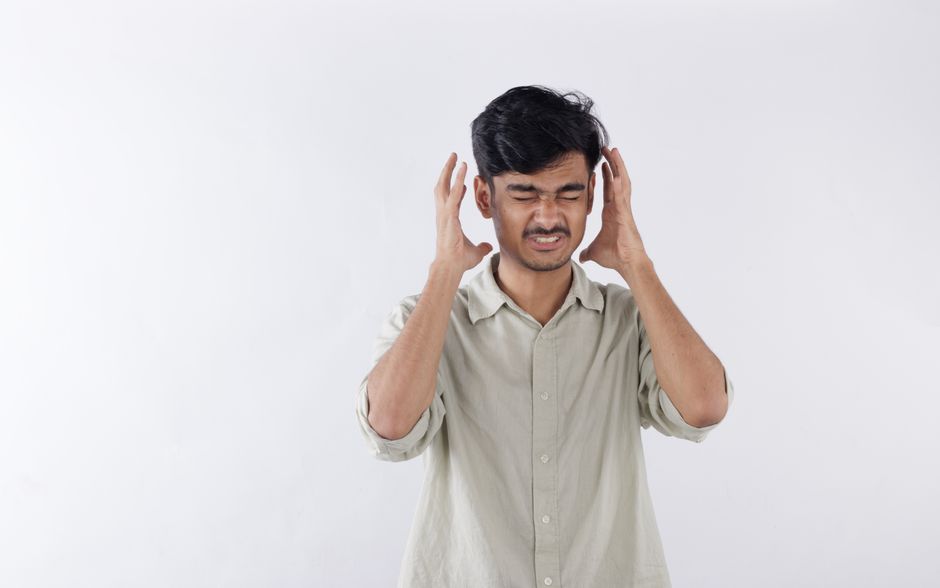
Anger problems rarely come from nowhere. They usually trace back to a mix of brain biology, learned habits, stress load, and sometimes an underlying condition like depression, PTSD, or intermittent explosive disorder. The feeling itself is normal and useful. It is how often it fires, how intense it gets, and what you do with it that turns anger into a problem.
Why Do I Have Anger Problems The Real Causes?
Anger is not a character flaw. It is a survival response wired into the brain, and it exists for a reason.
When your brain detects a threat, the amygdala — a small almond-shaped cluster deep in the temporal lobe — sounds an alarm before your thinking brain has time to weigh in. The hypothalamus then triggers adrenaline and cortisol. Your heart rate climbs, muscles tense, and attention narrows. This is the fight-or-flight response, and anger is its “fight” branch.
That system is supposed to switch on fast and switch off fast. In people with anger problems, it often switches on too easily, stays on too long, or fires in situations that do not call for it. The reasons for that vary. Some are biological. Some are learned. Most are both.
The most common real causes include:
- Chronic stress that keeps the stress-response system primed
- Sleep deprivation, which weakens the prefrontal cortex’s ability to put the brakes on emotion
- Untreated depression, anxiety, PTSD, or ADHD
- Alcohol and stimulant use
- Learned patterns from childhood — if anger got results or was modeled for you, the brain files it as a tool
- Low blood sugar, chronic pain, and hormonal shifts
- Trauma that left the threat-detection system calibrated too high
Notice what is not on that list: personality. People are not born with anger problems. They develop them through a combination of wiring, environment, and habit.
Is Anger a Mental Health Condition?
Anger by itself is not a diagnosis. It is a symptom, and it shows up across many conditions.
One condition does center on anger: intermittent explosive disorder, or IED. It involves repeated, sudden episodes of impulsive, aggressive outbursts that are out of proportion to the situation. The person often feels a sense of relief or release afterward, followed by regret. IED is recognized in the DSM-5, the standard diagnostic manual used in the United States.
Far more often, anger is a feature of something else:
- Major depression — irritability is a recognized symptom, especially in men, who may show anger instead of sadness
- PTSD — a hyperactive threat system makes neutral situations feel hostile
- Generalized anxiety — chronic tension lowers the threshold for frustration
- ADHD — impulsivity and low frustration tolerance are common
- Bipolar disorder — irritability can appear during mood episodes
- Substance use — alcohol and stimulants both raise irritability
This is why treating anger as its own problem, without checking for what is underneath, often fails. If depression is driving the irritability, no amount of anger management will fix it. The depression has to be treated.
How Does the Brain Create Anger?
Anger runs on a fast circuit and a slow circuit, and the mismatch between them explains a lot.
The fast circuit is the amygdala. It reacts in milliseconds using rough pattern matching. It does not know if the person who just cut you off in traffic is reckless or rushing to a hospital. It just flags “threat” and fires.
The slow circuit is the prefrontal cortex, the outer layer behind your forehead. It handles judgment, context, and impulse control. It can override the amygdala — but it takes time, and it needs resources.
When you are rested, fed, and calm, the prefrontal cortex does its job. When you are exhausted, hungry, stressed, or intoxicated, it goes offline. The amygdala runs the show. That is why anger problems often look worse at night, during stressful periods, or after drinking.
One detail worth knowing: the amygdala does not distinguish well between physical threats and social ones. An insult, a criticism, or a perceived slight can trigger the same cascade as a physical danger. The body does not know the difference.





What Role Does Childhood Play?
A lot. The brain learns what anger is for by watching and experiencing it early.
Children who grow up in households where anger was the main way to get needs met tend to carry that pattern forward. So do children who learned that anger was the only emotion that got a response. If crying was ignored but yelling worked, the brain files yelling as the tool that functions.
Trauma adds another layer. Adverse childhood experiences — abuse, neglect, household instability — are associated with long-term changes in how the stress-response system regulates. Some research suggests these changes can persist into adulthood, making the threat system more reactive and the calming system less effective.
This is not destiny. Learned patterns can be unlearned, and the brain retains the ability to form new connections throughout life. But it explains why anger problems often feel like they come from nowhere. The pattern was set long before the person noticed it.
Can Physical Health Cause Anger Problems?
Yes, and this is one of the most overlooked angles.
Anger is a whole-body event, and anything that destabilizes the body can destabilize mood:
- Sleep deprivation — even one poor night reduces prefrontal control over emotion
- Low blood sugar — the brain runs on glucose, and drops trigger irritability
- Chronic pain — constant discomfort wears down coping reserves
- Hormonal shifts — thyroid disorders, testosterone changes, and perimenopause can all affect irritability
- Medications — some steroids, stimulants, and antidepressants list irritability as a side effect
- Alcohol withdrawal — a well-documented cause of severe irritability
If anger problems appeared suddenly in adulthood with no clear trigger, a medical workup is reasonable. Thyroid function, blood sugar, sleep quality, and medication review are all worth checking before assuming the cause is purely psychological.
Why Does Anger Feel So Hard to Control?
Because by the time you notice it, the decision has already been made.
The amygdala fires before conscious awareness catches up. The feeling arrives first. The reasoning comes second, if it comes at all. This is not a weakness of will. It is how the brain is built — the threat system is designed to act faster than the thinking system, because in evolutionary terms, hesitating could be fatal.
What people call “anger control” is really the ability to insert a pause between the feeling and the action. That pause is a skill, and it depends on the prefrontal cortex having enough resources to do its job.
This is why the most effective approaches to anger problems focus on three things:
- Lowering baseline stress so the system is not already primed
- Building the pause through practice, so the prefrontal cortex gets a chance to weigh in
- Treating anything underneath — depression, trauma, sleep problems, substance use
Anger management classes that only teach techniques without addressing the underlying drivers tend to have limited results. The technique fails when the system is already overloaded.
When Should You Get Help?
Anger becomes a clinical concern when it damages relationships, work, or health — or when it leads to aggression toward people or property.
Some signs it is worth talking to a professional:
- Outbursts that feel out of proportion to the trigger
- Regret or shame after episodes
- Physical aggression, threats, or property damage
- Anger that is affecting a job, marriage, or friendships
- Anger that appeared suddenly with no clear cause
- Anger alongside depression, anxiety, or substance use
Treatment depends on what is driving it. Cognitive behavioral therapy has the strongest evidence base for anger problems. It targets the thoughts and interpretations that fuel the response. For underlying conditions like depression or PTSD, treating the condition often reduces the irritability. Medications are sometimes used, but they are typically reserved for specific diagnoses rather than anger as a standalone symptom.
One honest note: there is no single treatment that works for everyone. What works depends on what is actually causing the problem. That is why a proper assessment matters more than a one-size-fits-all program.
Frequently Asked Questions
Why do I get angry so easily?
Getting angry easily usually means your threat-detection system is calibrated too high, often from chronic stress, poor sleep, untreated depression or anxiety, or learned patterns from childhood. It is not a personality defect — it is a sign that something in the system needs attention.
Is anger a mental illness?
Anger itself is not a mental illness, but it can be a symptom of one. Intermittent explosive disorder is the one diagnosis that centers on anger, while depression, PTSD, ADHD, and anxiety commonly produce irritability as a feature.
Can low blood sugar make you angry?
Yes. The brain depends on glucose for self-control, and when blood sugar drops, the prefrontal cortex loses some ability to restrain emotional reactions. This is why hunger and irritability are so reliably linked.
Does childhood trauma cause anger problems?
It can. Adverse childhood experiences are associated with long-term changes in how the stress-response system regulates, which can make the threat system more reactive in adulthood. This does not mean the pattern is permanent — the brain can form new connections at any age.
