
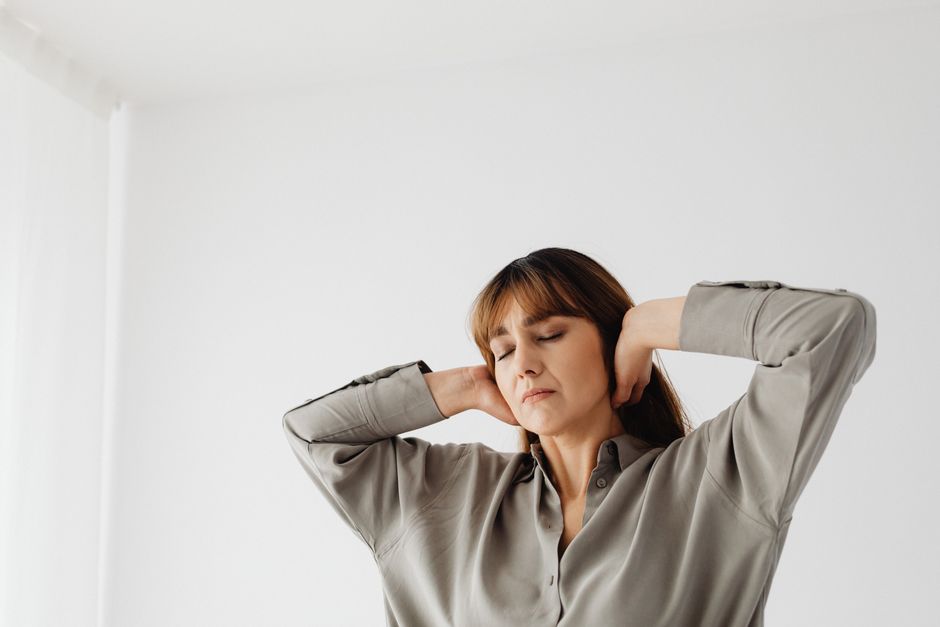
Overstimulation happens when your brain takes in more sensory information than it can process at once. Noise, bright lights, crowded spaces, and constant notifications can flood your nervous system. When that happens, your brain shifts into a stress response, and you feel overwhelmed, irritable, or exhausted. For many people, this is not a character flaw. It is a neurological response that some brains are simply more prone to than others.
What Does Overstimulation Actually Feel Like?
Overstimulation is not just feeling busy or stressed. It is a specific state where your nervous system becomes overloaded. Common signs include irritability, difficulty concentrating, a racing heart, and a strong urge to escape your current environment. Some people feel physically tense or develop a headache. Others feel emotionally fragile and may cry or snap at someone without meaning to.
These symptoms can appear suddenly or build up over hours. A crowded grocery store might trigger it. So can an open-plan office, a loud restaurant, or a phone that will not stop buzzing. The key feature is that the reaction feels out of proportion to the situation. A single conversation feels like too much. A normal volume television feels deafening.
This response is not a sign of weakness. It is a sign that your sensory processing system is working differently than average. Some brains filter out background noise automatically. Others take in every sound, light, and movement equally. That takes energy, and when energy runs out, the system overloads.
Why Do I Get Overstimulated So Easily Causes Tips? The Main Causes
Several factors make a person more likely to experience overstimulation. Genetics play a role. Some people are born with a more sensitive nervous system. This is sometimes called sensory processing sensitivity, and it affects roughly 15 to 20 percent of the population. It is not a disorder. It is a trait that influences how deeply you process information.
Stress is a major contributor. When you are already running on high alert, your threshold for additional input drops. A person who is well-rested and calm can tolerate a busy street. The same person after a poor night of sleep or a stressful week may find that same street unbearable. Chronic stress lowers your tolerance over time.
Sleep deprivation has a direct effect on sensory processing. The brain needs rest to reset its filtering systems. Without enough sleep, the brain becomes less efficient at ignoring irrelevant stimuli. Every sound and light feels louder and brighter than it should.
Anxiety and depression are closely linked to overstimulation. Both conditions keep the nervous system in a heightened state of arousal. This makes you more sensitive to external input. The relationship goes both ways. Overstimulation can trigger anxiety, and anxiety can make you more prone to overstimulation.
Certain medical conditions increase sensitivity. ADHD and autism are the most well-known. Both involve differences in how the brain filters sensory information. But you do not need a diagnosis to experience overstimulation. Many people without any condition have a low sensory threshold.
Lifestyle factors matter too. Caffeine, alcohol, and poor nutrition can all affect nervous system stability. Dehydration alone can impair cognitive function and increase irritability. A body that is running on empty has fewer resources to process the world around it.
How Your Brain Processes Sensory Input
Your brain receives millions of pieces of sensory information every second. It cannot process all of them consciously. Instead, it filters. The thalamus acts as a relay station, deciding which signals are important and which can be ignored. This filtering process is automatic for most people.
In people who overstimulate easily, this filter is less effective. More information gets through to the conscious brain. This is not necessarily bad. It can make you more creative, more observant, and more empathetic. But it also means your brain is working harder than average just to function in a normal environment.
When the filter lets too much through, the brain becomes overloaded. This triggers the sympathetic nervous system, which controls the fight-or-flight response. Adrenaline and cortisol are released. Your heart rate increases. Your muscles tense. Your body prepares to fight or flee, even though the threat is just a noisy room.
This is why overstimulation feels so physical. It is not just in your head. It is a full-body stress response driven by real neurological processes. Understanding this can help you take the reaction seriously instead of dismissing it as being overly sensitive.





Practical Tips to Reduce Overstimulation
The most effective strategy is to reduce your sensory load before it becomes overwhelming. This means being proactive rather than reactive. If you know a crowded grocery store triggers you, go at off-peak hours. Wear noise-canceling headphones on public transit. Dim the lights in your home in the evening.
Take regular breaks from screens. Notifications are designed to capture your attention, and each one adds to your cognitive load. Turning off non-essential notifications or putting your phone in another room for an hour can significantly reduce mental noise. Some research suggests that even the presence of a phone on your desk reduces cognitive capacity, even if you are not looking at it.
Practice the 5-4-3-2-1 grounding technique when you feel overwhelmed. Name five things you can see, four things you can touch, three things you can hear, two things you can smell, and one thing you can taste. This forces your brain to focus on concrete present-moment input rather than the flood of overwhelming stimuli.
Create a sensory recovery routine. This might include a warm bath, a quiet room with low lighting, or a short walk in nature. The goal is to give your nervous system a chance to reset. This is not a luxury. It is maintenance for a sensitive nervous system.
Set boundaries around your energy. Decline social invitations when you are already depleted. Leave events early instead of staying until you hit your limit. These choices are not rude. They are necessary self-regulation for people with sensitive sensory systems.
Long-Term Strategies to Build Tolerance
You cannot completely eliminate overstimulation, but you can raise your threshold over time. Sleep is the foundation. Most adults need seven to nine hours per night, and consistently getting less than that lowers your sensory tolerance. Prioritizing sleep is one of the most effective long-term strategies.
Regular aerobic exercise helps regulate the nervous system. Exercise burns off stress hormones and promotes the release of calming chemicals in the brain. Even a twenty-minute walk can have a measurable effect on your mood and stress levels.
Mindfulness and meditation training can help. These practices teach you to notice sensations without reacting to them. Over time, this can increase your ability to tolerate uncomfortable sensory input. The evidence for mindfulness is strongest for stress reduction, and lower stress directly translates to a higher sensory threshold.
Consider whether you are managing underlying anxiety or depression. If you experience persistent low mood, excessive worry, or physical symptoms of anxiety, it is worth discussing with a healthcare provider. Treating the underlying condition often reduces sensory sensitivity as a side effect.
Some clinicians recommend occupational therapy for sensory processing difficulties. This is most commonly discussed in children, but adults can benefit too. An occupational therapist can help you identify your specific sensory triggers and develop a personalized plan for managing them.
When to Seek Professional Help
Overstimulation becomes a problem when it interferes with your daily life. If you are avoiding work, social events, or necessary errands because of sensory overload, it is worth seeking help. The same applies if overstimulation is causing significant distress or affecting your relationships.
Start with your primary care doctor. They can rule out medical conditions that might contribute to your symptoms. Thyroid problems, vitamin deficiencies, and hormonal changes can all affect your nervous system and energy levels. A basic blood panel can identify these issues.
A mental health professional can help if anxiety or depression is part of the picture. Therapy can give you tools for managing stress and changing unhelpful thought patterns. Cognitive behavioral therapy has strong evidence for anxiety and depression, and both conditions are closely linked to overstimulation.
There is no medication specifically approved for sensory overstimulation. However, if your overstimulation is driven by anxiety, depression, or ADHD, treating that condition may reduce your sensitivity. Any medication decision should be made with a qualified healthcare provider who knows your full medical history.
Frequently Asked Questions
Is overstimulation a sign of ADHD?
Overstimulation is common in people with ADHD, but it is not exclusive to it. Many people without ADHD experience sensory overload, especially during periods of stress or sleep deprivation.
Can overstimulation cause physical symptoms?
Yes, overstimulation can cause a racing heart, muscle tension, headaches, and fatigue. These symptoms come from the fight-or-flight response, which activates even though there is no physical danger.
How long does it take to recover from overstimulation?
Recovery time varies by person and situation. A short break in a quiet environment may help within minutes, while a severe episode could take hours or a full night of restful sleep to fully recover from.
Are some people just naturally more sensitive to stimulation?
Yes, sensory processing sensitivity is a recognized trait that affects roughly 15 to 20 percent of people. It is not a disorder, but it does mean your brain processes sensory information more deeply than average.
