
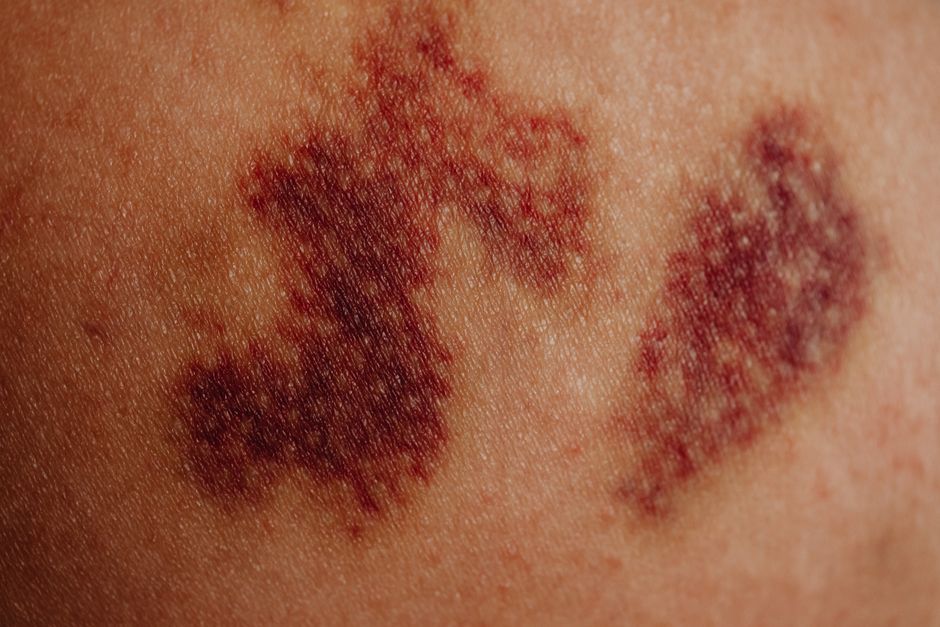
Bruises on your legs are common and usually harmless. They happen when small blood vessels under the skin break and leak blood into nearby tissue. Most leg bruises come from minor bumps you may not even remember, but some can point to a medication effect, a bleeding disorder, or another underlying condition worth checking.
Why Do I Get Bruises On My Legs Causes And Signs
A bruise, also called a contusion or hematoma, forms when blood vessels called capillaries break under the skin. Blood leaks into the tissue beneath, and the pooled blood shows through as a discolored patch. The skin itself stays intact. That is what separates a bruise from a cut or scrape.
Your legs are especially prone to bruising for a few reasons. They carry your body weight, they take repeated knocks against furniture and doorways, and the blood vessels in the lower legs work against gravity to return blood to the heart. That combination means the small vessels there take more wear than most other parts of the body.
As bruises heal, they typically change color. A fresh bruise is often red or purple. Over the next days it can turn blue, green, yellow, or brown as your body breaks down and reabsorbs the blood. This color progression is normal and is not a sign of anything wrong.
Common everyday causes
Most leg bruises trace back to ordinary events. Bumping your shin on a coffee table, carrying a heavy bag against your thigh, or brushing against a car door can all do it. People often cannot recall the exact moment because a minor impact does not always hurt right away.
Some people simply bruise more easily than others. Fair skin makes bruises more visible. Older adults bruise more readily because skin thins and the supporting tissue around blood vessels weakens with age. This is a normal part of aging, not a disease.
When a medication is involved
Certain medicines make bruising more likely by reducing the blood’s ability to clot. The most common include aspirin, some prescription blood thinners, and nonsteroidal anti-inflammatory drugs such as ibuprofen and naproxen. Corticosteroids taken by mouth can also make skin and vessels more fragile.
If you take any of these and notice more bruising than usual, that is worth mentioning to your doctor or pharmacist. Do not stop a prescribed blood thinner on your own. That decision needs medical guidance.
What Do Leg Bruises Look Like And When Should You Worry?
Most bruises are flat or slightly raised, tender to the touch, and fade over one to two weeks. The size can range from a small spot to a large patch, depending on how much blood leaked and how deep the vessel was.
Some signs deserve a closer look rather than a wait-and-see approach. These include bruises that appear without any injury, bruises that keep growing or spreading, and bruises that show up along with bleeding from the gums, nose, or elsewhere.
Watch for these patterns and bring them to a doctor:
- Bruises that appear on their own, with no bump or injury you can identify
- Bruises that keep getting bigger or do not fade after a couple of weeks
- Bruises along with frequent nosebleeds, bleeding gums, or blood in urine or stool
- Bruises that are unusually large or clustered in one area
- Bruising along with fatigue, fever, or unexplained weight loss
- Small red or purple dots on the skin, called petechiae, that do not blanch when pressed
Petechiae are worth a specific mention. They are tiny pinpoint spots caused by bleeding under the skin and can signal a problem with platelets or blood vessels. They look different from an ordinary bruise and are not caused by a simple bump.
None of these signs automatically means something serious. They are reasons to get checked, not reasons to panic. A doctor can sort out whether the cause is minor or needs treatment.
Can Low Platelets Or A Bleeding Disorder Cause Leg Bruises?
Yes. Platelets are tiny cell fragments that help blood clot. When platelet counts drop too low, or when platelets do not work properly, bruising and bleeding become more likely. This is one of the more important medical causes of easy bruising.
Conditions that affect platelets or clotting include immune thrombocytopenia, where the body attacks its own platelets, and inherited bleeding disorders such as von Willebrand disease. Liver disease can also interfere with clotting because the liver makes several clotting proteins.
Vitamin deficiencies can play a role too. Vitamin C is needed to build healthy collagen, which supports blood vessel walls. Severe vitamin C deficiency, called scurvy, causes easy bruising and bleeding gums. This is rare in people eating a varied diet but can occur with very restricted eating.
Vitamin K is needed for normal clotting, and deficiency can increase bleeding. It is uncommon in healthy adults but can happen with certain gut conditions or long-term antibiotic use.
Here is where a doctor’s evaluation matters. A simple blood test can measure platelet count and clotting function. If those come back normal, a bleeding disorder is much less likely. If they are abnormal, the results point toward the next step.



Do Varicose Veins And Circulation Problems Cause Bruising?
Varicose veins do not directly cause bruises, but they can make the legs more prone to them. When veins are enlarged and the valves inside them do not close well, blood pools in the lower legs. The surrounding tissue and small vessels can become more fragile over time.
People with chronic venous insufficiency, where blood does not flow back to the heart efficiently, often notice swelling, heaviness, and skin changes in the lower legs. The skin can become thinner and more easily injured, which makes bruising more likely from minor knocks.
This is different from a bleeding disorder. The underlying issue is vein function and fluid buildup, not a problem with clotting. A doctor can usually tell the difference by examining the legs and asking about symptoms like swelling that worsens through the day.
Does Diet Or Lifestyle Affect How Easily You Bruise?
Diet plays a modest role. Getting enough vitamin C supports blood vessel health, and vitamin K supports clotting. A balanced diet with fruits, vegetables, and adequate protein generally covers both. No specific food has been shown to prevent bruising on its own.
Alcohol is a more direct factor. Heavy drinking can affect platelet function and liver health, both of which influence bleeding and bruising. If bruising has increased alongside regular heavy drinking, that connection is worth raising with a doctor.
Some supplements can increase bleeding risk. Fish oil, ginkgo, ginger, garlic, and high-dose vitamin E have all been linked to a greater tendency to bleed in some people. This does not mean they are dangerous for everyone, but if you bruise easily and take these, it is reasonable to mention them to your doctor.
Sun exposure and skin aging also matter. Long-term sun damage thins the skin and weakens the support around blood vessels, which is one reason older adults bruise more on the forearms and legs.
How Are Easy Bruises Evaluated By A Doctor?
A doctor starts with questions rather than tests. They will ask when the bruising started, where it appears, whether it follows any injury, what medicines and supplements you take, and whether you have other bleeding signs. That history often narrows the cause quickly.
If the history suggests a possible bleeding problem, blood tests usually follow. A complete blood count measures platelets and red and white cells. Clotting tests measure how long blood takes to clot. These are standard and widely available.
When the history points to a medication or a vein issue instead, the workup looks different. Sometimes no testing is needed at all. A doctor may simply recommend watching the pattern and adjusting a medication if it is safe to do so.
There is no single test that explains all bruising. The evaluation is a process of ruling out the more serious causes first, then settling on the most likely explanation.
What Helps Leg Bruises Heal?
Most bruises heal on their own in one to two weeks. The body reabsorbs the leaked blood and repairs the vessel. There is no treatment that reliably speeds this up, though some basic steps may ease discomfort.
Resting the area, elevating the leg, and applying a cold pack wrapped in cloth for short periods in the first day or two can reduce swelling and pain. Cold narrows blood vessels, which may limit how much more blood leaks. Avoid direct ice contact with the skin.
After the first day or two, some people find gentle warmth soothing. The evidence that heat speeds bruising resolution is not strong, so treat it as comfort care rather than a proven remedy.
Do not use aspirin or ibuprofen for bruise pain if your goal is to limit bleeding, since both can increase it. Acetaminophen does not affect clotting the same way. If you are unsure what is safe for you, ask a pharmacist.
See a doctor if bruises appear without injury, keep growing, do not fade, or come with other bleeding signs. Those patterns are the ones worth taking seriously.
Frequently Asked Questions
Why do I suddenly get bruises on my legs for no reason?
Bruises that appear without a clear injury can come from a medication effect, a bleeding or platelet problem, or fragile skin and vessels. A doctor can check your platelet count and clotting with a simple blood test to narrow the cause.
Are leg bruises a sign of a serious illness?
Most leg bruises are harmless and come from minor bumps. Bruises that appear on their own, keep growing, or come with other bleeding signs are the ones that warrant a medical evaluation.
What vitamin deficiency causes easy bruising on the legs?
Severe vitamin C deficiency can cause easy bruising and bleeding gums, and vitamin K deficiency can increase bleeding. Both are uncommon in healthy adults eating a varied diet.
When should I see a doctor about bruises on my legs?
See a doctor if bruises appear without injury, keep getting bigger, do not fade after a couple of weeks, or come with nosebleeds, bleeding gums, or blood in urine or stool. These signs point to causes that need checking.
