
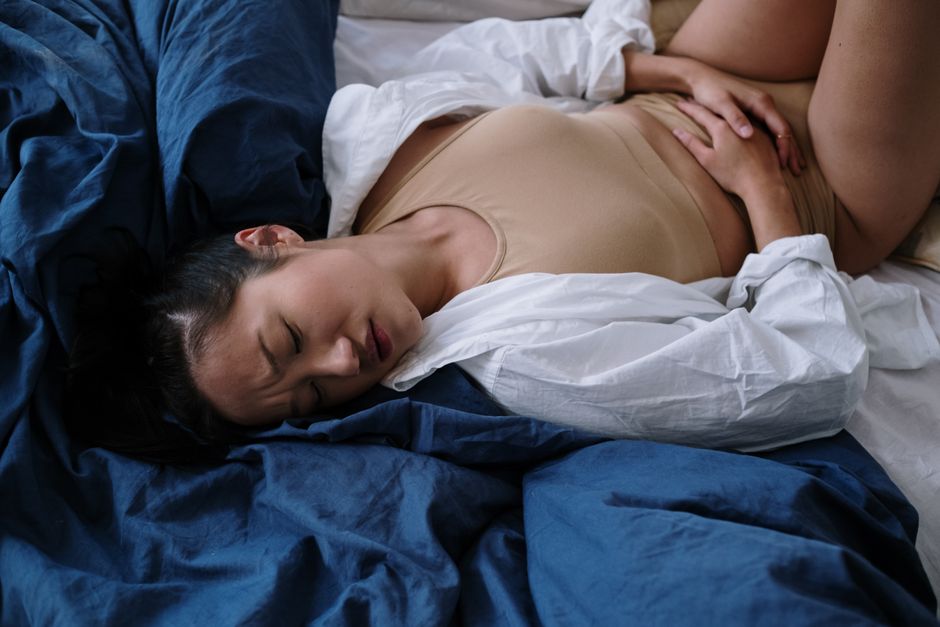
If you find yourself throwing off the covers or reaching for a fan in the days before and during your period, you are not imagining it. Body temperature genuinely rises in the second half of the menstrual cycle and stays slightly elevated until bleeding begins. That shift is driven by progesterone, the hormone that dominates the roughly two weeks after ovulation. For some people the change is barely noticeable. For others it shows up as flushing, night sweats, or feeling warmer than everyone else in the room.
Why Do I Feel Hot During My Period?
Progesterone raises your core body temperature. After ovulation, the empty follicle left in the ovary becomes a structure called the corpus luteum, which produces progesterone for about two weeks. Progesterone acts on the hypothalamus — the brain region that regulates temperature — and nudges your baseline body temperature upward.
The typical rise is small. A commonly cited figure in reproductive physiology is roughly 0.3 to 0.5 degrees Fahrenheit (about 0.2 to 0.3 degrees Celsius) above the pre-ovulation baseline. That is not a fever. It is a normal, predictable shift that repeats with each cycle that includes ovulation.
This is the same change that makes basal body temperature tracking possible. People trying to conceive measure their temperature every morning because the sustained rise after ovulation signals that it happened. The shift is subtle but consistent enough to chart.
Then menstruation arrives, progesterone falls, and your temperature should return to baseline. So why do many people feel hottest right around the start of their period rather than before it? A few things are happening at once. The drop in progesterone can trigger shifts in blood vessel tone, which may produce flushing or a sudden feeling of warmth. Menstrual cramps involve prostaglandins, compounds that can cause sweating and a sense of heat. And if you are already running warm from the luteal phase, the transition itself can feel like a swing.
Is Feeling Hot During Your Period Normal?
A mild sense of warmth during the menstrual cycle is normal and expected. It reflects ordinary hormonal physiology, not a sign that something is wrong.
What matters is the pattern and the intensity. Feeling slightly warmer in the days before your period, or flushing when your period starts, falls within the range of typical cycle-related changes. So does feeling warmer overall in the second half of your cycle compared with the first.
It becomes worth investigating when the heat feels extreme, when it comes with drenching night sweats that soak through clothing or sheets, when it disrupts sleep most nights, or when it appears alongside other symptoms that do not fit the usual cycle pattern. Those situations are less about normal hormonal warmth and more about something that deserves a conversation with a clinician.
One clarification worth making: feeling hot during your period is not the same as having a fever. A fever is a controlled elevation in body temperature set by the hypothalamus in response to illness, and it is generally defined as 100.4 degrees Fahrenheit (38 degrees Celsius) or higher. Cycle-related warmth does not reach that range. If you are measuring a genuine fever during your period, that points to an infection or another cause, not to your cycle.
What Else Can Make You Feel Hot During Your Period?
Hormones explain the baseline shift, but they are rarely the whole story. Several other factors commonly overlap with menstruation and can amplify the sensation of heat.
- Prostaglandins. These compounds drive uterine contractions during menstruation. They can also cause sweating, flushing, and a general feeling of being overheated.
- Iron levels. Heavy menstrual bleeding can lower iron stores over time. Fatigue and feeling unusually warm or flushed can sometimes accompany low iron, though the relationship is not straightforward and low iron does not always cause warmth.
- Thyroid function. An overactive thyroid raises metabolic rate and body temperature. If you feel hot all month, not just around your period, thyroid function is one thing clinicians commonly check.
- Perimenopause. In the years leading up to menopause, hormone levels fluctuate unpredictably. Hot flashes and night sweats can cluster around the menstrual period, which can make them easy to mistake for a cycle-related change.
- Medications. Some antidepressants, blood pressure medications, and hormone treatments can affect temperature regulation or cause flushing.
- Environment and behavior. Caffeine, alcohol, spicy food, a warm bedroom, and heavy bedding all add to the load.
If you are in your forties and the heat has become more intense or more frequent than it used to be, perimenopause is a reasonable explanation to consider. The average age of menopause in the United States is 51, and symptoms can begin several years earlier. Feeling hot during your period in this stage of life often reflects shifting hormones rather than the steady luteal-phase rise of earlier years.





Cycle-Related Warmth vs. Hot Flashes: What’s the Difference?
These two experiences get lumped together, but they are not the same thing. Understanding the difference can help you describe what you are feeling to a clinician.
| Feature | Cycle-related warmth | Hot flash |
|---|---|---|
| Typical timing | Second half of cycle, around period start | Any time, often unpredictable |
| Onset | Gradual, sustained | Sudden, intense |
| Duration | Hours to days | Usually a few minutes |
| Common age range | Any reproductive age | Most often 45 to 55 |
| Typical trigger | Progesterone rise and fall | Estrogen fluctuation |
The distinction matters because the two have different underlying drivers. Cycle-related warmth tracks with progesterone. Hot flashes are linked to changing estrogen levels and the way the hypothalamus responds to them. Some people experience both at once, especially during perimenopause, which is why the picture can get confusing.
When Should You Talk to a Doctor About Feeling Hot?
Most cycle-related warmth does not require medical attention. Certain patterns do.
See a clinician if you experience night sweats that soak your bedding or clothing, if the heat is severe enough to disrupt sleep or daily life on a regular basis, if you have a measured fever of 100.4 degrees Fahrenheit (38 degrees Celsius) or higher, or if the warmth is accompanied by unexplained weight loss, a racing heart, or swelling in the neck.
Also worth raising: a sudden change in your usual pattern. If you have always run slightly warm before your period and now the heat is intense, or if you are well past menopause and new hot flashes appear, that shift deserves evaluation.
There is no single test for cycle-related warmth. A clinician will typically take a history, ask about the timing and severity, and may check thyroid function, iron levels, or hormone status depending on your age and symptoms. The goal is to rule out other causes rather than to confirm a diagnosis of “normal hormonal warmth.”
What Can You Do About It?
There is no treatment specifically for the small temperature rise that progesterone causes, because it is a normal part of the cycle. What you can do is manage the discomfort and reduce the factors that stack on top of it.
Practical steps that people commonly find helpful include:
- Dressing in layers so you can adjust quickly
- Keeping the bedroom cool and using lighter bedding
- Limiting caffeine, alcohol, and spicy food around your period if you notice they make it worse
- Staying hydrated, especially with heavy bleeding
- Tracking your symptoms across a few cycles so you can see the pattern clearly
If symptoms are severe and perimenopause is the likely driver, some clinicians recommend hormone therapy for hot flashes. That is a decision to make with a doctor, because hormone therapy carries its own risks and benefits that depend on your health history. It is not a first-line answer for ordinary cycle-related warmth, and it is not appropriate for everyone.
What does not have strong evidence behind it: most over-the-counter supplements marketed for hormonal balance or temperature control. Some small studies have looked at specific botanical ingredients for menopausal hot flashes, but results are mixed, and no supplement has been shown to reliably address the normal luteal-phase temperature shift. If a product claims to “cool your cycle,” that claim is not supported by clinical trials.
Tracking is genuinely useful here. Note your temperature, the day of your cycle, and how you feel for two or three months. Patterns that are obvious on paper are much easier for a clinician to interpret than a vague sense that you have been running hot.
Frequently Asked Questions
Why do I feel hot right before my period starts?
Progesterone peaks in the days before your period and raises core body temperature slightly, so you may feel warmer than usual. When progesterone drops as bleeding begins, the shift itself can trigger flushing or a sudden sense of heat.
Is feeling hot during your period a sign of pregnancy?
No, a mild feeling of warmth during the luteal phase is a normal cycle change and does not indicate pregnancy. A sustained temperature rise past your expected period date is one signal some people track, but it is not a reliable pregnancy test.
Can perimenopause make you feel hot during your period?
Yes, hormone fluctuations in perimenopause can cause hot flashes and night sweats that cluster around your period. If the heat has become more intense than it used to be and you are in your forties, that is a common pattern.
When should I worry about feeling hot during my period?
Worry is the wrong frame for most cycle-related warmth, but see a doctor if you have drenching night sweats, a measured fever of 100.4 degrees Fahrenheit (38 degrees Celsius) or higher, or symptoms that disrupt sleep and daily life. A sudden change from your usual pattern also deserves evaluation.
