
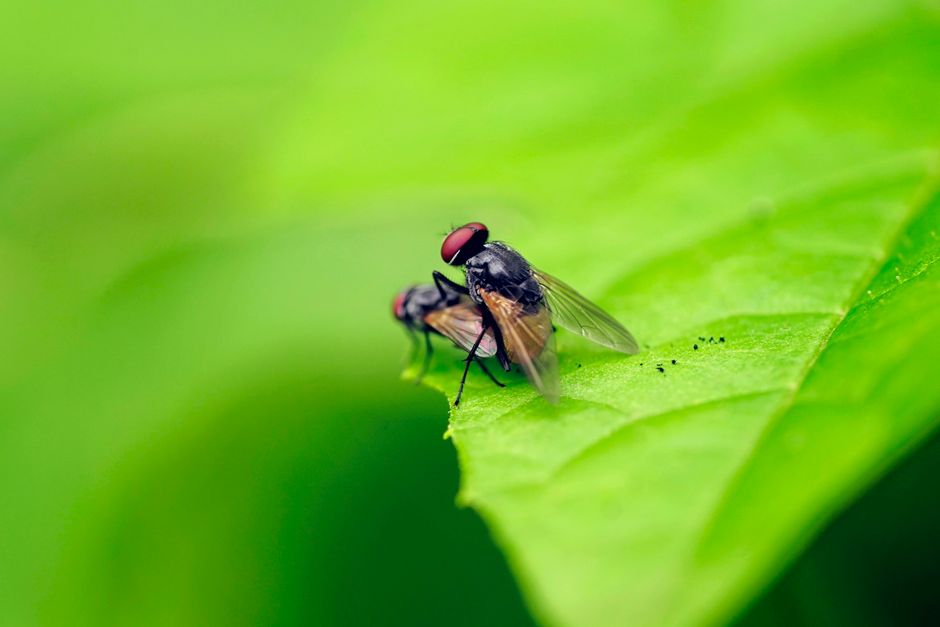
Flies do not have red blood. Their blood, called hemolymph, is usually clear, pale yellow, or greenish. The red fluid you see when you swat a fly is not its blood at all — it is the fly’s fat body, which stores nutrients and often has a reddish-orange color. This is a common mix-up, and the confusion makes sense when you look at how an insect’s insides are arranged.
Why Do Flies Have Red Blood They Dont? The Reason
The reason is simple: flies do not have blood in the way humans do. They have hemolymph, a fluid that moves through an open body cavity rather than through closed tubes. In many fly species, the hemolymph itself is colorless or slightly tinted. The red-orange material that smears when you crush a fly comes from the fat body — a spongy tissue that stores energy and gives many insects their reddish color.
So when you see red after killing a fly, you are looking at its stored fat, not its circulation fluid. The fly’s “blood” never turns red because it has no hemoglobin. Hemoglobin is the iron-based protein that makes human blood red and carries oxygen. Flies use a different oxygen transport system entirely.
What Is Hemolymph and How Does It Work?
Hemolymph is the insect equivalent of blood, but it works differently. Instead of flowing through arteries and veins, it bathes the organs directly in an open body cavity called the hemocoel. A long tubular heart along the insect’s back pumps this fluid forward, but it does not form a closed loop like the human circulatory system.
Hemolymph does not carry oxygen in most insects. Oxygen enters through tiny tubes called spiracles and travels directly to tissues through a network of tracheae. This is why flies can survive with a “blood” that has no oxygen-carrying pigment. The fluid mainly transports nutrients, hormones, and waste products.
Some insects do have colored hemolymph. Certain fly larvae, like midges, have red hemolymph because they contain hemoglobin. This is an exception, not the rule, and it happens in aquatic larvae that need extra oxygen in low-oxygen water. But the common house fly you see in your kitchen has clear or pale hemolymph.
Why Is the Fat Body Red?
The fat body is an organ that stores lipids, proteins, and carbohydrates. It is the insect version of both the liver and fat tissue in humans. In many flies, this tissue has a distinct orange or red color because of carotenoid pigments. Carotenoids are the same pigments that make carrots orange and tomatoes red.
Flies get these pigments from their diet. They feed on decaying organic matter, fruit, and other nutrient sources that contain carotenoids. The pigments accumulate in the fat body, giving it that reddish appearance. When you crush a fly, the fat body ruptures and releases this colored material, which looks exactly like blood to the naked eye.
This is why the “blood” you see is often described as reddish-orange rather than bright red. It is not oxygenated blood. It is stored pigment.





Do Any Insects Have True Red Blood?
Yes, but it is rare. A few insects and their relatives have hemolymph that is genuinely red. The larvae of some midges, known as bloodworms, contain hemoglobin and their hemolymph is red. These larvae live in muddy, oxygen-poor water, and hemoglobin helps them extract oxygen from that environment.
Some other invertebrates also have red blood. Certain marine worms and some crustaceans use hemoglobin or similar proteins. But among common insects like flies, bees, and ants, red blood is not the norm. Their circulatory fluid is typically clear, yellowish, or greenish.
The green color in some insects comes from biliverdin, a breakdown product of heme. Heme is the iron-containing molecule in hemoglobin, but insects do not use it the same way. Instead of recycling it into red blood cells, some insects excrete or store it as green pigment.
What About the Myth That Flies Have Red Blood?
The myth likely started because people see red fluid when they kill a fly and assume it is blood. It is a reasonable assumption. But the red material is the fat body, not the circulatory fluid. The misconception spreads because most people never inspect a fly closely enough to tell the difference.
Another reason the myth persists is that some flies do have reddish body fluids. Tsetse flies, for example, have hemolymph that can appear reddish due to the breakdown of heme from blood meals. But these are blood-feeding flies, and their coloration is not the same as human blood.
There is also confusion with other insects. When people squash a mosquito that has recently fed, they see red blood — but that blood comes from the human or animal the mosquito bit, not from the mosquito itself. The same applies to any blood-feeding insect. The red fluid is the host’s blood, not the insect’s.
Why Does This Matter for Pest Control?
Knowing that flies do not have red blood can help you identify what you are seeing in your home. If you find red stains on a wall or windowsill, it is likely crushed insect tissue, not blood from a wound. This distinction matters if you are trying to figure out whether a stain is from a bug or from a person.
It also matters for cleaning. Fly hemolymph and fat body are not hazardous in the way human blood can be. They do not carry bloodborne pathogens like hepatitis or HIV. However, flies themselves can carry bacteria and other microbes on their bodies and in their digestive tracts, so it is still wise to clean surfaces where flies have been crushed.
If you see red fluid after swatting a fly, you are not looking at blood. You are looking at stored nutrients and pigments. The fly’s actual circulatory fluid is nearly invisible to the naked eye.
How Is Insect Circulation Different From Human Circulation?
Human circulation is closed. Blood stays inside vessels — arteries, veins, and capillaries — and never directly touches organs. Oxygen is carried by hemoglobin inside red blood cells. This system is efficient for large, active animals that need a lot of oxygen.
Insect circulation is open. Hemolymph moves freely through the body cavity, directly bathing organs. There are no red blood cells and no hemoglobin in most insects. Oxygen is delivered by a separate tracheal system that pipes air directly to tissues. This works well for small animals with high surface-area-to-volume ratios.
This difference explains why flies do not need red blood. Their oxygen delivery does not depend on a colored protein in their circulation fluid. The tracheal system is so effective that many insects can fly at high speeds without any oxygen-carrying pigment in their hemolymph.
Can You Tell a Fly’s Health From Its Hemolymph Color?
Not easily. Hemolymph color varies by species, diet, age, and even environmental conditions. A well-fed fly may have a more prominent fat body with stronger coloration. A starved fly may have a smaller, paler fat body. But these differences are not something you can reliably observe without a microscope.
Researchers study hemolymph and fat body composition to understand insect physiology, nutrition, and pesticide resistance. But for the average person, the color of a crushed fly tells you very little about its health. It mainly tells you what it has been eating.
If the fly recently fed on something rich in carotenoids, its fat body will be more orange or red. If it fed on a diet low in pigments, the fat body may be pale. This is why not every crushed fly leaves a red stain — some leave only a faint yellowish smear.
Frequently Asked Questions
What is the red liquid when you kill a fly?
The red liquid is the fly’s fat body, not its blood. The fat body stores nutrients and pigments that give it a reddish-orange color.
Do flies have blood like humans?
No. Flies have hemolymph, a clear or pale fluid that bathes their organs in an open body cavity. It does not carry oxygen and contains no red blood cells.
Why do some insects have red blood?
Some insects, like midge larvae, have hemoglobin in their hemolymph, which makes it red. This is an adaptation for surviving in low-oxygen aquatic environments.
Is fly hemolymph dangerous to humans?
No. Fly hemolymph does not carry bloodborne pathogens. However, flies can carry bacteria on their bodies, so clean surfaces where they have been crushed.
