
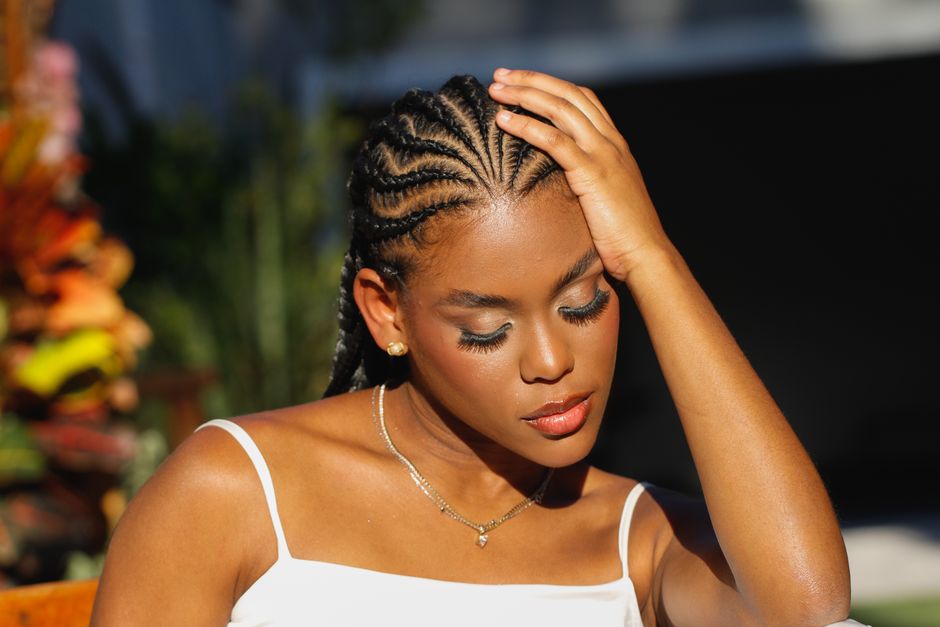
Cornrows itch mostly because of tension on the scalp, not because your hair is dirty. When braids are pulled tight, the scalp responds with inflammation and irritation that registers as itching. Dryness, product buildup, and a common scalp condition called seborrheic dermatitis can make it worse. The fix starts with less tension, not more washing.
Why Do Cornrows Itch? The Main Reason
Tension is the leading cause of itching under cornrows. Braiding pulls hair follicles in directions they don’t naturally sit. The scalp reacts to that mechanical stress the way skin reacts to any constant pull: with redness, tenderness, and itch.
Hair follicles are small organs with nerve endings and blood vessels nearby. Sustained pulling irritates those structures. This is why itching often starts within the first day or two after braiding, and why it tends to be worst along the parts and edges where tension is highest.
There’s a second layer to this. When hair is braided wet and then dries, it shrinks. Shrinkage tightens the braid further, which is why itching can ramp up a day after installation rather than right away.
Tension is also the reason cornrows can cause traction alopecia, a form of hair loss from repeated pulling. Itching is an early warning sign worth paying attention to, not just an annoyance to push through.
Is Itching a Sign of Something More Than Tight Braids?
Sometimes. Tension explains most itching, but it isn’t the only cause. If itching comes with flaking, crusting, bumps, or a rash, something else may be going on.
Seborrheic dermatitis is a common one. It causes flaky, itchy, sometimes greasy patches on the scalp. Braids can trap flakes and make the scalp harder to clean, which can worsen symptoms. Dandruff is a mild form of the same condition.
Product buildup is another factor. Gels, oils, and leave-in products used during braiding can accumulate at the scalp and along parts. That residue can irritate skin and clog follicles.
Less often, itching points to a contact reaction to a product, or to a fungal or bacterial issue. Signs that suggest something beyond simple tension include:
- Redness, swelling, or warmth along the scalp
- Bumps, pus, or open sores
- Thick flaking or crusting
- Itching that continues or worsens after the braids are removed
If you see these, it’s worth having a clinician or dermatologist look at your scalp. Persistent scalp symptoms that don’t improve deserve a real diagnosis rather than another product.
Why Does It Itch More at Night or When You Sweat?
Itching often feels worse at night because there are fewer distractions. Attention shifts to the scalp, and the sensation becomes more noticeable. Warmth under bedding can also increase blood flow to the skin, which can heighten itch.
Sweat is a separate trigger. When you exercise or your scalp gets hot, sweat and oil mix with product residue. That combination can irritate the scalp and intensify itching. Sweating also softens the skin, which can make any underlying irritation feel sharper.
This is why some people notice itching spikes after a workout or on hot days. It doesn’t mean the braids are suddenly dirtier. It means the scalp environment changed.





How Do You Stop Cornrows From Itching?
The most effective step is reducing tension. If braids were installed too tight, the honest answer is that they may need to be redone looser. A braid that causes pain, throbbing, or visible bumps at the edges is too tight.
Beyond tension, a few practical steps help:
- Ask your braider to avoid pulling at the hairline and edges
- Skip tight styles right after a fresh install if your scalp is already irritated
- Keep the scalp clean without over-washing, which can dry it out
- Use gentle, fragrance-free products if your scalp is sensitive
- Avoid heavy gels and oils that sit on the scalp and trap debris
- Give your scalp breaks between tight styles
For mild dryness, a light scalp oil can help some people. But oil isn’t a fix for tension, and heavy oiling can worsen buildup and flaking. If flaking looks like seborrheic dermatitis, an over-the-counter medicated shampoo containing ingredients like ketoconazole, zinc pyrithione, or salicylic acid is often used. A pharmacist or clinician can advise on which is appropriate for you.
One point worth being clear about: scratching feels good in the moment but damages the scalp and can lead to breaks in the skin and infection. If you need relief, press or tap gently instead of scratching.
When Should You Take the Braids Out?
Take them out if the scalp is painful, if you see bumps or sores, or if itching doesn’t settle within a few days. These are signs the tension or irritation is beyond what the scalp can tolerate.
You should also remove them if you notice thinning or bald patches, especially along the hairline or edges. Traction alopecia can become permanent if tight styling continues over time. Early removal gives the follicles a chance to recover.
There’s no single timeline that fits everyone. Some scalps tolerate braids well for weeks. Others react within days. The signal to watch is your own scalp, not a fixed number of days.
Can You Prevent Cornrow Itching in the First Place?
Prevention comes down to tension, scalp health, and technique. Looser braids cause far less itching than tight ones, even if they don’t last quite as long.
Keeping the scalp clean and moisturized before and during braiding helps. So does avoiding heavy products at the roots. Some people find that braiding on clean, fully dry hair reduces the shrinkage-tightening effect that happens with wet braiding.
Regular breaks matter too. Wearing tight styles back to back without rest increases the risk of irritation and long-term hair loss. Rotating styles and giving the scalp recovery time is one of the more reliable habits for scalp health.
If itching keeps returning no matter what you change, the cause may not be the braids themselves. A dermatologist can check for seborrheic dermatitis, contact reactions, or other scalp conditions that need specific treatment.
Frequently Asked Questions
Why do my cornrows itch so much?
Most cornrow itching comes from tension on the scalp, which causes irritation and inflammation around the hair follicles. Dryness, product buildup, and conditions like seborrheic dermatitis can make it worse.
How long does cornrow itching usually last?
Mild tension itching often eases within a few days as the scalp adjusts, but it varies by person. If itching is severe or doesn’t settle, the braids are likely too tight and should be redone or removed.
Does itching mean my cornrows are too tight?
Itching alone doesn’t always mean the braids are too tight, but pain, throbbing, bumps, or redness at the edges do. Those are signs to loosen or remove them.
What can I put on my scalp to stop cornrows from itching?
A light, fragrance-free scalp oil can help with dryness, and medicated shampoos are sometimes used for flaking. No product fixes itching caused by tension, so reducing the pull is the real solution.
