
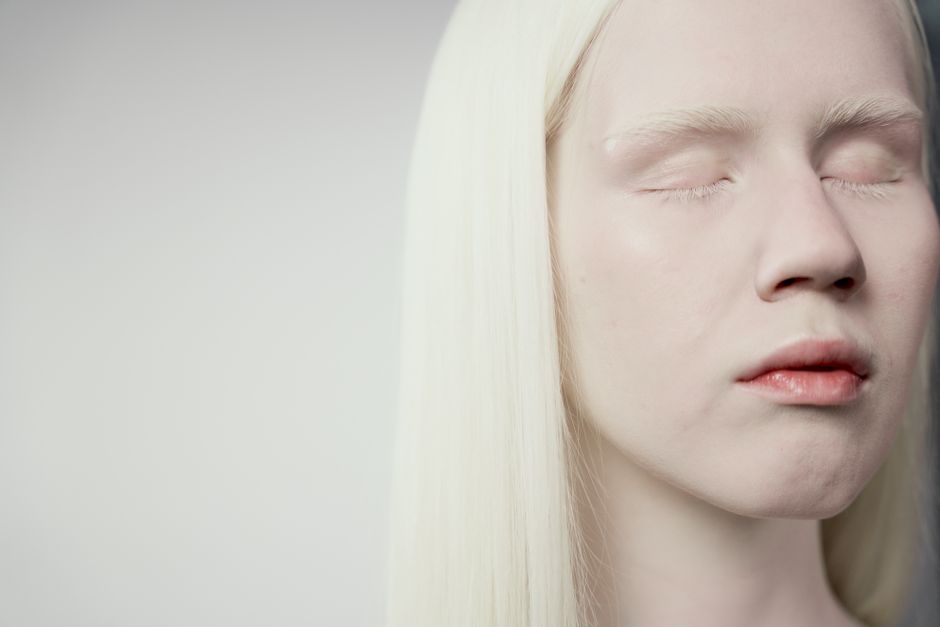
If you have albinism, you may notice your eyes move back and forth or up and down without you controlling it. This movement is called nystagmus, and it is very common in people with albinism. The shaking happens because the visual system develops differently in albinism, and the brain struggles to hold the eyes steady without clear visual input. It is not a sign of a separate disease, and it is not something the person can control or stop by effort.
What Is Nystagmus in Albinism?
Nystagmus is a rhythmic, involuntary movement of the eyes. In albinism, this movement usually starts in early infancy, often by 6 to 8 weeks of age. The eyes may move side to side, up and down, or in a circular pattern. The movement can be fast or slow, and it often changes depending on where the person is looking or how tired they are.
In albinism, nystagmus is typically present from birth or early infancy and remains throughout life. It is not a condition that develops later. The severity varies from person to person. Some people have barely noticeable movement, while others have more obvious shaking that affects how they use their vision.
The key point is that this eye movement is a symptom of the underlying visual system differences in albinism, not a separate eye disease. It is a neurological and visual development issue, not a muscle problem.
Why Does Albinism Cause the Eyes to Shake?
Albinism affects the development of the visual pathway from the eye to the brain. In a typical visual system, the retina sends signals through the optic nerve to the brain, and the brain uses those signals to keep the eyes aligned and steady. In albinism, there are structural differences in how the retina and optic nerve develop.
One major difference is in the fovea, the small central area of the retina responsible for sharp, detailed vision. In albinism, the fovea does not develop fully. This is called foveal hypoplasia. Because the fovea is underdeveloped, the brain receives less precise visual information. The brain relies on visual feedback to hold the eyes still. When that feedback is degraded, the eyes drift and then jerk back, creating the rhythmic shaking.
Another difference involves the optic nerve fibers. In albinism, more optic nerve fibers than usual cross to the opposite side of the brain at the optic chiasm. This abnormal routing affects how the brain processes visual signals from both eyes. The brain receives mismatched information, which makes it harder to maintain stable eye position.
Some researchers also point to the absence of melanin, the pigment missing in albinism. Melanin is present in parts of the eye during development, and its absence likely contributes to the structural differences. However, the exact mechanism linking missing pigment to nystagmus is not fully understood.
Is the Eye Shaking Dangerous?
Nystagmus itself is not dangerous. It does not damage the eye, the optic nerve, or the brain. It is a functional issue, not a progressive disease. The eye movement does not get worse over time in most people with albinism, and it does not lead to blindness.
What nystagmus does affect is visual clarity. Because the eyes are moving, the image on the retina shifts constantly. This makes it harder to see fine details. However, people with albinism often develop a “null point” — a specific gaze direction where the nystagmus is least intense. When they turn their head to look in that direction, their vision is clearer.
The bigger visual challenge in albinism is the underdeveloped fovea, not the nystagmus itself. Even if the eyes were perfectly still, vision would still be reduced because the retina cannot capture sharp central images. This is why low vision is common in albinism regardless of eye movement.





Can the Eye Shaking Be Treated?
There is no cure for nystagmus in albinism, and no medication reliably stops it. Some treatments can reduce the intensity of the movement, but none restore normal eye stability.
One surgical approach is called tenotomy and reattachment. The eye muscles are cut and reattached in a way that can reduce nystagmus intensity. Some studies have shown improvement in visual function after this surgery, but results vary. The surgery does not correct the underlying visual system differences, and it is not right for everyone.
Prism glasses can sometimes help by shifting the image to align with the null point. This encourages the eyes to rest in the position where movement is least. Contact lenses are sometimes used because they move with the eye, which may provide slightly clearer vision than glasses in some people.
For most people, the most helpful approach is low vision support. This includes using magnifiers, large-print materials, good lighting, and other tools that make daily tasks easier. The goal is not to stop the eye movement but to work with it.
Does the Eye Shaking Affect Everyday Life?
Nystagmus affects vision but not intelligence, coordination, or overall health. People with albinism can read, drive in some cases, work, and live independently. The level of visual impairment varies widely, and each person finds their own strategies.
One common experience is that nystagmus increases with stress, fatigue, or anxiety. When a person is tired or focused intensely, the eye movement may become more noticeable. This is not harmful, but it can be frustrating. Rest and regular breaks from visual tasks can help reduce the intensity.
Children with albinism often need extra support in school. They may need to sit closer to the board, use large-print books, or use electronic magnification devices. With proper accommodations, most children with albinism perform well academically.
Is Nystagmus Always Present in Albinism?
Most people with albinism have nystagmus, but not everyone. The presence and severity of nystagmus depend on the type of albinism and individual variation. Oculocutaneous albinism, which affects skin, hair, and eyes, is more commonly associated with nystagmus. Ocular albinism, which mainly affects the eyes, also causes nystagmus in most cases.
Nystagmus can also occur in people without albinism. It can be caused by other conditions affecting the brain or inner ear, by certain medications, or by neurological disorders. If someone develops nystagmus later in life with no history of it, that is a different situation and should be evaluated by a doctor.
If nystagmus appears suddenly in an adult, it is not related to albinism. New-onset nystagmus in adulthood warrants medical evaluation because it can signal a neurological issue. In albinism, the eye movement is always present from early life.
What Should You Do If You Notice Eye Shaking?
If you notice involuntary eye movement in yourself or your child, see an eye care professional. An ophthalmologist can examine the eyes and determine whether the movement is related to albinism or another cause. They can also assess visual acuity and check for other eye conditions commonly associated with albinism, such as strabismus (misaligned eyes) or light sensitivity.
There is no single test for albinism. Diagnosis is based on clinical examination, including skin and hair appearance, eye examination, and sometimes genetic testing. Genetic testing can confirm the specific type of albinism, which helps with understanding the condition and its implications.
Early evaluation matters, especially in children. Identifying visual needs early allows for appropriate support at home and school. The earlier a child receives low vision services, the better they can develop skills to navigate their environment.
What Is the Outlook for Someone with Albinism and Nystagmus?
The outlook is generally positive. Nystagmus does not worsen with age in most cases, and some people find that the movement becomes less noticeable over time as they learn to use their vision more effectively. Visual acuity typically remains stable throughout life.
People with albinism have normal life expectancy and normal health overall, aside from the visual system differences. They can pursue any career, with some limitations based on visual demands. Many adults with albinism drive, using bioptic telescopes or other approved visual aids.
The main challenges are practical, not medical. Managing light sensitivity, using magnification, and advocating for accommodations are the most common daily concerns. With the right tools and support, nystagmus in albinism is a manageable condition.
Frequently Asked Questions
Can albinism eye shaking get worse over time?
In most cases, nystagmus in albinism remains stable and does not worsen with age. Some people even notice the movement becomes less intense as they develop better head control and find their null point.
Is nystagmus in albinism painful?
No, nystagmus is not painful. The eye movement itself causes no physical discomfort, though some people experience eye strain or fatigue from trying to focus with reduced vision.
Can surgery stop the eye shaking in albinism?
Surgery can reduce the intensity of nystagmus in some cases, but it does not eliminate it or restore normal vision. The procedure, called tenotomy and reattachment, has shown variable results and is not appropriate for everyone.
