
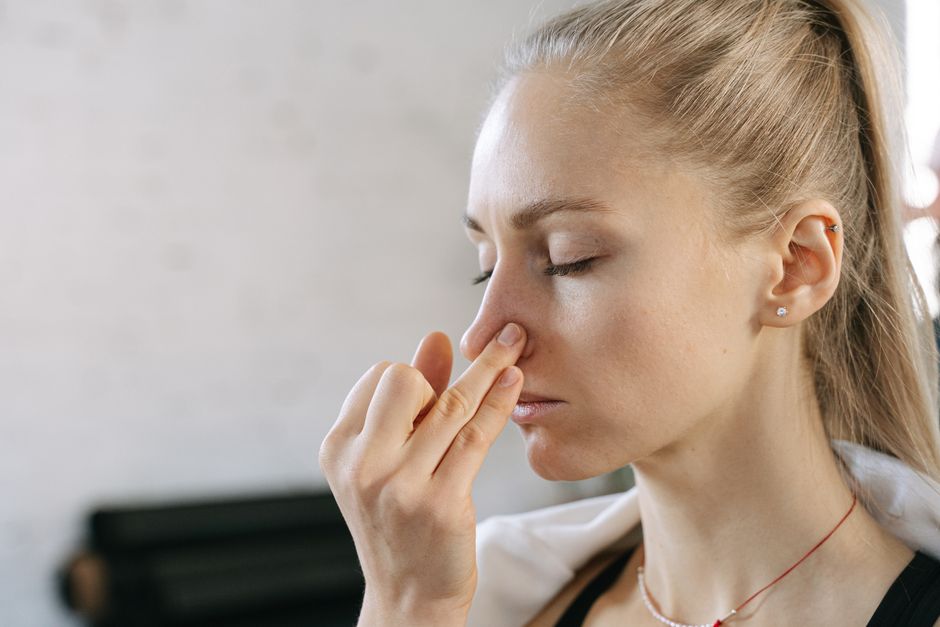
A random nosebleed usually happens because a small blood vessel in the front of the nasal septum has dried out and cracked. The septum is the wall that divides your nostrils, and it carries a dense web of tiny vessels close to the surface. When the air around you gets dry, or you rub or blow your nose, that fragile spot can open and bleed. Most random nosebleeds are not a sign of anything serious.
Why Did Your Nose Bleed Randomly?
The front of your nasal septum sits in a spot doctors call Kiesselbach’s plexus. It is a meeting point for several arteries, and the vessels there are thin and near the surface. That combination makes it the source of most nosebleeds.
These vessels are easy to injure. Dry air pulls moisture from the nasal lining, and the tissue can crust and crack. A small crack in a vessel wall is enough to start bleeding. This is why nosebleeds are more common in winter, in heated indoor air, and in dry climates.
There is a detail many people miss. The nose does not bleed at random in the sense of having no cause. There is almost always a trigger, even if you did not notice it. A dry room overnight, a hand brushing your face, or a hard sneeze can all open a vessel you never knew was irritated.
Most nosebleeds come from the front of the nose. These are called anterior nosebleeds, and they are usually easy to stop. Bleeding from deeper in the nose is less common and can be harder to control.
What Causes a Nosebleed With No Warning?
Dry air is the most common cause. When the nasal lining dries out, it loses the thin layer of mucus that protects the vessels underneath. Without that protection, the tissue cracks and bleeds.
Other common triggers include:
- Picking or rubbing the inside of the nose
- Blowing your nose hard
- Colds, allergies, or sinus infections that inflame the lining
- Nasal sprays used for more than a few days in a row
- Certain medications, including some blood thinners and anti-inflammatory drugs
- A deviated septum or other structural issue that exposes vessels
- High altitude, where the air holds less moisture
Some causes are less obvious. A nosebleed can follow a minor injury you barely remember. It can also come from repeated exposure to cigarette smoke, which irritates the nasal lining over time.
Blood thinners do not create nosebleeds out of nothing. They make a small bleed last longer and stop more slowly. If you take a blood thinner and get frequent nosebleeds, that is worth mentioning to your doctor.
Is a Random Nosebleed Ever a Sign of Something Serious?
Most random nosebleeds are not dangerous. The large majority come from the front of the nose and stop on their own or with simple pressure. They are annoying more than alarming.
That said, some patterns deserve medical attention. Talk to a doctor if:
- Bleeding lasts more than 20 minutes despite pressure
- You get nosebleeds often, such as several times a week
- Bleeding is heavy or you feel weak, dizzy, or faint
- It started after a head injury or a fall
- You take a blood thinner and bleeding is hard to stop
- You also bruise easily or have bleeding from other areas
- It happens in a child under age 2
These signs do not mean something is wrong. They mean a doctor should check. In rare cases, frequent nosebleeds can point to a bleeding disorder, high blood pressure that is not controlled, or a growth in the nose. Those causes are uncommon, but they are reasons to get evaluated rather than wait.





How Do You Stop a Nosebleed the Right Way?
Most people tilt their head back when their nose bleeds. That is the wrong move. Tilting back sends blood down your throat, which can make you swallow it and feel sick.
Do this instead:
- Sit upright and lean slightly forward
- Pinch the soft part of your nose, just below the bony bridge
- Hold steady pressure for 10 to 15 minutes without letting go to check
- Breathe through your mouth
- Spit out any blood that reaches your mouth rather than swallowing it
Letting go early to peek is a common mistake. It breaks the clot that is forming and restarts the bleed. Hold the full time before you check.
If pressure does not work, a decongestant nasal spray can sometimes help shrink the vessels. This is a common step in clinical settings. It is not a substitute for pressure, and it should not be used long term.
How Can You Prevent Nosebleeds From Coming Back?
Keeping the nasal lining moist is the main way to lower your risk. A few simple habits help.
- Use a saline nasal spray or gel to keep the lining moist
- Run a humidifier in your bedroom, especially in winter
- Keep fingernails short and avoid picking
- Blow your nose gently
- Limit nasal decongestant sprays to a few days
A thin layer of petroleum jelly or a saline gel inside the nostrils can help protect the tissue. This is a common practice, though the evidence that it prevents nosebleeds is limited. It is low risk and many people find it helps.
If you take a blood thinner, do not stop it on your own because of nosebleeds. Call your doctor instead. Stopping these medications without guidance can be dangerous.
When Should You See a Doctor About Nosebleeds?
See a doctor if nosebleeds are frequent, hard to stop, or come with other symptoms. Frequent means several times a week or more. Hard to stop means bleeding that continues past 20 minutes of steady pressure.
A doctor can look inside your nose to find the source. If there is a visible vessel, a procedure called cautery can seal it. This is often done in the office. For more stubborn cases, a doctor may pack the nose or refer you to an ear, nose, and throat specialist.
You should also get checked if nosebleeds started after you began a new medication, or if they come with easy bruising or bleeding gums. Those can be clues that point to a clotting issue.
Does High Blood Pressure Cause Nosebleeds?
The link between high blood pressure and nosebleeds is weaker than many people assume. Some studies suggest a connection, but the evidence is mixed. High blood pressure is not a well-established direct cause of random nosebleeds.
What high blood pressure can do is make a bleed harder to stop once it starts. If you have frequent nosebleeds and also have high blood pressure, both are worth discussing with your doctor. Do not assume one explains the other.
Do Nosebleeds Mean Anything Different in Adults and Children?
Nosebleeds are common in children, and they are usually minor. Kids pick their noses, and their nasal linings are delicate. Dry air and colds make it worse. Most childhood nosebleeds come from the front of the nose and are easy to manage.
In adults, the same front-of-nose causes apply. But adults are more likely to take blood thinners or have other health conditions that affect bleeding. That is why persistent nosebleeds in adults get more attention.
In older adults, nosebleeds can sometimes come from deeper vessels and be harder to control. That does not mean they are always serious. It means they may need a doctor’s help to stop.
Frequently Asked Questions
Why did my nose bleed randomly for no reason?
There is almost always a cause, even if you did not notice it. Dry air, rubbing your nose, or a hard sneeze can crack a small vessel in the front of the septum.
Is a random nosebleed a sign of cancer?
It is very unlikely. Most nosebleeds come from dry or irritated tissue in the front of the nose, not from cancer. See a doctor if nosebleeds are frequent, one-sided, or come with a blocked nose that does not clear.
How long should a nosebleed last before I worry?
A nosebleed that keeps bleeding past 20 minutes of steady pressure needs medical attention. Most stop within 10 to 15 minutes with proper pinching.
Should I tilt my head back during a nosebleed?
No. Tilting back sends blood down your throat and can make you feel sick. Sit upright, lean forward, and pinch the soft part of your nose.
