
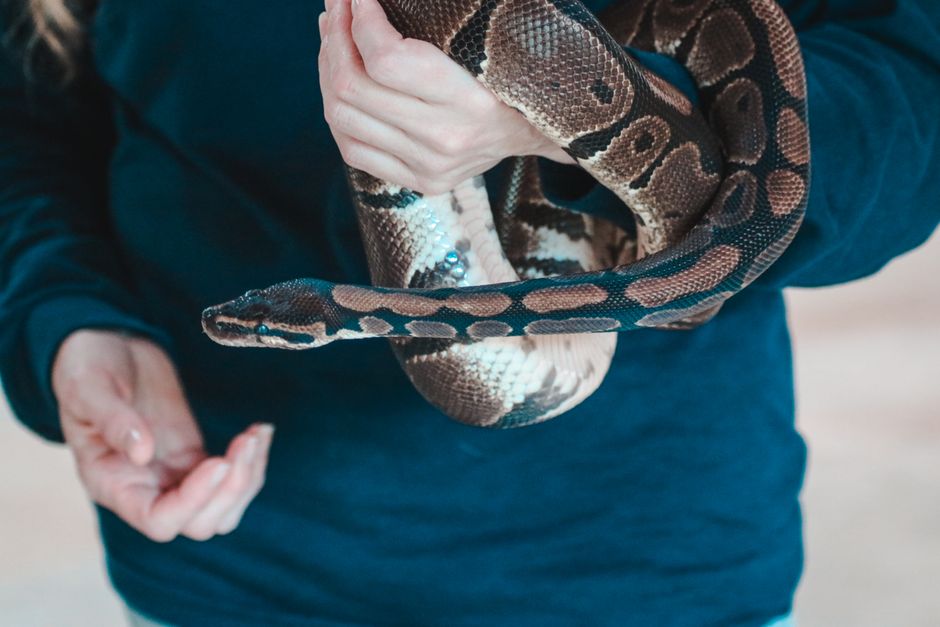
A ball python bite is almost always a feeding response or a defensive reaction, not aggression. Ball pythons are non-venomous constrictors, and they bite for a small number of predictable reasons: they smelled food, they felt threatened, or they were startled. Most bites happen during feeding or handling around feeding time, and most are fixable once you identify the trigger.
The bite itself is usually minor. Ball pythons have rows of small, backward-curving teeth designed to hold prey, not to tear flesh. A bite typically leaves shallow puncture marks. The real work is figuring out why it happened so you can prevent the next one.
Why Did My Ball Python Bite Me?
Ball pythons bite for two broad reasons: feeding response or fear. Almost every bite fits one of these categories. Understanding which one applies to your situation is the first step to fixing it.
A feeding response happens when the snake’s brain registers “food.” Ball pythons rely heavily on smell and heat detection. If your hands smell like rodents, or if you reach into the enclosure during the time your snake expects to eat, a bite can follow. This is not the snake being mean. It is a reflex tied to hunting.
A defensive bite happens when the snake feels cornered, picked up too quickly, or handled after a stressful event. Ball pythons are naturally shy. They are more likely to ball up and hide than bite, which is where their name comes from. When they do bite defensively, it often comes with a strike and immediate release rather than a held grip.
There is a third, less common trigger: a startled or disturbed snake. Reaching into a hide, waking a sleeping snake abruptly, or sudden movement near the enclosure can produce a quick bite. This overlaps with defensive behavior but is worth separating because the fix is different.
How Can You Tell a Feeding Bite From a Defensive Bite?
The two bite types look and feel different, and the difference tells you what to fix. A feeding bite usually involves a fast strike followed by a hold. The snake may wrap its body around your hand, treating it like prey. It may take a moment to let go.
A defensive bite is typically a quick strike and release. The snake may hiss, flatten its head, or retreat immediately after. It often happens when you approach from above, which mimics a predator to a ground-dwelling snake.
This distinction matters because the solutions are different. A feeding bite means you need to adjust how you handle food and feeding. A defensive bite means you need to adjust how you approach and handle the snake itself.
What Are the Most Common Causes of Ball Python Bites?
Most bites trace back to a handful of everyday mistakes. Here are the ones that come up most often.
- Scent transfer. Handling rodents and then reaching for your snake without washing your hands. The smell of prey on your skin triggers a feeding response.
- Feeding with your hands. Offering prey by hand instead of with tongs teaches the snake that hands bring food.
- Handling too soon after feeding. Snakes are still in a heightened feeding state for a period after eating. Handling during this window raises bite risk.
- Reaching in during feeding time. If you open the enclosure around the time your snake expects food, it may strike at whatever enters first.
- Approaching from above. Coming down over a ball python’s head can trigger a defensive strike.
- Sudden handling. Grabbing or lifting a snake without letting it register your presence first.
- Stress from poor enclosure conditions. A snake that feels exposed or uncomfortable may be more reactive to handling.
One point worth clarifying: ball pythons do not bite out of spite, and they do not “turn aggressive” as a breed. Temperament is largely individual, and a bite is almost always a response to a specific stimulus. If your snake bit you, something in its environment or your routine triggered it.





How Do You Fix Feeding-Response Bites?
The fix for feeding bites is to break the link between your hands and food. Ball pythons learn associations quickly, and once they connect hands with prey, that connection is hard to undo without changing your routine.
Feed with tongs, not your hands. Offer the prey item at a distance so the snake strikes the food, not your fingers. This single change prevents a large share of feeding bites.
Wash your hands before handling your snake, especially after touching rodents or any prey item. Even trace scent can trigger a strike. Some keepers also use a separate set of tools for feeding to avoid transferring scent.
Do not handle your snake for a period after feeding. The exact time varies, but many keepers wait at least 24 to 48 hours after a meal before handling. This is common practice rather than a strict rule backed by controlled studies, but it aligns with the snake’s digestive state and reduced activity after eating.
If your snake is striking at the glass or at your hands when you pass the enclosure, it may be hungry or may be anticipating food. Check your feeding schedule and make sure the snake is eating appropriately for its size and age.
How Do You Fix Defensive Bites?
Defensive bites are fixed by changing how you approach and handle your snake. The goal is to reduce the sense of threat.
Approach from the side, not from above. Let the snake see your hand before you touch it. Many keepers gently touch the snake’s side or use a hook to signal that handling is about to begin. This gives the snake a moment to register what is happening.
Support the snake’s body when you pick it up. A ball python that feels unsupported may grip or strike. Use both hands and let the snake move at its own pace rather than restraining it.
Keep handling sessions calm and brief, especially with a new snake. Give the animal time to settle into its enclosure before regular handling. A newly acquired ball python often needs a period of adjustment before it is comfortable being handled.
Review your enclosure setup. A ball python with appropriate hiding spots, correct temperatures, and a secure feeling is generally less reactive. A snake that feels exposed has more reason to defend itself.
What Should You Do Right After a Ball Python Bites You?
Stay calm and do not pull away sharply. A feeding bite may involve the snake holding on, and yanking your hand can cause more damage to you and to the snake’s teeth. Let the snake release on its own, or gently support it until it lets go.
Wash the bite area with soap and water. Ball python bites are usually shallow, but any animal bite can introduce bacteria into the skin. Clean the wound and monitor it.
Watch for signs of infection over the following days: increasing redness, swelling, warmth, or pus. Seek medical care if these appear. People with weakened immune systems should be especially cautious with any animal bite.
Check the snake for retained teeth. Ball python teeth are small and can break off in the skin. If you notice a fragment, it can usually be removed with clean tweezers, but see a healthcare provider if it is embedded or if the wound is not healing.
Can You Prevent Ball Python Bites Entirely?
You can greatly reduce the risk, but no handling routine eliminates every bite. Snakes are animals with instincts, and occasional mistakes happen even with experienced keepers.
The main preventive steps are consistent: feed with tongs, wash your hands, avoid handling around feeding time, approach from the side, and keep the enclosure comfortable. These address the most common triggers.
It also helps to learn your individual snake’s body language. A ball python that is hungry may be more active and alert near the front of the enclosure. One that is stressed may stay hidden or move away. Reading these cues lets you choose when to handle and when to leave the snake alone.
If bites continue despite these changes, consider whether the snake is being fed often enough or whether the enclosure setup needs adjustment. Persistent biting is usually a sign that something in the routine or environment is not working, not that the snake is aggressive by nature.
Frequently Asked Questions
Are ball python bites dangerous?
Ball python bites are rarely dangerous because the snake is non-venomous and its teeth are small. The main risk is minor wound infection, so clean the bite and watch for signs of redness or swelling.
Why did my ball python bite me and not let go?
A bite that holds on is usually a feeding response, where the snake treats your hand as prey. Let it release on its own rather than pulling away, and feed with tongs in the future to prevent it.
Do ball pythons bite when they are hungry?
Yes, hunger is one of the most common reasons for a feeding-response bite. A hungry ball python may strike at hands or movement near the enclosure, especially around feeding time.
How long after feeding should I wait to handle my ball python?
Many keepers wait at least 24 to 48 hours after feeding before handling. This is common practice rather than a strict rule backed by controlled studies, but it reduces stress and bite risk.
