
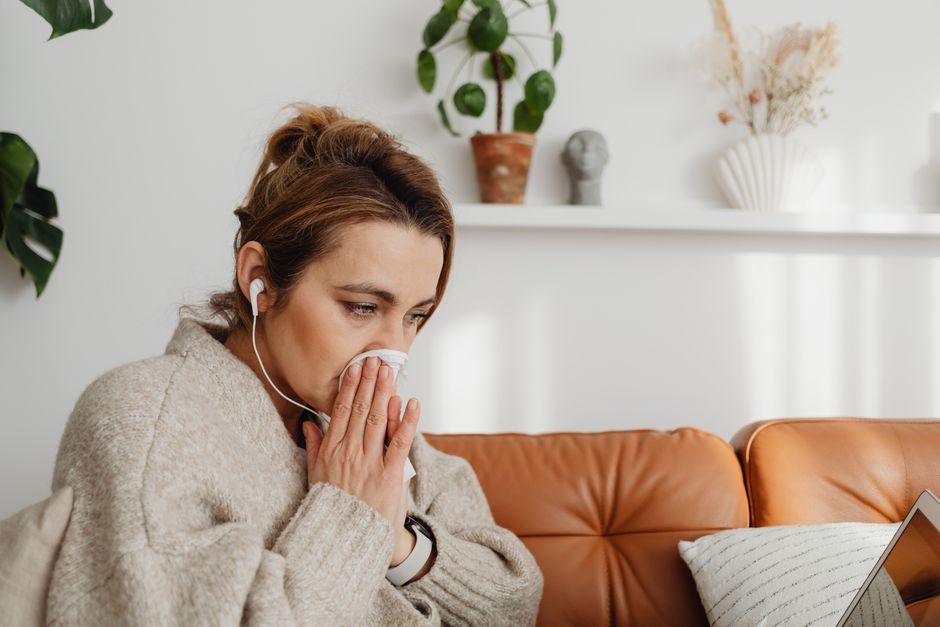
Sneezing is a reflex your body uses to clear irritants from your nasal passages, and it usually stops once the trigger is gone. When sneezing won’t stop, it means something is repeatedly activating that reflex — most often allergies, a cold or sinus infection, or physical irritants in the air. The pattern of your sneezes, how long they last, and what comes with them point to the cause.
Why Can’t I Stop Sneezing?
Sneezing is controlled by a reflex arc in your brainstem. When nerve endings in your nose detect something they consider an irritant, they send a signal that triggers a sudden, forceful expulsion of air. That burst of air is meant to clear the irritant out.
The reflex doesn’t stop until the trigger stops. If you’re sneezing repeatedly, something is continuously stimulating those nerve endings. That’s the core mechanism behind almost every cause of persistent sneezing.
Common triggers fall into a few categories:
- Allergens — pollen, dust mites, pet dander, mold spores
- Infections — viral colds, flu, sinus infections
- Physical irritants — smoke, strong odors, pollution, temperature changes
- Medications — some nasal sprays and certain drugs
- Structural issues — nasal polyps, deviated septum
- Non-allergic rhinitis — sensitivity to irritants without an allergic response
Each of these works through a slightly different pathway. Figuring out which one applies to you comes down to timing, pattern, and what else is happening in your body.
What Is the Most Common Cause of Frequent Sneezing?
Allergic rhinitis is the most common cause of repeated sneezing. It affects a large share of adults in the United States, and sneezing is one of its hallmark symptoms.
When you have an allergy, your immune system mistakenly identifies a harmless substance — pollen, for example — as a threat. It releases histamine and other chemicals. Histamine irritates nerve endings in your nose, which triggers the sneeze reflex. It also causes itching, runny nose, and congestion.
The key clue is timing. Allergic sneezing tends to follow a pattern:
- It happens in specific situations or seasons
- It comes in bursts, often several sneezes in a row
- It’s accompanied by itchy, watery eyes or an itchy nose or throat
- It improves when you leave the environment where the allergen is present
Seasonal allergic rhinitis is usually triggered by tree, grass, or weed pollen. Perennial allergic rhinitis — which happens year-round — is more often caused by dust mites, pet dander, mold, or cockroach particles.
If your sneezing doesn’t follow any seasonal or situational pattern and isn’t linked to itching, allergies may not be the cause.
Can a Cold or Sinus Infection Cause Nonstop Sneezing?
Yes. Viral upper respiratory infections commonly cause sneezing, especially in the first few days. The virus inflames the nasal lining, which makes the nerve endings more sensitive. Even small amounts of mucus or irritants can then trigger sneezing.
With a cold, sneezing usually peaks early and fades as the infection clears. Most colds improve within about a week to ten days, though some symptoms can linger a bit longer.
Sinus infections are a bit different. They often cause more facial pressure and congestion than sneezing, but sneezing can still happen. If sneezing is accompanied by thick yellow or green discharge, facial pain, and symptoms lasting more than ten days without improving, a bacterial sinus infection is possible and worth discussing with a doctor.
One distinction matters here: colds and allergies can look similar. Both cause sneezing, runny nose, and congestion. The difference is usually fever, body aches, and the timeline. Colds come on over a day or two and improve. Allergies come and go with exposure and don’t cause fever.





What Causes Sneezing That Isn’t From Allergies or a Cold?
Non-allergic rhinitis is a broad category for nasal inflammation that isn’t caused by an allergic response. It’s common and often underrecognized. The immune system isn’t reacting to an allergen, but the nose is still hypersensitive.
Common triggers for non-allergic rhinitis include:
- Sudden temperature or humidity changes
- Strong smells — perfume, cleaning products, smoke
- Air pollution and vehicle exhaust
- Alcohol
- Spicy foods
- Certain medications, including some blood pressure drugs and nasal decongestant sprays used too long
- Hormonal changes, including pregnancy
Medication-induced rhinitis is worth knowing about. Nasal decongestant sprays, when used for more than a few days in a row, can cause rebound congestion and increased sneezing. This is called rhinitis medicamentosa. It’s a common and often missed cause of persistent nasal symptoms.
Structural problems can also play a role. Nasal polyps — soft, non-cancerous growths in the nasal lining — can cause chronic sneezing, congestion, and a reduced sense of smell. A deviated septum can worsen symptoms but is less likely to cause sneezing on its own.
When Is Sneezing a Sign of Something More Serious?
Sneezing by itself is rarely a sign of a serious condition. It’s a normal reflex, and most causes are benign and treatable.
That said, certain patterns deserve medical attention:
- Sneezing with a high fever that doesn’t improve
- Facial swelling, especially around the eyes
- Difficulty breathing or wheezing alongside sneezing
- Symptoms that keep getting worse over weeks
- One-sided nasal blockage or bloody discharge
- Loss of smell that doesn’t return
- Sneezing that starts suddenly after a head injury
Sneezing after a head injury is uncommon but worth flagging. In rare cases, a skull fracture can cause cerebrospinal fluid to leak into the nasal passages, and that fluid can trigger sneezing. This is a medical emergency.
For most people, though, persistent sneezing points to an irritant or immune response, not something dangerous. The goal is to identify the trigger and reduce exposure or treat the underlying cause.
How Do You Figure Out What’s Triggering Your Sneezing?
Tracking your symptoms is the most practical first step. Note when sneezing happens, where you are, what you were doing, and what else you feel. Patterns often reveal the cause.
A few questions can help narrow it down:
- Does it happen only in certain places or seasons?
- Is it worse indoors or outdoors?
- Does it come with itching, or with fever and body aches?
- Did it start after a new medication or a new environment?
- Does it improve when you leave a specific space?
If allergies seem likely, a doctor can confirm with a skin prick test or a blood test that measures specific antibodies. These tests identify which allergens your immune system reacts to.
If allergies are ruled out, the focus shifts to non-allergic triggers, medication use, and structural causes. An exam of the nasal passages can check for polyps or other physical issues.
What Actually Helps Reduce Persistent Sneezing?
The most effective approach depends on the cause. There’s no single fix that works for everyone.
For allergic rhinitis, avoiding the allergen is the first step when possible. That means keeping windows closed during high pollen days, using dust mite covers on bedding, and keeping indoor humidity controlled. These steps reduce exposure but rarely eliminate symptoms entirely.
Medications that are commonly used include:
- Antihistamines — block histamine, which reduces sneezing and itching
- Intranasal corticosteroid sprays — reduce inflammation in the nasal lining; often more effective for ongoing symptoms than antihistamines alone
- Saline nasal rinses — flush out irritants and mucus; safe for most people when done with distilled or properly boiled water
- Decongestants — reduce swelling but should not be used long-term, especially nasal sprays
For non-allergic rhinitis, treatment focuses on avoiding triggers and using saline rinses or steroid sprays. Antihistamines tend to be less helpful because histamine isn’t the main driver.
If a medication is causing your symptoms, a doctor may adjust the dose or switch to a different drug. Don’t stop a prescribed medication without talking to your doctor first.
One thing worth being clear about: no treatment works for every cause of sneezing. What helps allergic sneezing may do nothing for non-allergic sneezing, and vice versa. Matching the treatment to the cause matters more than trying everything.
Frequently Asked Questions
Why can’t I stop sneezing all of a sudden?
A sudden onset of repeated sneezing usually means you’ve been exposed to a new irritant or allergen, or you’re in the early stage of a viral infection. If it started right after being in a specific place or around a specific substance, that environment is the likely trigger.
Is sneezing a lot a sign of allergies?
Frequent sneezing is one of the most common signs of allergic rhinitis, especially when it comes with itching, a runny nose, or watery eyes. But non-allergic rhinitis and viral infections can cause the same pattern, so sneezing alone doesn’t confirm allergies.
Can stress or anxiety make you sneeze more?
There’s no strong evidence that stress directly causes sneezing, but stress can affect the immune system and nasal sensitivity in ways that might worsen existing symptoms. The link is not well established.
How long is too long to be sneezing?
Sneezing from a cold typically improves within about a week to ten days. If sneezing lasts longer than that, keeps getting worse, or comes with fever, facial pain, or one-sided blockage, it’s worth seeing a doctor.
