
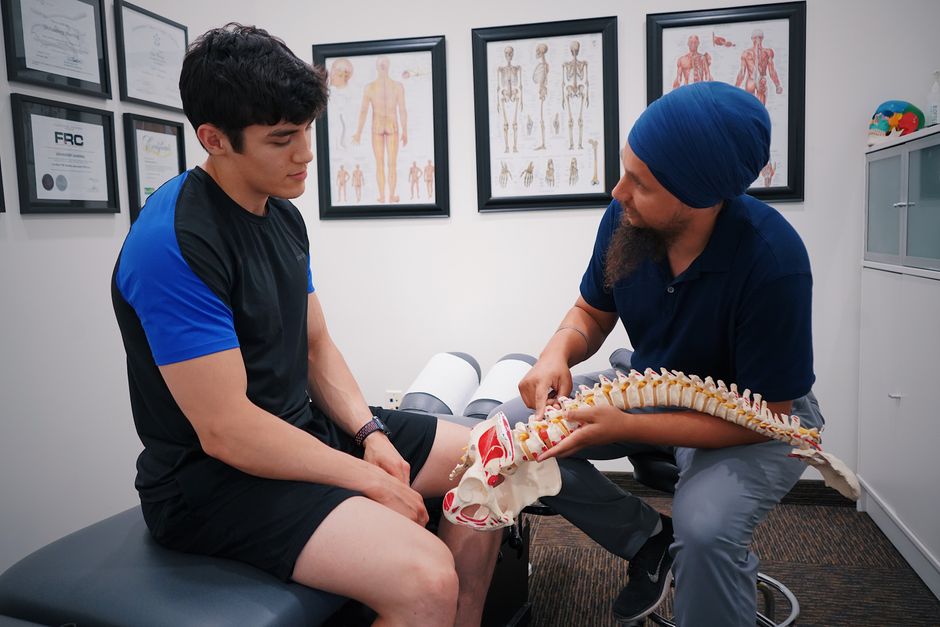
Spinal decompression is any technique that takes pressure off the spinal cord, nerve roots, or the spaces between vertebrae. Some forms are surgical, some are done with traction devices in a clinic, and some are passive stretching you can do at home. The word describes a goal, not one single procedure. That is why two people can both say they had “spinal decompression” and be describing completely different things.
What Is Spinal Decompression and How Does It Work?
Decompression works by creating space. In the spine, nerves travel through openings called foramina and through the central spinal canal. When a disc bulges, when bone spurs form, or when tissue thickens, those openings narrow. A nerve gets squeezed. That pressure is what produces pain, numbness, tingling, or weakness.
The body’s own traction response is the basis for most non-surgical decompression. When a steady gentle pull is applied to the spine, vertebrae separate slightly. The theory is that this reduces pressure on the disc and nerve, and may allow a bulging disc to retract. Whether that retraction actually happens in a living person is where the evidence gets thinner.
What is well established is that narrowing of the spinal canal and nerve openings causes symptoms. What is less established is how much a traction table changes the underlying anatomy over time. Studies have measured small changes in disc height and pressure during traction, but these are short-term measurements, not proof of lasting structural repair.
What Are the Different Types of Spinal Decompression?
There is no single decompression. The term covers a wide range of approaches, and they are not interchangeable.
- Surgical decompression. A surgeon physically removes whatever is pressing on the nerve. This can mean removing part of a vertebra (laminectomy), removing bone spurs, or removing part of a herniated disc (discectomy). This is the most direct form of decompression and the most studied.
- Non-surgical mechanical traction. A motorized table or device applies a controlled pull to the spine. It may be continuous or intermittent. This is what most clinics mean when they advertise “spinal decompression therapy.”
- Manual traction. A physical therapist or chiropractor uses their hands to apply a stretch. The force is far lower than a machine.
- Inversion and positional traction. Hanging upside down or using a traction bench uses body weight to create a gentle pull.
- At-home devices. Doorway traction kits, inflatable neck collars, and similar products are sold directly to consumers.
These methods differ enormously in the force applied, the duration, and the training required to use them. A study on one does not automatically tell you anything about another.
Does Non-Surgical Spinal Decompression Actually Work?
The evidence is mixed, and it is weaker than most clinic marketing suggests.
Some studies have found that mechanical traction reduces short-term pain in people with disc-related low back pain or sciatica. Other studies have found that traction performs no better than a sham treatment or than standard physical therapy. A common problem is that many of these studies are small, and the results do not point in one direction.
For neck pain and cervical radiculopathy, the picture is similar. Some research suggests traction may help, but the quality of the evidence is low to moderate. That means we cannot say with confidence that the traction itself is doing the work.
This matters because pain is complicated. A person lying on a traction table for 30 minutes is also resting, being touched, and paying attention to their body. Any of those things can reduce pain on their own. Without a convincing control group, it is hard to separate the device from the experience.
What the evidence does not support is the claim that non-surgical decompression “rehydrates” discs, “regrows” cartilage, or permanently reverses degeneration. No large human trial has confirmed those claims.





How Does Surgical Decompression Compare?
Surgical decompression has a clearer evidence base for specific problems. When a nerve is compressed badly enough to cause progressive weakness, loss of bladder or bowel control, or severe pain that has not improved with conservative care, surgery is often considered. In those situations, removing the pressure directly can relieve symptoms that nothing else will.
For milder cases, the picture changes. Studies comparing surgery to non-surgical care for common conditions like lumbar spinal stenosis have found that both groups can improve, and the differences are not always large. Some people do better with surgery. Some do just as well without it.
Surgery also carries real risks: infection, bleeding, nerve injury, and the possibility that symptoms return. That is not a reason to avoid it when it is needed. It is a reason not to treat it as a casual first step.
Who Might Benefit From Spinal Decompression?
Non-surgical decompression is most often tried for:
- Herniated or bulging discs
- Sciatica from disc pressure
- Spinal stenosis
- Degenerative disc disease
- Neck pain with arm symptoms (cervical radiculopathy)
It is generally not appropriate for people with certain conditions, including spinal fractures, spinal tumors, severe osteoporosis, or an active infection in the spine. Some clinicians also avoid it during pregnancy, though guidance here is not standardized.
If you are considering it, the honest position is this: it may help some people, it is unlikely to cause serious harm when performed by a trained provider, and it is not a guaranteed fix. Anyone who tells you otherwise is selling something.
What Are the Risks and Limitations?
Non-surgical decompression is generally considered low risk when done properly. Reported side effects are usually mild and short-lived: muscle soreness, temporary increase in pain, or stiffness.
The bigger risk is delay. If a serious problem is causing your symptoms and you spend months on a traction table instead of getting it evaluated, that time is lost. Progressive weakness, numbness in the groin area, or trouble controlling your bladder or bowel are reasons to seek medical care immediately, not to try decompression first.
Cost is another limitation. Sessions are often sold in packages, and insurance coverage varies. Because the evidence is mixed, some insurers do not cover it. That is worth checking before committing to a course of treatment.
What Else Helps Back and Neck Pain?
For most people with common back pain, the treatments with the strongest evidence are not dramatic. Staying active, avoiding prolonged bed rest, and doing guided exercise all have solid support. Physical therapy focused on strength and movement is widely recommended.
Over-the-counter pain relievers help some people. For persistent pain, some clinicians recommend other approaches, though which one works best varies from person to person. There is no single answer that fits everyone.
What does not have strong evidence: relying on any one passive treatment, including decompression, as a standalone fix. Passive treatments can reduce pain in the short term. They do not build the strength and movement patterns that protect the spine over years.
Frequently Asked Questions
Is spinal decompression the same as traction?
Non-surgical spinal decompression is a form of traction, though the term is often used to describe motorized tables that apply a controlled pull. Manual traction and inversion are related but use different forces.
Does spinal decompression really work?
The evidence is mixed. Some studies show short-term pain relief, while others find it works no better than sham treatment or standard physical therapy.
How long does spinal decompression take to work?
There is no reliable timeline supported by strong evidence. Some people report relief within a few sessions, while others see no change at all.
Is spinal decompression safe?
It is generally considered low risk when performed by a trained provider, but it is not appropriate for everyone. People with spinal fractures, tumors, severe osteoporosis, or spinal infection should not use it.
