
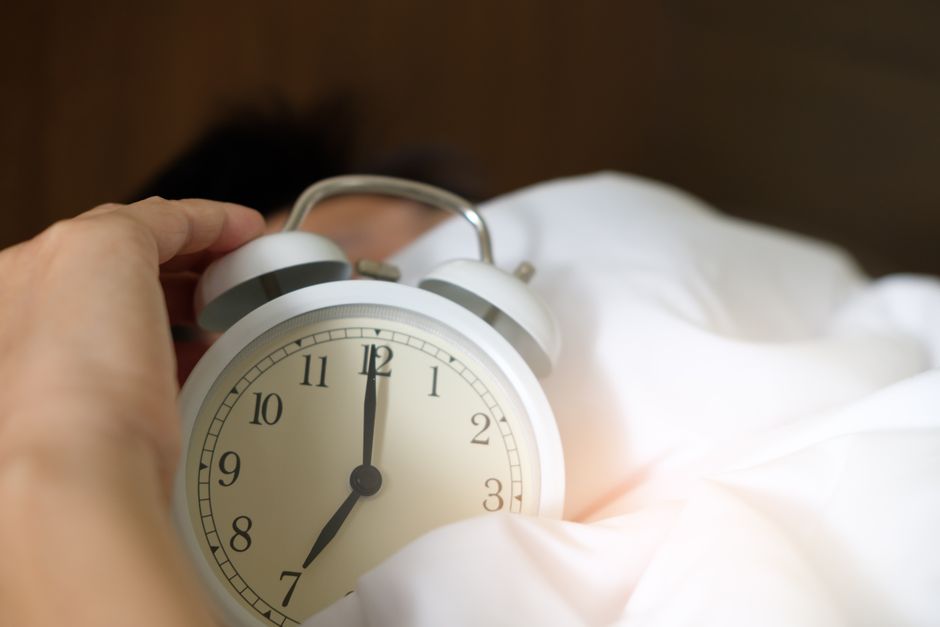
You slept seven or eight hours. The alarm goes off, and you feel like you barely closed your eyes. That heavy, foggy, dragging feeling has a name in sleep medicine: sleep inertia. It is the grogginess you feel during the transition from sleep to full wakefulness, and for most people it fades within 15 to 30 minutes. When it does not fade — when you feel exhausted all day no matter how long you stay in bed — the cause is usually something measurable: your sleep architecture, a sleep disorder, a medication, or a medical condition. Not laziness. Not a character flaw.
Why Are You So Tired When I Wake Up?
Waking up tired happens when your brain did not complete the sleep stages that restore it, or when something repeatedly pulled it out of those stages.
Sleep is not one uniform state. It cycles through stages roughly every 90 minutes. Deep sleep — called slow-wave sleep — is when the body repairs tissue and the brain clears metabolic waste. REM sleep is when emotional processing and memory consolidation largely happen. Both matter. If you spend enough total hours in bed but keep getting pulled out of deep sleep, you can wake up feeling like you hardly slept, because in a real sense your brain did not get the restorative part of the night.
Two things commonly break up that architecture. The first is fragmentation: brief arousals you do not remember, sometimes dozens per hour. The second is timing: sleeping at hours that fight your internal body clock. Either one can leave you tired after eight hours in bed.
What Is Sleep Inertia and Why Does It Feel So Bad?
Sleep inertia is the normal, temporary grogginess between waking and being fully alert. It is not a disorder, and everyone experiences it to some degree.
The feeling is worst when you wake suddenly from deep sleep — say, to an alarm — rather than surfacing naturally from a lighter stage. During that window, blood flow to parts of the brain is still ramping up, and your core body temperature is at its lowest point of the 24-hour cycle. Reaction time, memory, and decision-making are measurably worse for a short period. That is why you can feel almost drunk for a few minutes after a hard wake-up, even after a full night.
For most healthy adults, sleep inertia clears within about 15 to 30 minutes. Light exposure and movement tend to speed it along. It is not something you can think your way out of, and it is not a sign that something is wrong by itself.
What matters is the pattern. If the fog lifts by mid-morning, that is ordinary sleep inertia. If it never lifts, look elsewhere.
Is Your Sleep Actually Restorative?
Time in bed is not the same as time asleep, and time asleep is not the same as restorative sleep. This is where a lot of people get stuck.
You can lie down for eight hours and sleep for six of them. You can sleep for eight hours and spend almost none of it in deep sleep. The number on the clock does not tell you which happened. Several things reliably reduce deep sleep and increase fragmentation:
- Alcohol near bedtime. It can help you fall asleep faster, then it disrupts the second half of the night and suppresses REM sleep.
- Caffeine in the afternoon or evening. Caffeine has a long half-life, meaning a meaningful amount can still be circulating at bedtime.
- Late heavy meals and reflux, which worsen when you lie flat.
- Bedroom temperature that is too warm. Core body temperature needs to drop for sleep to begin and deepen.
- Irregular sleep and wake times, which keep your body clock from settling.
None of these are exotic. Together they explain a large share of ordinary morning fatigue.





When Waking Up Tired Points to a Sleep Disorder
If you sleep what looks like a full night, keep good habits, and still wake up exhausted, a sleep disorder moves toward the top of the list.
Obstructive sleep apnea is the most common one. The airway repeatedly narrows or closes during sleep, breathing briefly stops, and the brain rouses you just enough to reopen the airway. These arousals are usually too short to remember. Someone with significant apnea can be pulled out of sleep dozens of times an hour and have no memory of any of it. Loud snoring, gasping or choking sounds, witnessed pauses in breathing, and waking with a dry mouth or headache are common clues. So is feeling tired despite a full night. The condition is diagnosed with a sleep study, not by how tired you feel.
Other possibilities include insomnia, where the problem is falling or staying asleep; restless legs syndrome, an urge to move the legs that is worse at rest and in the evening; and circadian rhythm disorders, where your internal clock is out of step with your schedule — common in shift workers and in people who stay up very late and wake early.
One clarification worth making: feeling tired and feeling sleepy are not the same thing. Sleepiness is the urge to fall asleep — nodding off in meetings, while driving, watching TV. Fatigue is a lack of energy and motivation without necessarily wanting to sleep. Sleepiness points more toward a sleep problem. Fatigue alone points more toward a medical or mood cause. If you are dozing off during the day despite adequate time in bed, that is a signal to get evaluated.
Could a Medical Condition Be the Cause?
Yes. Morning exhaustion is not always about sleep. Several medical conditions produce it, and they are easy to miss because they develop slowly.
Anemia — low red blood cells or low hemoglobin — reduces oxygen delivery to tissues and causes persistent tiredness. It is diagnosed with a simple blood test. Hypothyroidism, an underactive thyroid, slows metabolism and commonly causes fatigue, cold intolerance, and weight change. Type 2 diabetes and poorly controlled blood sugar can cause fatigue, as can sleep apnea itself, which often travels with diabetes and weight gain.
Depression and anxiety deserve specific mention. Both are strongly associated with waking up tired and with disrupted sleep architecture. Morning fatigue is sometimes one of the earliest signs, appearing before someone recognizes the mood component at all.
Medications are another common contributor. Some antidepressants, blood pressure medications, antihistamines, and muscle relaxants cause drowsiness or suppress deep sleep. If your fatigue started or worsened after a medication change, that timing is worth raising with your clinician.
None of this can be sorted out by how you feel alone. Blood work and, when indicated, a sleep study are what separate these causes.
What Actually Helps You Wake Up Less Tired
The fixes that help most are the ones aimed at the specific cause, not at the feeling. Still, a few steps address the most common contributors.
Keep your wake time consistent, including weekends. A steady wake time anchors your body clock more effectively than a steady bedtime. Get bright light soon after waking, ideally natural light, because light is the strongest signal your internal clock uses.
Give caffeine a cutoff well before bed. Because of its long half-life, an afternoon coffee can still be active at midnight. Keep alcohol away from bedtime, or at least recognize that it trades faster sleep onset for worse sleep quality.
If you snore loudly, gasp in your sleep, or feel sleepy during the day despite enough time in bed, talk to a clinician about a sleep study. This is the single highest-yield step for people with undiagnosed apnea, and it is not something you can self-diagnose.
If you have tried the basics and are still exhausted after several weeks, that is the point to seek evaluation rather than push through. Persistent morning fatigue is a symptom, and symptoms have causes that can usually be found.
Frequently Asked Questions
Why am I so tired when I wake up even after 8 hours of sleep?
Eight hours in bed does not guarantee eight hours of restorative sleep. Fragmented sleep, suppressed deep sleep from alcohol or caffeine, or an undiagnosed condition like sleep apnea can leave you tired despite the hours.
How long should morning grogginess normally last?
For most healthy adults, ordinary sleep inertia clears within about 15 to 30 minutes. If the fog lasts for hours or all day, that points to something beyond normal sleep inertia.
Is waking up tired a sign of a sleep disorder?
It can be, especially if you also snore loudly, gasp during sleep, or feel sleepy during the day. Obstructive sleep apnea is the most common cause and is diagnosed with a sleep study.
What medical conditions cause tiredness in the morning?
Anemia, hypothyroidism, diabetes, depression, and anxiety are common contributors, along with certain medications. Blood tests and a clinical evaluation are what identify the cause.
