
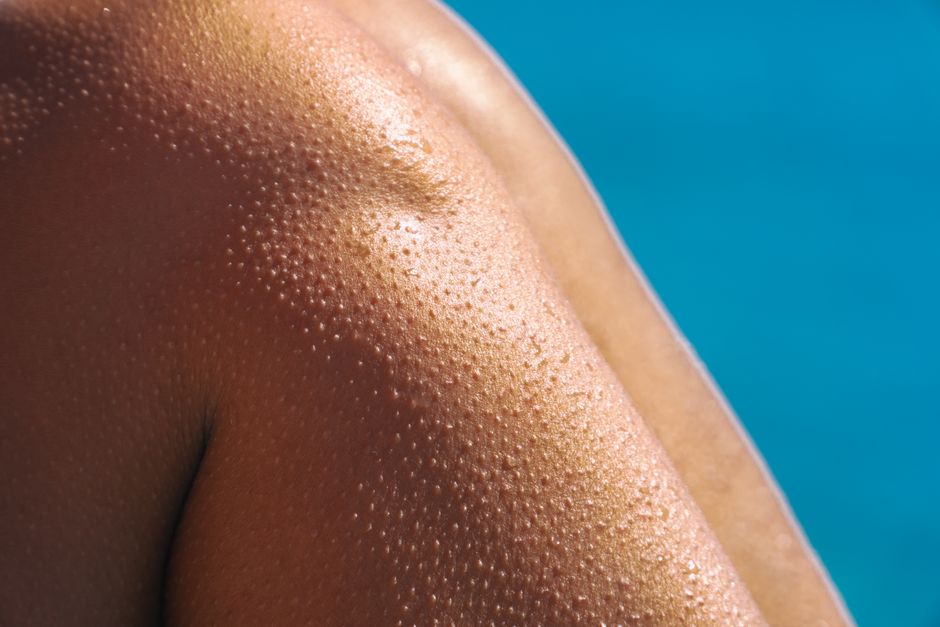
Goosebumps are the small bumps that appear on your skin when you are cold or scared. They happen when tiny muscles at the base of each hair follicle tighten, pulling the skin up around the hair. The name comes from the way the raised skin looks like the skin of a plucked goose or chicken.
Why Are They Called Goosebumps?
The term “goosebumps” is a direct reference to the appearance of a plucked goose. When a goose is prepared for cooking, its skin shows small raised bumps where feathers once grew. Human skin looks nearly identical when the tiny muscles under the skin contract.
The medical name for goosebumps is cutis anserina. In some countries people call them “chicken skin” or “goose pimples.” All of these names describe the same visual effect — skin that looks like a plucked bird.
Goosebumps are a normal body response, not a skin condition or a sign of illness. They are temporary and fade on their own.
What Causes the Bumps to Form?
Each hair on your body grows from a small sac called a follicle. At the base of that follicle is a tiny band of muscle called the arrector pili. This muscle is not under your conscious control. It responds to signals from your nervous system.
When the arrector pili muscle contracts, it pulls the hair follicle upward. The skin around the follicle rises with it, creating a small bump. The hair itself stands more upright. When many of these muscles contract at once, you see a pattern of bumps across your skin.
This response is automatic. You cannot make it happen by thinking about it. It is controlled by the part of your nervous system that also manages heart rate, digestion, and other involuntary functions.
Why Does Being Cold Cause Goosebumps?
The cold response is a leftover from our evolutionary past. In animals with thick fur, this muscle contraction traps a layer of air between the hairs. That air layer acts as insulation and helps the animal stay warm.
Humans no longer have enough body hair to benefit from this insulation. The response still happens, but it serves little practical purpose for temperature control. Your body sends the same signal it sent to your distant ancestors — but you simply do not have the fur to make it useful.
Being cold is the most common trigger. A sudden drop in temperature, a cold wind, or stepping into cold water can all cause goosebumps within seconds.





Why Do Strong Emotions Trigger Goosebumps?
Emotional goosebumps are a different pathway. Music, a moving speech, a frightening scene, or a powerful memory can all trigger the same muscle response.
The emotional trigger is linked to the brain’s reward system. When you experience something deeply moving, your brain releases dopamine and other chemical messengers. Some research suggests this response also activates the same nerve pathways that control the arrector pili muscles.
Studies using brain imaging have found that people who get goosebumps from music show stronger activity in brain areas associated with pleasure and emotional processing. This suggests goosebumps may be a physical sign of intense emotional engagement.
Not everyone gets emotional goosebumps. Research shows wide variation — some people experience them regularly, others almost never. This difference may be related to personality traits like openness to experience.
Are Goosebumps Ever a Sign of a Health Problem?
In most cases goosebumps are completely harmless. They come and go quickly and require no treatment.
There is one condition commonly called “chicken skin” that is not the same as goosebumps. Keratosis pilaris causes persistent rough bumps on the skin, usually on the upper arms, thighs, or buttocks. These bumps do not come and go. They are caused by a buildup of keratin blocking the hair follicles, not by muscle contraction.
Keratosis pilaris is harmless and very common. It affects nearly half of the population at some point. Moisturizers and gentle exfoliation can improve the appearance, but the condition often persists for years.
There is no medical condition where persistent goosebumps are the main symptom. If you notice bumps that do not go away, that is likely a different skin issue and worth mentioning to a doctor.
What Is the Fight-or-Flight Connection?
Goosebumps are part of the body’s stress response. When you feel threatened, your nervous system releases adrenaline. This hormone prepares your body to either fight or flee.
Adrenaline affects many parts of the body at once. It increases heart rate, redirects blood flow to muscles, dilates pupils, and — as part of the same response — causes the arrector pili muscles to contract.
In animals with thick fur, this response makes them appear larger to predators. A frightened cat or dog with raised fur looks bigger than it really is. Humans have the same response, but without enough body hair to create a dramatic effect.
This is why fear and cold produce the same physical reaction. Both signals travel through the same nervous system pathways. The body treats both situations as emergencies requiring a quick physical response.
Can You Control Goosebumps?
You cannot directly control goosebumps. They are an involuntary reflex, like blinking when something approaches your eye or jerking your hand away from a hot surface.
You can influence the triggers. Staying warm prevents cold-induced goosebumps. Managing stress and anxiety may reduce the frequency of emotional goosebumps. But even with these strategies, goosebumps will still happen from time to time.
Some people report they can generate goosebumps on demand by thinking about certain memories or imagining specific sensations. This is not well studied, but it is consistent with how the reflex works — the brain can activate the same pathways through thought alone.
There is no evidence that suppressing goosebumps is necessary or beneficial. They are a normal reflex that causes no harm.
Frequently Asked Questions
Are goosebumps caused by cold or fear?
Both. Cold and strong emotions activate the same tiny muscles at the base of each hair follicle.
Can goosebumps be a sign of a serious condition?
No. Goosebumps are a normal reflex and are not a symptom of any serious illness.
Why do some people get goosebumps from music?
Music can trigger the brain’s emotional processing centers, which send a signal that activates the same muscle response as cold or fear.
What is the difference between goosebumps and keratosis pilaris?
Goosebumps are temporary bumps caused by muscle contraction. Keratosis pilaris causes persistent rough bumps from blocked hair follicles.
