
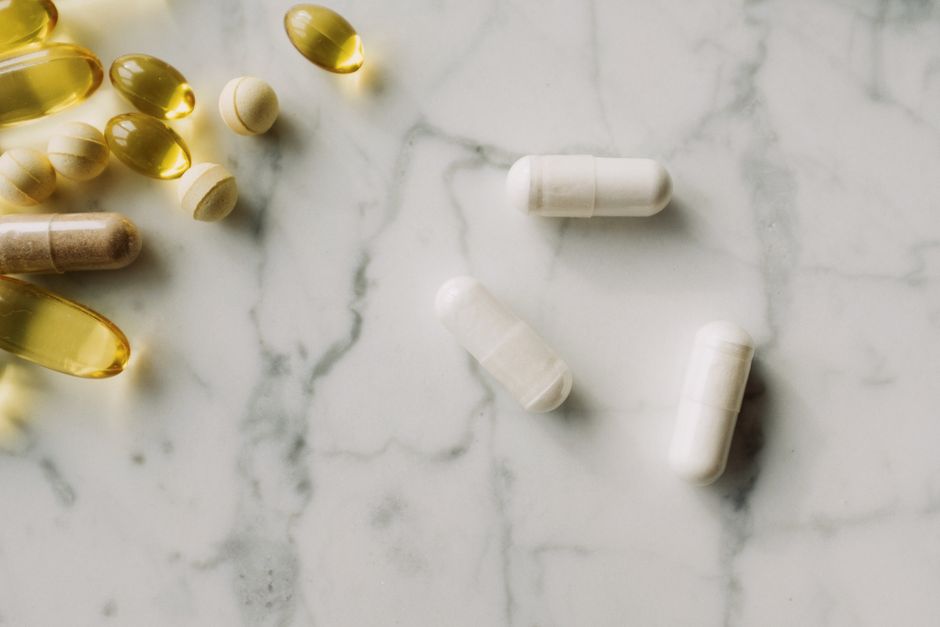
Omega-3 pills are large because the active ingredients, EPA and DHA, need to be delivered in high amounts to have any real effect, and the softgel form is the most practical way to keep them stable. A standard 1000 mg fish oil capsule actually contains far less EPA and DHA than you might think—often only 300 to 500 mg total. To get a clinically useful dose, you either swallow a giant capsule or take multiple smaller ones each day. There are alternatives, including smaller high-concentration pills, liquid oils, and plant-based sources, but each comes with trade-offs in cost, effectiveness, and convenience.
What Exactly Is Inside a Big Omega-3 Pill?
Most omega-3 softgels contain fish oil that has been processed and concentrated. The total weight on the label—say 1000 mg—includes the oil plus the softgel shell. The actual EPA and DHA content is usually listed separately in smaller print.
A typical 1000 mg softgel from a standard brand provides about 180 mg EPA and 120 mg DHA. That is 300 mg total. To reach the 1000 mg of combined EPA and DHA that research often uses, you would need three or four of those pills per day.
High-concentration pills try to pack more EPA and DHA into a smaller softgel. Some brands achieve 500 mg of EPA plus 200 mg of DHA in a single 1000 mg capsule. These pills are still large because the oil itself takes up space, and the softgel needs to be big enough to swallow without being fragile.
The size is not random. It is a direct result of trying to deliver a meaningful dose in a stable format that does not spoil quickly.
Why Do You Need Such a High Dose in the First Place?
Research has established effective doses for specific health outcomes. The American Heart Association recommends 1 gram (1000 mg) of EPA plus DHA per day for people with heart disease. For lowering triglycerides, doses of 2 to 4 grams daily are common in clinical studies.
These are not arbitrary numbers. Studies published in journals like the New England Journal of Medicine and JAMA have used these ranges to show benefits. Lower doses often fail to produce measurable changes in blood markers or symptoms.
The body does not absorb omega-3s perfectly either. Some of what you swallow gets broken down before it reaches your cells. Higher doses help ensure enough actually gets into your system to do something useful.
If you are taking omega-3s for general health maintenance, a lower dose may be fine. But if you have a diagnosed condition like high triglycerides or inflammation, the higher doses are what the evidence supports.
What Are the Best Alternatives to Giant Pills?
If you struggle with large softgels, you have several options. None are perfect, but one may fit your situation better than others.
High-concentration softgels are the most direct alternative. These pills contain more EPA and DHA per gram of oil. A single 1000 mg capsule might deliver 700 mg of active ingredients instead of 300 mg. You take fewer pills, but they are still large. Brands like Nordic Naturals and Viva Naturals offer these. They cost more per bottle.
Liquid fish oil avoids the pill problem entirely. You measure out a teaspoon or tablespoon. A typical 5 ml serving provides about 1000 mg of EPA plus DHA. The taste can be an issue, but flavored versions help. Refrigeration is required after opening. The bottle can be messy.
Algae oil is the plant-based option. It provides DHA directly, but most brands have little to no EPA. If you need EPA—which is the more anti-inflammatory of the two—algae oil may not meet your needs. Some newer brands are adding EPA through fermentation, but these are less common and more expensive.
Krill oil comes in smaller softgels because the oil is more concentrated in phospholipid form. The total EPA and DHA per capsule is lower than fish oil, often around 200 mg total. You may need more pills to reach the same dose. Krill oil is also pricier.
Here is a quick comparison of common forms:
| Form | Typical EPA/DHA per serving | Pill size | Cost per gram |
|---|---|---|---|
| Standard fish oil (1000 mg softgel) | 300 mg total | Large | Low |
| High-concentration fish oil | 600-700 mg total | Medium to large | Medium |
| Liquid fish oil (5 ml) | 1000 mg total | No pill | Low to medium |
| Algae oil (DHA only) | 200-500 mg DHA | Medium | High |
| Krill oil | 200 mg total | Small | High |


Does the Size of the Pill Affect How Well It Works?
No. The size of the softgel does not change how your body processes the oil. A large pill and a small pill with the same amount of EPA and DHA will work identically once swallowed.
What does matter is the form of the oil. Triglyceride form (natural) is absorbed better than ethyl ester form (synthetic). Most high-quality brands use the triglyceride form. Check the label. If it says “re-esterified triglycerides” or “natural triglycerides,” that is good. If it says “ethyl esters,” absorption may be lower.
Enteric coatings are sometimes used to reduce fishy burps, but they can also reduce absorption. Some studies suggest that coated pills may not release the oil as effectively in the small intestine. If you are taking omega-3s for a specific medical reason, uncoated softgels are the safer choice.
The size issue is about comfort and compliance, not effectiveness. If you cannot swallow the pills, you will not take them. That is the real problem.
What About Side Effects from Large Doses?
High-dose omega-3s can cause side effects. The most common are fishy aftertaste, burping, and indigestion. These are not dangerous, but they are unpleasant enough that many people stop taking the pills.
Taking the pills with food helps. Freezing the softgels can reduce burping. Some people tolerate high-concentration pills better because there is less filler oil to digest.
Blood thinning is a real concern at very high doses. The FDA has approved prescription omega-3 products at 4 grams per day for triglyceride reduction. At that level, the effect on blood clotting is measurable. If you take blood thinners like warfarin or aspirin, talk to your doctor before taking more than 2 grams of omega-3s daily.
Some people report loose stools or nausea. This usually happens when starting a high dose. Starting lower and increasing slowly over a week or two can help your digestive system adjust.
There is no evidence that large pills cause any unique side effects compared to smaller ones. The side effects come from the oil itself, not the size of the capsule.
Common Misconceptions about Omega-3 Pill Size
“Bigger pills mean more active ingredients.” Not always. Some large softgels are mostly filler oil with low EPA and DHA content. Check the label. A smaller high-concentration pill can deliver more active ingredients than a larger standard pill.
“You can just eat more fish instead.” That works, but you need to eat fatty fish like salmon, mackerel, or sardines several times per week to match a supplement dose. A 3-ounce serving of farmed salmon has about 1800 mg of EPA plus DHA. That is a solid dose. But most Americans do not eat fish that often. Supplements are a practical alternative, not a replacement for a healthy diet.
“All omega-3 supplements are the same.” They are not. The concentration, form, freshness, and purity vary widely. Cheap pills may be oxidized (rancid) before you even open the bottle. Rancid oil smells fishy and may cause more side effects. Quality matters more than price.
“Algae oil is just as good as fish oil.” For DHA, yes. For EPA, no. Most algae oil contains little to no EPA. If you need EPA for inflammation or heart health, algae oil alone will not cut it. Some newer products add EPA through fermentation, but these are still rare and expensive.
“Krill oil is better because the pills are smaller.” Krill oil pills are smaller, but you need more of them to reach the same dose. The total EPA and DHA per capsule is lower. You may end up swallowing the same number of pills overall, just smaller ones. Krill oil also costs more per gram of active ingredient.
What to Look for When Choosing an Alternative
If you want to avoid giant pills, start by reading labels carefully. Look for the amount of EPA and DHA per softgel, not the total oil weight. A 500 mg softgel with 400 mg of active ingredients is better than a 1000 mg softgel with 300 mg.
Check for freshness. The oil should not smell strongly fishy. Look for brands that test for oxidation and publish their results. Some third-party seals like USP or IFOS indicate quality testing has been done.
Consider liquid fish oil if pills are truly a problem. The taste takes getting used to, but you can mix it into yogurt or a smoothie. Refrigerate it and use it within a few months of opening.
If you are vegetarian or vegan, algae oil is your best bet for DHA. Just understand that you will not get meaningful EPA from most products. Some people convert a small amount of ALA from flaxseed or chia into EPA, but the conversion rate is under 10 percent. That is not enough for therapeutic purposes.
Talk to your doctor before starting high-dose omega-3s, especially if you have a bleeding disorder or take blood thinners. A blood test can measure your omega-3 index to see if you actually need supplementation.
Frequently Asked Questions
Why are omega-3 pills so big compared to other supplements?
The softgel needs to be large enough to hold a meaningful amount of EPA and DHA, and the oil itself takes up physical space. Smaller pills would require taking many more capsules per day to reach the same dose.
Can I get enough omega-3s without swallowing large pills?
Yes, liquid fish oil is a good alternative, and high-concentration softgels reduce the number of pills you need. Eating fatty fish like salmon twice a week also provides a solid dose without any pills.
Do smaller omega-3 pills work as well as large ones?
Yes, as long as the total amount of EPA and DHA per serving is the same. Pill size does not affect how the body absorbs or uses the omega-3s.
What is the best alternative to large fish oil capsules?
High-concentration fish oil softgels are the closest alternative, and liquid fish oil avoids pills entirely. For plant-based options, algae oil provides DHA but typically lacks EPA.
