
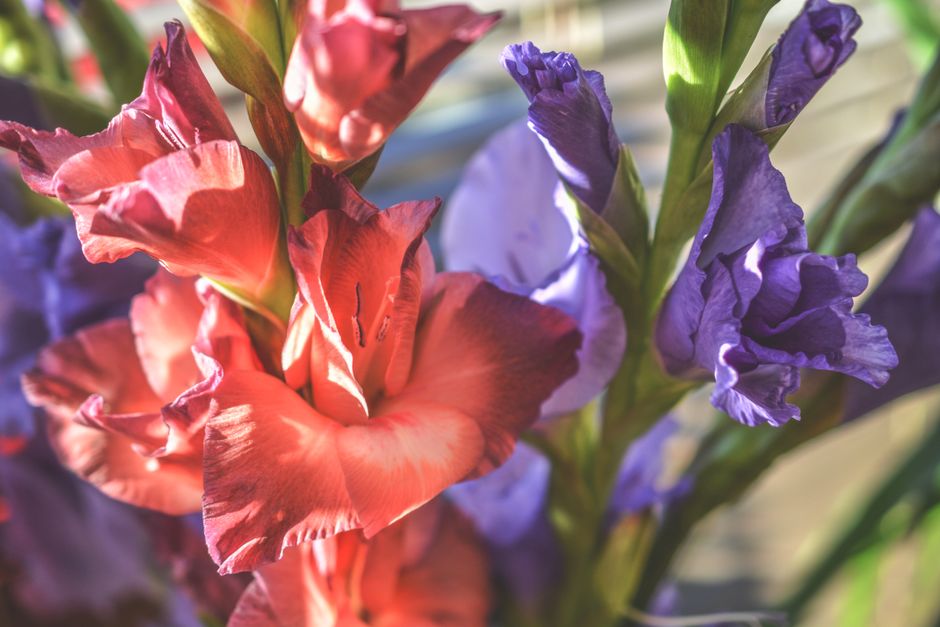
Gladiolus falling over is one of the most common frustrations for gardeners who grow these tall, dramatic flowers. The problem is simple to diagnose: the flower spike is too heavy for the stalk to support, or the root system is too weak to hold the plant upright in the soil. You can stop it by planting corms deep enough, staking the plants early, and hilling soil around the base as they grow. The good news is that with a few straightforward steps, you can keep your gladioli standing tall from first bloom to last.
Why Do Gladiolus Plants Fall Over?
Gladiolus are top-heavy by design. The flower spike can grow three to four feet tall, and the blooms open from the bottom upward. By the time the top flowers open, the entire stalk is carrying a significant amount of weight. The stem itself is relatively thin and hollow, which makes it structurally weak under that load.
The root system adds to the problem. Gladiolus grow from a corm, which is a swollen underground stem. The roots that anchor the plant are fibrous and relatively shallow compared to the height of the plant. In loose soil or after heavy rain, the corm can shift, and the plant loses its grip entirely.
Wind is often the final trigger. A gust of wind catches the wide, flat leaves and the tall flower spike like a sail. Even a healthy plant can snap or lean permanently after one strong storm.
How Deep Should You Plant Gladiolus Corms?
Planting depth is the first line of defense against falling over. Shallow planting leaves the corm with almost no anchor. Deep planting gives the roots more soil to grip and supports the stalk from below.
Plant gladiolus corms at a depth of 4 to 6 inches. Measure from the top of the corm to the soil surface. In sandy soil, plant toward the deeper end of that range. In heavy clay soil, plant closer to 4 inches because the corm needs warmer soil to sprout and clay drains more slowly.
Spacing also matters. Corms planted too close together compete for water and nutrients, which produces weaker stalks. Space corms 6 to 8 inches apart. This gives each plant enough room to develop a sturdy root system without crowding.
When and How to Stake Gladiolus
Staking is the most reliable way to keep gladiolus upright. The key is timing. Stake the plant when it is young, not when it is already leaning. Once the stalk bends, it does not straighten on its own.
Insert a stake into the soil when the plant is about 12 inches tall. Place the stake 2 to 3 inches away from the corm so you do not damage it. Use a stake that is at least as tall as the mature plant will be. A 4-foot bamboo stake works well for most varieties.
Secure the stalk to the stake with soft plant ties, garden twine, or even pantyhose cut into strips. The tie should be loose enough to allow the stem to grow but tight enough to hold it upright. Add a second tie higher up on the stalk as the plant grows. Check the ties weekly during rapid growth.
For rows of gladiolus, a different approach works better. Drive sturdy posts at each end of the row and run twine or wire along the length of the row at about 18 inches and again at 36 inches. The plants grow up through the support and hold each other up. This method is faster than staking individual plants and works well for cutting gardens.





Does Hilling Soil Around the Base Help?
Yes, hilling is an effective and often overlooked method. Hilling means pulling soil up around the base of the plant as it grows. This added soil covers the lower part of the stem, and the stem responds by sending out additional roots from the buried portion. More roots mean a stronger anchor.
Start hilling when the plant is about 12 inches tall. Pull soil from between the rows up around the stem, creating a small mound 2 to 3 inches high. Repeat this once or twice more as the plant grows, but stop before the flower spike begins to open. You do not want to bury the developing flower buds.
Hilling is especially useful in windy gardens or in loose, sandy soil where staking alone may not be enough. It also helps with drainage around the base of the plant, which reduces the risk of corm rot.
What Role Does Fertilizer Play in Weak Stalks?
Fertilizer directly affects stalk strength. Too much nitrogen produces lush, rapid leaf growth at the expense of sturdy stems. The plant grows tall quickly, but the stalks are soft and weak, and they flop under their own weight.
Use a fertilizer that is lower in nitrogen and higher in phosphorus and potassium. Phosphorus supports root development, and potassium strengthens cell walls, which makes stalks firmer. A fertilizer labeled for flowering bulbs or tomatoes, such as a 5-10-10 or 8-8-8 formula, is a reasonable choice.
Apply fertilizer at planting time and again when the plants are about 10 inches tall. Avoid fertilizing once the flowers begin to open. Late fertilization pushes leaf growth and does nothing to help the current bloom stalk.
How to Handle Gladiolus That Are Already Falling Over
If a gladiolus has already fallen, you can often save it, but the flower spike may not stand perfectly straight again. The stem bends permanently at the point of damage. You can still support it, and the blooms will continue to open, but the stalk will carry a visible kink.
For a plant that is leaning but not broken, push a stake into the soil on the opposite side of the lean. Gently lift the stalk and tie it to the stake. Do not try to force the stem completely upright in one pull. That can snap it. Tie it in a slightly upright position and tighten the tie over the next few days.
For a stalk that has snapped completely, cut it at the break point and bring it indoors. Gladiolus make excellent cut flowers. Place the cut stem in a vase with fresh water, and the remaining unopened buds will continue to open over the next several days. The corm itself will still produce leaves and store energy for next year, even if this season’s flower is lost.
Are Some Gladiolus Varieties Less Likely to Fall Over?
Yes, variety selection matters. The tall, large-flowered gladiolus hybrids are the most prone to falling because they produce the heaviest spikes. Smaller-flowered varieties and the miniature gladiolus types are naturally sturdier because they carry far less weight.
If falling over has been a recurring problem in your garden, consider planting shorter varieties in exposed, windy areas. These plants reach 2 to 3 feet tall instead of 4 feet, and their thinner spikes resist wind better. They still produce beautiful blooms and work well in borders and mixed plantings.
Some gardeners also plant gladiolus in clumps rather than single rows. Clumps of three to five corms planted close together support each other as they grow. The leaves interlock, and the group acts as a natural windbreak for each individual stem.
Can Planting Location Prevent Gladiolus From Falling?
Location has more influence than many gardeners realize. Gladiolus need full sun to bloom well, but an open, exposed site leaves them at the mercy of every gust of wind. A spot that gets full sun but has some protection from prevailing winds is ideal.
Planting along a fence, wall, or behind a row of sturdy shrubs provides natural wind protection without shading the plants. The structure blocks the strongest gusts, and the gladiolus still receive the six or more hours of direct sun they need.
Soil quality also plays a role. Gladiolus grow best in well-drained soil that is rich in organic matter. Soil that is too sandy offers little resistance when the plant rocks in the wind. Soil that is heavy and compacted makes it hard for roots to spread. Amending the planting bed with compost before planting improves both drainage and root anchorage.
Frequently Asked Questions
How deep do I need to plant gladiolus corms to keep them from falling?
Plant corms 4 to 6 inches deep, measuring from the top of the corm to the soil surface. Deeper planting gives the roots more soil to grip and helps anchor the tall flower stalk.
Can I straighten a gladiolus that is already leaning over?
You can stake a leaning plant, but the stem will likely keep a permanent bend at the point where it folded. Lift it gently, tie it loosely to a stake, and tighten the tie gradually over a few days.
Does cutting gladiolus flowers for a vase help the plant stay upright?
Yes. Cutting the flower spike removes the heavy weight that causes the plant to fall. Leave at least four leaves on the plant so the corm can still store energy for next year.
Why do my gladiolus fall over even though I stake them?
The stake may be too short, or the tie may be too loose. The stake should be as tall as the mature plant, and ties should be checked and adjusted weekly during rapid growth.
