
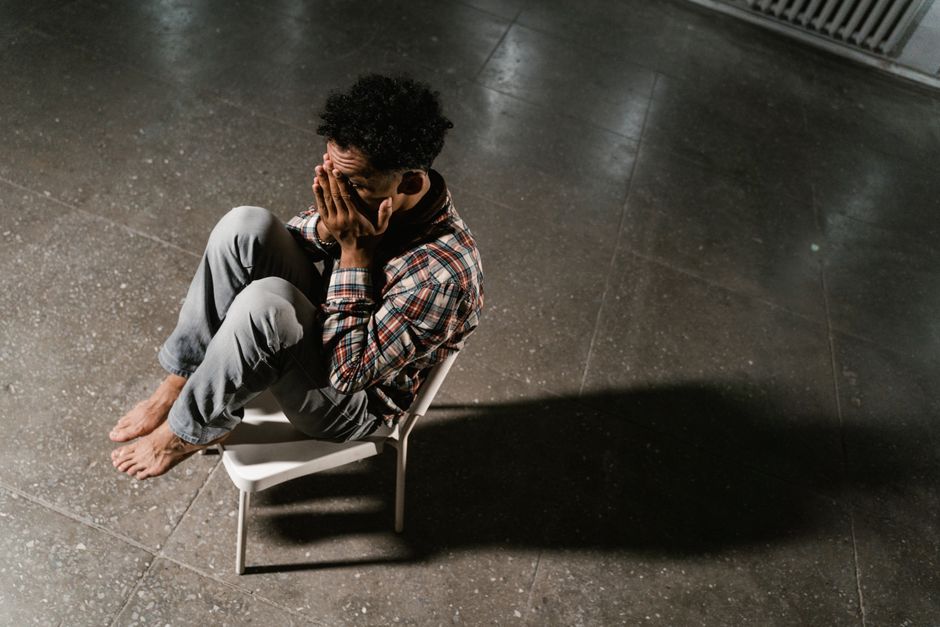
Fear of the dark is one of the most common fears in childhood, but it is also surprisingly common to experience it again in adulthood. The fear usually returns when your brain perceives a real or imagined threat that it cannot see clearly. This is not a sign of weakness or regression; it is a natural response to specific triggers like stress, trauma, or major life changes. You are not alone, and the reasons are rooted in biology, psychology, and your environment.
Why Am I Scared Of The Dark Again The Real Reasons?
Your brain is wired to treat darkness as a state of uncertainty. When you cannot see your surroundings, your brain cannot confirm whether you are safe, so it switches to a state of heightened alertness. This is a survival mechanism that has kept humans alive for thousands of years. The fear returns in adulthood when your brain perceives an increased level of threat, even if that threat is not physical.
Anxiety is the most common trigger. When you are under stress, your brain stays in a state of hypervigilance. In the dark, there is no visual information to reassure you, so your brain fills the gap with imagined threats. This is why the fear often appears during periods of high stress, grief, or major transitions like a new job, a breakup, or moving to a new home.
Trauma is another strong trigger. If you have experienced a frightening event, especially one that happened in darkness or during sleep, your brain may link darkness with that memory. Post-traumatic stress can resurface at night when your defenses are lower. This is not a weakness; it is your brain trying to protect you based on past experience.
What Happens In Your Brain When The Lights Go Out?
When the lights go out, your brain does not simply shut down. It becomes more active in certain areas. The amygdala, which processes fear, can become more sensitive when visual input is reduced. Without visual confirmation that you are safe, the amygdala may send a warning signal to the rest of your brain.
Your body responds to this signal with physical changes. Your heart rate may increase, your breathing becomes shallow, and your muscles tense. This is the fight-or-flight response. It is automatic and not something you can control by willpower alone. The response is designed to help you react to danger, but in the dark, there is often no actual danger to react to.
The brain also relies on your other senses more heavily in the dark. Sounds become louder and more noticeable. A creaking house or a distant siren can be interpreted as a threat. This is because your brain is searching for information to fill the gap left by the lack of vision. It is not that you are imagining things; your brain is actively trying to make sense of incomplete information.
Is This A Sign Of A Mental Health Condition?
For most people, a returning fear of the dark is not a mental health condition on its own. It is a symptom of something else, usually anxiety or stress. If the fear is mild and does not interfere with your daily life, it is likely a temporary response to a stressful period.
However, if the fear is severe, causes panic attacks, or keeps you from sleeping most nights, it may be worth discussing with a healthcare provider. Persistent fear of the dark can be a component of generalized anxiety disorder or a specific phobia. A specific phobia is diagnosed when the fear is intense, persistent, and leads to avoidance behaviors that disrupt your life.
It is also possible that the fear is connected to a sleep disorder. People who experience sleep paralysis, for example, often develop a fear of falling asleep. If you are waking up feeling paralyzed or experiencing vivid hallucinations as you fall asleep, that is a separate issue from a general fear of the dark. These symptoms should be evaluated by a doctor.




Why Do I Feel Like A Child Again?
Feeling like a child when the fear returns is a common experience. This happens because the fear response is stored in the same part of the brain that developed early in life. The amygdala is one of the oldest parts of the brain in evolutionary terms. It does not distinguish between a childish fear and an adult fear.
When you were a child, you may have learned that darkness was something to fear. That learning is not erased when you grow up. It is suppressed or managed through experience and rational thinking. Under stress, that suppression weakens, and the old response surfaces again. This is why the fear can feel so familiar and so irrational at the same time.
Another reason is that nighttime removes many of the coping mechanisms you use during the day. During the day, you can distract yourself with work, conversations, or activities. At night, you are alone with your thoughts. There is less to occupy your mind, so worries and fears have more room to grow.
What Can You Do To Manage The Fear?
The first step is to acknowledge the fear without judging yourself. Calling yourself silly or telling yourself to get over it usually makes the fear worse. Instead, recognize that the fear is a natural response and that it will pass. This reduces the pressure you feel and lowers your overall anxiety.
Creating a predictable bedtime routine can help. When your brain knows what to expect, it feels safer. Go to bed at the same time each night. Use a dim light or a nightlight if it helps. There is no shame in using a nightlight as an adult. The goal is to reduce the level of uncertainty your brain is dealing with.
Breathing exercises are effective because they directly calm the nervous system. Try breathing in for four seconds, holding for four seconds, and breathing out for four seconds. Repeat this for a few minutes. This activates the parasympathetic nervous system, which counteracts the fight-or-flight response. It is not a cure, but it can reduce the intensity of the fear.
Gradual exposure can also help. Start by sitting in a dimly lit room for a few minutes each night. Over time, lower the light level. This teaches your brain that darkness is not dangerous. The process is slow, and results vary. If the fear is severe, working with a therapist who specializes in anxiety can be more effective than doing it alone.
When Should You Seek Professional Help?
You should consider professional help if the fear is affecting your sleep most nights for more than a few weeks. Lack of sleep has serious health consequences, including weakened immunity, poor concentration, and increased anxiety. If the fear is causing you to avoid going to bed or to stay up until exhaustion, that is a sign that the fear is taking up too much space in your life.
If the fear is accompanied by panic attacks, chest pain, or a feeling of losing control, you should speak with a healthcare provider. These symptoms can also be signs of other medical conditions, so it is important to get a proper evaluation. A doctor can rule out physical causes and refer you to a mental health professional if needed.
Therapy, particularly cognitive behavioral therapy, has a strong track record for treating phobias and anxiety. A therapist can help you identify the thoughts that feed the fear and replace them with more realistic ones. This is not about forcing yourself to stop being afraid. It is about changing the way your brain processes the dark.
Frequently Asked Questions
Can adults develop a fear of the dark suddenly?
Yes, adults can develop a fear of the dark suddenly, often after a stressful event or a period of poor sleep. The fear usually reflects an underlying anxiety that has not been fully processed.
Is a fear of the dark in adults a sign of trauma?
It can be, but it is not always. Trauma is one possible cause, especially if the fear appeared after a frightening experience. Anxiety, stress, and even certain medications can also trigger the fear.
Does using a nightlight as an adult make the fear worse?
No, using a nightlight does not make the fear worse. It reduces uncertainty and helps you feel safe enough to sleep. You can gradually reduce the light over time if you want to.
Can therapy cure a fear of the dark?
Therapy can be very effective, but it is not a guaranteed cure. Cognitive behavioral therapy helps many people reduce their fear to a manageable level. The outcome depends on the individual and the underlying cause.
