
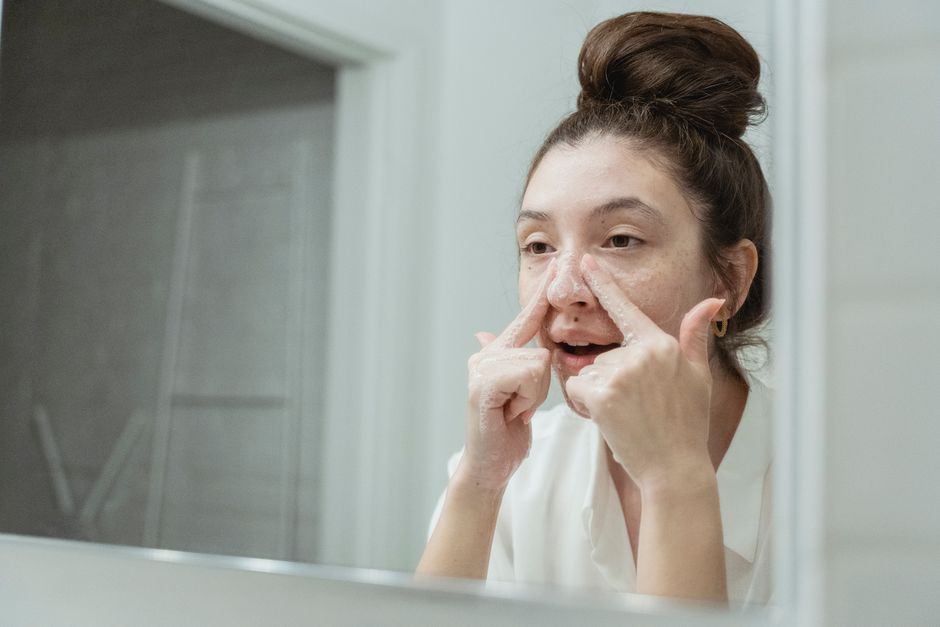
Whiteheads are tiny, flesh-colored or white bumps that form when a pore becomes completely blocked. They are a mild form of acne, technically called closed comedones. The blockage is a mix of oil, dead skin cells, and bacteria that gets trapped just below the skin’s surface. Unlike blackheads, which are open to the air and darken from oxidation, whiteheads stay closed, which is why they appear as small white or skin-colored bumps.
What Exactly Causes a Whitehead to Form?
Your skin is covered in millions of tiny hair follicles, each with an oil gland attached. These glands produce sebum, a natural oil that keeps skin lubricated and protected. Normally, sebum travels up the follicle and out to the skin’s surface, carrying dead skin cells with it.
A whitehead forms when that normal process breaks down. The follicle opening becomes blocked, trapping sebum and dead skin cells inside. The blocked pore stays closed at the surface, creating a small white bump. The trapped material provides a food source for Cutibacterium acnes, a bacteria that naturally lives on everyone’s skin. This bacteria can multiply inside the blocked pore, which is why some whiteheads become red, swollen, and painful.
Several factors increase your chances of developing whiteheads. Hormonal changes are the most common trigger. Androgens, hormones that increase in both boys and girls during puberty, cause oil glands to enlarge and produce more sebum. Hormonal fluctuations during menstrual cycles, pregnancy, and perimenopause can also trigger breakouts in adults.
Why Am I Getting Whiteheads? Causes And Treatment
If you are suddenly seeing more whiteheads than usual, the cause is often a shift in your skin’s environment. The most common culprits include hormonal changes, stress, and the products you use on your skin.
Stress does not directly cause whiteheads, but it can make them worse. When you are stressed, your body produces more cortisol. This hormone signals your oil glands to produce more sebum, creating more opportunities for pores to become blocked.
Your skincare and cosmetic routine matters a great deal. Heavy creams, thick moisturizers, and oil-based makeup can trap dead skin cells and oil against the skin. Look for products labeled “non-comedogenic,” which means they are formulated to not block pores. However, keep in mind that everyone’s skin reacts differently. A product that is fine for one person can still cause breakouts in another.
Diet is a debated topic in acne research. Some studies suggest that high-glycemic foods, like white bread, sugary drinks, and processed snacks, may worsen acne. Dairy, particularly skim milk, has also been linked to breakouts in some research. The evidence is not strong enough to say diet causes whiteheads, but if you notice a pattern between certain foods and your breakouts, it may be worth reducing them to see if your skin improves.
How to Treat Whiteheads at Home
Consistency matters more than intensity when treating whiteheads. The goal is to keep pores clear and reduce oil buildup without irritating your skin. Over-washing or using harsh scrubs can damage your skin barrier and actually increase oil production, making the problem worse.
Salicylic acid is the most effective over-the-counter ingredient for whiteheads. It is a beta hydroxy acid that penetrates oil and helps dissolve the material blocking the pore. It also gently exfoliates the skin surface, helping dead cells shed normally. Products with salicylic acid are available as cleansers, toners, and leave-on treatments. A leave-on product is generally more effective than a wash-off cleanser because it stays in contact with the skin longer.
Benzoyl peroxide works differently. It is an antimicrobial that reduces the C. acnes bacteria in the pore. It also helps remove excess oil and dead skin cells. Benzoyl peroxide can be drying and irritating, so start with a lower concentration and apply it only once a day. It can also bleach fabrics, so be careful with pillows and towels.
Retinoids are the most effective topical treatment for whiteheads. Adapalene is available over the counter at a 0.1% strength under the brand name Differin. It works by normalizing the way your skin cells shed, preventing them from clumping together and blocking pores. Retinoids require patience. You will not see full results for 8 to 12 weeks, and your skin may get worse before it gets better during the first few weeks.
If you use multiple products, introduce them one at a time. Start with one active ingredient and wait at least two weeks before adding another. Using too many actives at once can cause severe dryness, redness, and peeling.





What Not to Do When You Have Whiteheads
Do not squeeze or pop whiteheads. Unlike a pimple that has come to a head, a whitehead is closed. Squeezing it pushes the trapped material deeper into the skin. This can cause the pore wall to rupture, spilling bacteria and oil into the surrounding tissue. The result is a larger, more inflamed pimple that takes longer to heal and is more likely to leave a dark spot or scar.
Avoid abrasive physical scrubs. Sugar scrubs, walnut shell scrubs, and cleansing brushes can create micro-tears in your skin. These tears allow bacteria to enter and can trigger more inflammation. Chemical exfoliants like salicylic acid and glycolic acid are gentler and more effective for treating whiteheads.
Do not use toothpaste, baking soda, or lemon juice on your skin. These are popular internet remedies with no scientific support. They can cause chemical burns, allergic reactions, and severe irritation. There is no clinical evidence that any of these home ingredients treat acne effectively.
When to See a Dermatologist
Over-the-counter treatments can take up to 12 weeks to show noticeable improvement. If you have been consistent with a salicylic acid or adapalene routine for three months and your whiteheads are not improving, it is reasonable to see a dermatologist.
You should also seek professional care if your whiteheads are extensive, painful, or leaving scars. A dermatologist can prescribe stronger treatments that are not available over the counter. These include prescription-strength retinoids like tretinoin, topical antibiotics, or oral medications.
For women with hormonal acne, a dermatologist may recommend certain birth control pills or spironolactone. These medications work by reducing androgen levels, which decreases oil production. These are prescription treatments that require a full medical evaluation because they have potential side effects and are not appropriate for everyone.
Dermatologists also offer in-office procedures for stubborn whiteheads. Chemical peels and professional extraction can provide faster results than topical treatments alone. Extraction should only be done by a professional. A dermatologist uses a sterile tool to gently open the blocked pore and remove the contents with minimal trauma to the surrounding skin.
How to Prevent Whiteheads From Forming
Prevention focuses on keeping your skin’s natural shedding process working smoothly. Wash your face twice a day with a gentle cleanser. Washing more often does not help and can strip your skin of its natural moisture, causing your oil glands to overcompensate.
Moisturize every day, even if your skin is oily. When your skin is dehydrated, it tries to compensate by producing more oil. A lightweight, oil-free moisturizer helps maintain your skin barrier and can actually reduce excess oil production.
Change your pillowcases regularly. They collect oil, dead skin cells, and bacteria from your hair and face. Sleeping on a dirty pillowcase presses these substances back into your skin every night. Washing your pillowcase once a week is a simple, effective prevention step.
Clean your phone screen and avoid resting your chin or cheeks in your hands. Both transfer bacteria and oil to your face throughout the day. This is especially important if you notice whiteheads concentrated on one side of your face, which often points to a phone or hand habit.
Frequently Asked Questions
Can toothpaste get rid of whiteheads?
No. Toothpaste is not an acne treatment and can irritate or burn your skin. No clinical evidence supports using toothpaste on whiteheads.
How long does it take for whiteheads to go away?
With consistent treatment, most whiteheads clear within 8 to 12 weeks. A single whitehead may resolve faster, but preventing new ones takes time because your skin needs a full cell turnover cycle to clear.
Are whiteheads caused by poor hygiene?
No. Whiteheads are caused by blocked pores, not dirt. Washing your face more often will not prevent them and may worsen them by irritating your skin.
Does sunscreen make whiteheads worse?
Some sunscreens can block pores, but skipping sun protection is worse for your skin. Choose a sunscreen labeled “non-comedogenic” or “oil-free” to protect your skin without clogging pores.
