
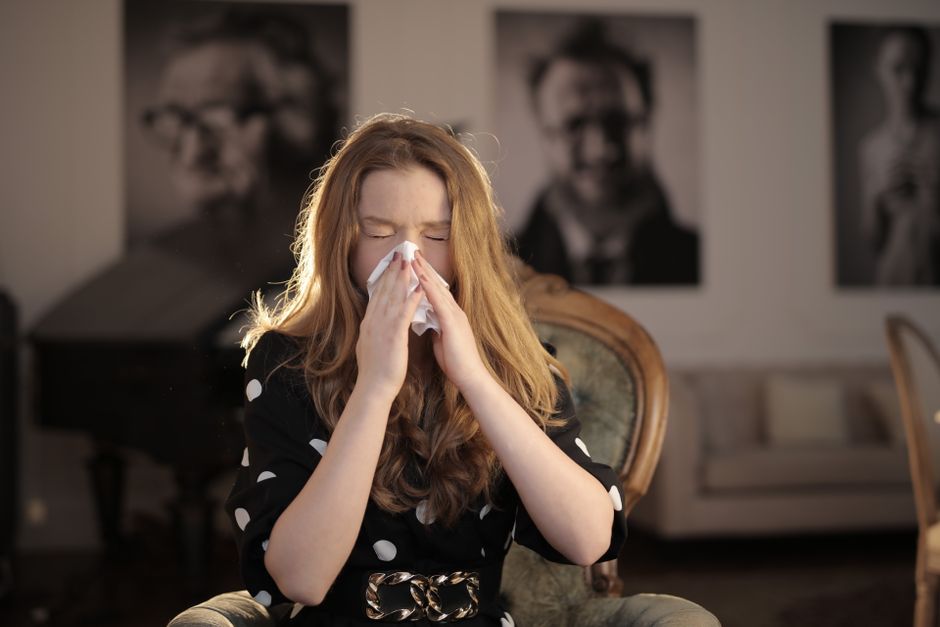
Allergies make you sneeze because your immune system mistakes a harmless particle — pollen, dust mite protein, cat dander — for a threat, and the fastest way to expel that “threat” from your nose is a sneeze. The reflex is triggered by histamine and other chemicals released in your nasal lining, which irritate nerve endings and send a signal to your brainstem to force air out at high speed.
You can reduce sneezing by limiting your exposure to the allergen, using saline rinses, and taking antihistamines or steroid nasal sprays that block part of that chemical cascade. None of these cure the allergy. They interrupt the reaction at different points, and how well they work depends on what you’re allergic to and how consistently you use them.
Why Allergies Make You Sneeze And How To Stop It?
A sneeze is a protective reflex, and in allergy it fires on a false alarm. Here is what happens in sequence.
When you breathe in pollen or another allergen, it lands on the mucous membrane lining your nose. In an allergic person, immune cells there — mast cells — are already coated with antibodies called IgE that are specific to that allergen. The allergen binds to those antibodies and the mast cell breaks open, releasing histamine, leukotrienes, and other mediators.
Histamine does several things at once. It makes blood vessels in your nose leak fluid, which causes swelling and congestion. It stimulates mucus glands. And it directly irritates sensory nerve endings in the nasal lining. Those nerves carry a signal to the sneeze center in the brainstem, which coordinates the reflex: a deep breath in, closure of the throat, pressure buildup, then a sudden explosive release of air through the nose and mouth.
That is the whole mechanism. The sneeze is not the immune system clearing out a germ. It is a nerve reflex triggered by chemicals your own body released.
This is why allergy sneezing tends to come in bursts. Each exposure triggers fresh mediator release, and the nerves stay sensitized for a while. Some people also sneeze in bright sunlight — that is a separate reflex called the photic sneeze reflex and it has nothing to do with allergy.
Where each treatment interrupts the process
Antihistamines block histamine from binding to its receptors, so the nerve irritation and fluid leakage are reduced. Steroid nasal sprays work further upstream, calming the inflammation in the nasal lining over days rather than minutes. Saline rinses physically remove allergen from the nose before it can trigger anything.
No treatment stops the immune system from recognizing the allergen in the first place. That is why avoidance and consistency matter more than picking the “strongest” option.
What Actually Causes Allergy Sneezing?
Allergic rhinitis is the medical term, and it has two common patterns. Seasonal allergic rhinitis is usually driven by tree, grass, or weed pollen and follows a predictable calendar. Perennial allergic rhinitis happens year-round and is most often triggered by indoor allergens: dust mites, pet dander, cockroach debris, and mold spores.
The underlying cause is genetic and immune. People with allergies tend to have family histories of allergies, asthma, or eczema. The immune system develops IgE antibodies against substances that are not dangerous. Once that programming exists, it is generally long-lasting.
There is a detail worth knowing. Dust mite allergy is not caused by the mite itself but by proteins in its feces and body fragments, which become airborne in house dust. This is why “dusting more” alone does not fix it — the allergen is in the air and in soft furnishings, not just on surfaces.
Sneezing is also not the only symptom. Most people with allergic rhinitis also get itching, clear runny nose, nasal congestion, and often itchy watery eyes. If your main symptom is thick colored mucus, fever, or facial pain, allergy is less likely and infection or another cause should be considered.
How Do You Stop Allergy Sneezing Without Medication?
Reducing exposure is the most direct approach, and for some people it is enough. The evidence for allergen avoidance is strongest when the avoidance is thorough and targeted at an allergen you have actually been shown to react to.
- Keep windows closed during high pollen periods, and use air conditioning with a clean filter.
- Shower and change clothes after being outdoors during pollen season, so you do not carry pollen into bed.
- Use allergen-proof covers on mattresses and pillows if dust mites are a trigger, and wash bedding in hot water regularly.
- Keep indoor humidity controlled, since dust mites and mold thrive in damp air.
- Rinse your nose with saline. This is low-risk and helps remove allergen and mucus. Use distilled, sterile, or previously boiled and cooled water — never straight tap water, because of a rare but serious infection risk.
Some people find that a nasal filter or a light coating of petroleum jelly at the nostrils reduces symptoms. The evidence for these is limited, and petroleum jelly should not be applied inside the nose or used around anyone with a risk of aspiration.
What does not work: “allergy shots” in the sense of unregulated injections, herbal mixtures marketed as desensitizing, and most air purifiers positioned as a standalone fix. Air purifiers with HEPA filters can reduce airborne allergen in a room, but they do not remove allergen from bedding and upholstery, which is where most indoor exposure happens.





Which Medications Help Allergy Sneezing?
Several classes of medication are used, and they differ in how fast they work and what they target.
| Type | How it works | Typical onset |
|---|---|---|
| Oral antihistamines | Blocks histamine receptors | Minutes to an hour |
| Intranasal antihistamines | Blocks histamine in the nose directly | Minutes |
| Intranasal corticosteroids | Reduces inflammation in nasal lining | Days of regular use |
| Saline rinses | Removes allergen and mucus | Immediate, short-lived |
| Oral decongestants | Shrinks nasal blood vessels | 30-60 minutes |
Intranasal corticosteroids are generally considered the most effective single treatment for allergic rhinitis, and this is a position supported by consistent clinical evidence rather than marketing. They do not relieve symptoms immediately — they need to be used daily for several days to reach full effect. Many people try a steroid spray for two days, feel nothing, and stop. That is the most common reason it “doesn’t work.”
Oral antihistamines work quickly and are useful for mild or intermittent symptoms. Older first-generation antihistamines cause drowsiness and impair performance; newer second-generation options are less sedating. Intranasal antihistamines act faster than steroid sprays and can be combined with them.
Decongestants relieve congestion but are not the main answer for sneezing, and oral decongestants can raise blood pressure and cause insomnia. They should not be used long-term. Nasal decongestant sprays used for more than a few days can cause rebound congestion, a well-documented problem.
For anyone who does not respond to these, allergy immunotherapy — shots or sublingual tablets — is the only treatment that can change the underlying immune response and produce lasting benefit after treatment ends. It is a multi-year commitment and should be managed by a clinician. It is not a quick fix.
When Should You See a Doctor About Allergy Sneezing?
See a clinician if symptoms are interfering with sleep, work, or daily life despite over-the-counter treatment. Also see one if you are unsure whether it is allergy at all.
Testing matters more than most people realize. Skin prick testing or specific IgE blood tests can identify which allergens you actually react to, which makes avoidance practical instead of guesswork. Treating “allergies” without knowing the trigger often means treating the wrong thing.
Some situations need prompt attention. Wheezing, chest tightness, or shortness of breath alongside nasal symptoms can indicate asthma, which frequently occurs with allergic rhinitis and needs its own treatment. Symptoms that are one-sided, include bloody discharge, or begin in adulthood without prior allergy history should be evaluated rather than assumed to be allergy.
Anaphylaxis is a different condition from allergic rhinitis. It involves swelling of the throat, difficulty breathing, widespread hives, or a drop in blood pressure, and it is a medical emergency. Nasal allergy does not progress to anaphylaxis.
Can Allergy Sneezing Be Prevented?
You cannot prevent the immune system from developing an allergy, and there is no reliable way to reverse an established IgE response through lifestyle alone. What you can prevent is the sneeze itself, by reducing exposure and treating before symptoms peak.
Starting a steroid nasal spray a week or two before your known pollen season begins is a common and reasonable strategy, because it takes days for the medication to build effect. This is widely done in clinical practice, though the strongest trial evidence is for treating active symptoms rather than for pre-season timing specifically.
For indoor allergens, the biggest gains usually come from bedding and humidity control, not from cleaning products. If you have a pet allergy and cannot rehome the animal, keeping it out of the bedroom and using HEPA filtration reduces — but does not eliminate — exposure.
One honest point: allergy symptoms often change over years. Some people improve, some worsen, and some develop new sensitivities. If your pattern shifts, retesting is reasonable.
Frequently Asked Questions
Why do allergies make you sneeze?
Allergens trigger mast cells in your nasal lining to release histamine, which irritates sensory nerves and activates the sneeze reflex in the brainstem. The sneeze is a nerve response to your own immune chemicals, not a reaction to the allergen directly.
How do you stop allergy sneezing fast?
Intranasal antihistamines act within minutes, and saline rinsing removes allergen immediately but only briefly. Oral antihistamines take roughly an hour, and steroid nasal sprays need several days of regular use to work fully.
Do allergy pills stop sneezing?
Antihistamines reduce sneezing by blocking histamine receptors, and they work well for mild to moderate symptoms. They are generally less effective than intranasal corticosteroids for ongoing allergic rhinitis.
Can allergies make you sneeze without other symptoms?
Sneezing alone can be allergic, but isolated sneezing without itching, runny nose, or congestion is also common with non-allergic triggers like cold air, strong smells, or bright light. Testing helps distinguish the two.
