
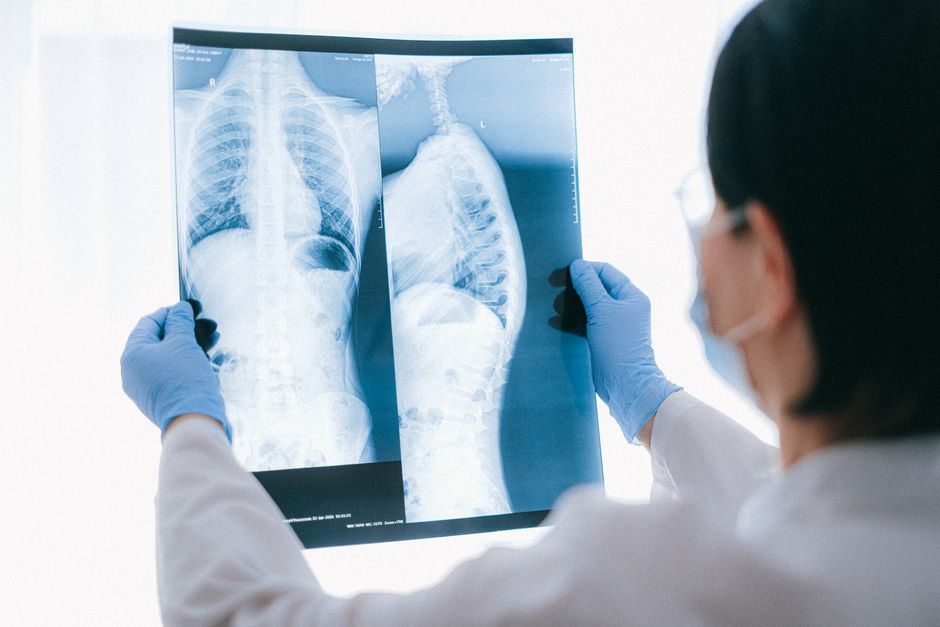
An MRI scan produces detailed images of the inside of your body. Only a licensed physician with specialized training in radiology is qualified to officially read and interpret an MRI. That doctor is called a radiologist. While other doctors may look at your MRI images, the formal report that guides your care comes from a radiologist who has spent years learning to recognize normal anatomy, subtle abnormalities, and the countless variations that can appear on these scans.
What training does a radiologist complete?
Radiologists are medical doctors first. They complete a four-year undergraduate degree, then four years of medical school. After that, they enter a four-year residency program focused entirely on medical imaging. During residency they learn to read X-rays, CT scans, ultrasounds, nuclear medicine studies, and MRIs. They interpret thousands of scans under the supervision of experienced radiologists.
After residency, many radiologists complete an additional one or two years of fellowship training in a subspecialty. For MRI, common fellowships include neuroradiology (brain and spine), musculoskeletal radiology (bones and joints), body imaging (abdomen and pelvis), and breast imaging. Board certification requires passing rigorous exams from the American Board of Radiology. This training is why a radiologist can identify a subtle fracture, a small tumor, or an early sign of multiple sclerosis that a non-specialist might miss.
Can other doctors read an MRI?
Yes, other doctors can and do look at MRI images. A surgeon may review a scan before an operation. A neurologist might examine an MRI of the brain to assess stroke or tumor. However, these doctors rely on the radiologist’s formal report for the definitive interpretation. The radiologist’s reading is considered the official medical record.
Legally and practically, the radiologist bears responsibility for the accuracy of the interpretation. Insurance companies and hospitals require a radiologist’s report for billing and medical decision-making. A clinician who makes a treatment decision based on their own reading without consulting the radiologist’s report is taking on legal risk. For complex or subtle findings, the radiologist’s specialized training provides a safety net that benefits every patient.
Who Can Read an MRI? The Role of the Radiologist
The radiologist’s role goes beyond simply describing what they see on the scan. They place the imaging findings in the context of your medical history, your symptoms, and the results of other tests. They identify abnormalities, separate significant findings from harmless variations (incidentalomas), and recommend next steps such as additional imaging, biopsy, or follow-up.
Radiologists also ensure image quality. If the scan is incomplete or contains motion artifact, they may recommend repeating the study before making a final interpretation. They communicate urgent findings directly to your doctor. In many hospitals, radiologists participate in multidisciplinary conferences with surgeons, oncologists, and other specialists to discuss complex cases. The radiologist is not just a reader of images—they are a consultant who helps guide your entire diagnostic journey.





What does a radiologist look for when reading an MRI?
A radiologist follows a systematic process. They check the type of scan, the body part imaged, and the specific sequences used. Different sequences highlight different tissues—some show water, others show fat, others show blood flow. Radiologists look at each sequence methodically, comparing left and right sides for symmetry, assessing organ size and shape, and searching for abnormal signal.
They look for masses, inflammation, fluid collections, bleeding, fractures, infections, and structural abnormalities. In the brain, they examine the ventricles, the cortex, the white matter, and the blood vessels. In the spine, they check each vertebra, disc, and nerve root. In the knee, they assess ligaments, menisci, cartilage, and bone marrow. Every structure has a normal appearance, and the radiologist must know the range of normal for each patient’s age and body type.
How does a radiologist’s report help your doctor?
The written report is the main way the radiologist communicates with your primary doctor or specialist. It is divided into sections: clinical history, technique, comparison with prior studies, findings, and impression. The findings section is detailed and descriptive. The impression is a summary that states what the radiologist believes is going on and may include specific recommendations.
Your doctor uses this report to make treatment decisions. For example, an MRI showing a torn anterior cruciate ligament will lead to an orthopedic surgery referral. An MRI showing a brain tumor will prompt a neurosurgery consultation and possibly a biopsy. Without the radiologist’s precise interpretation, these decisions would rest on incomplete information. The report also serves as a legal document that records your imaging findings for future reference.
What is the role of AI in reading MRIs?
Artificial intelligence (AI) software is being developed to help radiologists read MRIs. Some AI tools can highlight suspicious areas, measure structures automatically, or compare a current scan to a prior one. These tools are approved by the FDA for specific tasks—like detecting breast cancer on mammograms or identifying brain bleeds on CT scans.
However, AI does not replace the radiologist. No AI system is currently approved to independently interpret an entire MRI scan and generate a final report without human oversight. The evidence supports AI as an assistive tool, not a replacement. Radiologists review AI findings and use their judgment to decide whether the AI’s suggestion is accurate. The radiologist remains legally and clinically responsible for the final interpretation. Claims that AI will soon make radiologists obsolete are not supported by current evidence or regulatory reality.
When should you ask about your MRI results?
After your MRI, the radiologist interprets the scan and the report is sent to your ordering doctor. Your ordering doctor will discuss the results with you. In most cases, that is the appropriate person to explain what the findings mean for your health and treatment plan.
If you have questions about the technical aspects of the scan or want a deeper understanding of the findings, you can request to speak with the radiologist. However, not all hospitals or imaging centers allow this directly. Some require that you go through your ordering doctor. Your right to access your medical records include the full radiology report. Reading it yourself is possible, but keep in mind that medical terminology can be confusing and that some findings sound alarming but are actually benign. Your doctor can put the report into context for you.
Frequently Asked Questions
Can a doctor other than a radiologist read an MRI?
Yes, any licensed physician can look at MRI images. But only a radiologist has the specialized training required to provide the official interpretation that guides medical decisions and is used for the medical record.
Do radiologists ever misread MRIs?
Yes, radiologists can make mistakes, just like any doctor. However, the error rate is low, and most errors are minor or do not change patient care. Double-reading and peer review processes are common to catch errors before a final report is issued.
How long does it take to become a radiologist?
After high school, it typically takes 12 to 14 years: 4 years of college, 4 years of medical school, 4 years of radiology residency, and often 1 to 2 years of fellowship for subspecialty training.
Can a patient request to speak directly with the radiologist?
Yes, you can ask. Some imaging centers and hospitals allow it, but it is not standard practice. Your ordering doctor is usually the best person to explain your results and answer your questions.
