
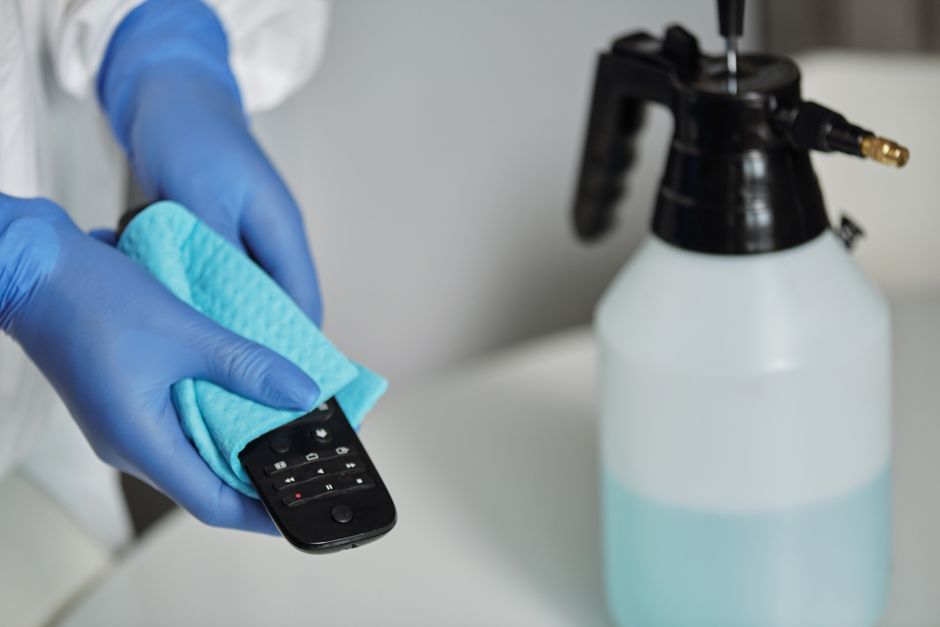
Spot contamination is a small, localized deposit of a substance on a surface — a drop of blood, a smear of grease, a splash of chemical, a spot of mold. The decontamination method that reliably removes it depends on what the spot is made of and what surface it sits on, but the single most effective general approach is a two-step process: physically remove the bulk of the material first, then apply a chemical agent that targets what remains. Physical removal alone removes most spot contamination. Chemical treatment alone, applied over a spot that has not been wiped or rinsed, often spreads the material and can make the problem worse.
This matters because spot contamination is common in homes, kitchens, bathrooms, workshops, and healthcare settings — and the wrong method can leave a residue, damage the surface, or create a hazard. What follows explains how spot decontamination actually works, which methods suit which situations, and where the evidence is genuinely thin.
What Is Spot Contamination and Why Does It Matter?
Spot contamination is contamination confined to a defined area rather than spread across a whole surface or volume. A spot of raw chicken juice on a countertop is spot contamination. So is a droplet of used motor oil on a garage floor, or a patch of black discoloration on a bathroom tile grout line.
The distinction matters because spot contamination is usually easier to address than widespread contamination — but only if it is handled before it spreads. A wet spot can be absorbed into a porous surface within minutes. Once absorbed, the material is no longer on the surface and no surface wipe will reach it.
Contamination is also not the same as infection or poisoning. A spot of contamination is a physical presence of a substance. Whether it causes harm depends on the substance, the amount, the route of exposure, and who is exposed. For most household spots, the risk is low. For some — certain chemicals, certain biological materials — the risk is real and the method matters a great deal.
Which Decontamination Method Removes Spot Contamination Most Effectively?
The most effective method for removing spot contamination is absorb-and-lift followed by targeted chemical treatment. This is the sequence used in healthcare environmental cleaning and in industrial spill response, and it works because it addresses the two different problems a spot presents.
The first problem is bulk material. A spot has mass. Wiping a liquid spot with a dry cloth smears it. Wiping it with a wet cloth dilutes it and pushes it into the surface. The correct first move is to absorb it — with a paper towel, an absorbent pad, or an appropriate absorbent material — using a blotting motion from the outside of the spot inward, so you do not spread the material outward.
The second problem is residue. After the bulk is lifted, a film remains. That film may be invisible. It may contain microorganisms, chemical residue, or both. This is where a chemical agent comes in, chosen to match the contaminant.
For most household surfaces, a detergent solution followed by a clean water rinse removes the majority of spot contamination. Detergent is not a disinfectant — it does not kill microorganisms — but it lifts and suspends material so it can be wiped away. That mechanical removal is often the most important step.
For biological contamination — blood, vomit, feces, respiratory secretions — the general approach used in healthcare settings is absorb, clean with detergent, then disinfect with an EPA-registered disinfectant appropriate to the surface and the organism of concern. The specific disinfectant and contact time depend on the product label, and those instructions should be followed exactly. Contact time is not optional; a disinfectant wiped off immediately after application has not had time to work.
Does Disinfection Alone Remove Spot Contamination?
No. Disinfection alone does not remove spot contamination, and this is one of the most common misunderstandings in household cleaning.
Disinfectants are formulated to inactivate microorganisms on a pre-cleaned surface. They are not formulated to cut through grease, lift dried residue, or penetrate soil. When a disinfectant is applied over visible dirt or organic material, the active ingredient is consumed by that material and may not reach the microorganisms underneath. Cleaning — the physical removal of soil — has to happen first.
This is why the standard sequence in infection control is clean, then disinfect. Cleaning removes the soil and most of the microbial load. Disinfection reduces what remains to a level considered safe for the intended use.
There is a practical exception worth knowing. Some products are labeled as cleaner-disinfectants and are designed to do both in one step, but they still require the surface to be visibly clean to work as labeled. If a spot is visible, it needs to be removed, not just sprayed.



Which Method Works for Different Types of Spots?
The right method depends on what the spot is and what it is on. The table below summarizes general approaches. These are general directions, not universal rules — always check the product label and the surface manufacturer’s guidance.
| Spot type | First step | Second step |
|---|---|---|
| Blood or body fluid | Absorb with disposable material; avoid direct contact | Clean with detergent, then disinfect per product label |
| Food residue or grease | Scrape or blot up bulk material | Wash with detergent and warm water; rinse |
| Chemical spill (household) | Ventilate; absorb with appropriate material | Follow the product’s safety data sheet instructions |
| Mold spot on hard surface | Address moisture source first | Clean surface; use appropriate cleaner per surface type |
| Oil or solvent on workshop floor | Absorb with inert absorbent | Degrease, then dispose of waste properly |
Two points deserve emphasis. First, for blood and other potentially infectious material, personal protection — disposable gloves at minimum — matters before anything else. Second, for chemical spills, the product’s safety data sheet is the authoritative source, not general cleaning advice. Some household chemicals react dangerously with common cleaning products, and mixing them can produce toxic gas.
Why Does the Order of Steps Matter So Much?
Order matters because each step removes a different kind of contamination, and skipping a step leaves the next one unable to do its job.
If you disinfect before you clean, the disinfectant is neutralized by the soil. If you clean before you absorb, you spread the material. If you absorb before you ventilate a chemical spill, you may expose yourself to fumes. If you apply a chemical treatment to a mold spot without fixing the moisture that caused it, the mold returns — because the conditions that produced it are still present.
There is a useful way to think about this. Decontamination is not a single action. It is a sequence that reduces contamination in stages: bulk removal, then cleaning, then disinfection where needed, then safe disposal of the waste you generated. Each stage depends on the one before it.
Disposal is the step people forget. The material you absorbed, the cloth you used, the gloves you wore — those are now contaminated. They need to go somewhere appropriate. For most household spot contamination, sealed in a plastic bag and placed in regular trash is adequate. For certain chemical or infectious materials, local regulations specify different handling, and those should be followed.
When Is Professional Decontamination Needed Instead?
Professional decontamination is warranted when the contaminant is unknown, when the area is large, when the material is hazardous, or when the contamination has penetrated a porous surface that cannot be cleaned.
Specific situations where professional help is generally the right call include:
- Sewage backups, which carry a range of pathogens and require specialized handling
- Any spill involving a chemical you cannot identify
- Mold growth covering a large area, or mold inside wall cavities or HVAC systems
- Contamination from a known infectious disease outbreak in a space
- Any situation where the material may have entered the building’s air handling system
For porous materials — carpet, upholstery, drywall, unsealed wood — spot contamination that has soaked in is often not fully removable by surface methods. In some cases the material can be cleaned; in others it must be removed and replaced. This is a judgment call that depends on the contaminant and the material, and it is one where an honest assessment is better than a confident guess.
What Does the Evidence Actually Show?
The evidence base for cleaning and disinfection is strong for the general sequence — clean first, then disinfect — and for the role of mechanical removal in reducing contamination. This is well established in infection control and environmental hygiene.
The evidence is weaker for specific claims about individual household products. Many products are marketed with claims that go beyond what independent testing has confirmed. A product labeled as a disinfectant has met regulatory requirements for that claim, but that does not mean it works on every surface, against every organism, or in the presence of soil.
One clarification worth making: “kills 99.9% of germs” is a laboratory statement made under specific test conditions. It does not describe what happens on a dirty kitchen counter in real use. Real-world effectiveness depends on contact time, surface type, organic load, and how the product is applied.
Where the evidence is genuinely limited is in comparing one household cleaning method against another for real-world outcomes. Most studies measure microbial reduction on surfaces, not health outcomes in people. That gap is worth knowing about when you read confident claims about which method is best.
Frequently Asked Questions
What is the best method to remove spot contamination?
Absorb the bulk of the spot first, then clean with detergent, then disinfect if the contaminant is biological. Physical removal is the most important step.
Can I just use disinfectant spray on a spot?
No. Disinfectants are designed for pre-cleaned surfaces and are neutralized by visible soil. The spot needs to be removed first.
Does vinegar or baking soda remove spot contamination?
They can help lift some residues, but they are not registered disinfectants and should not be relied on to inactivate pathogens. Use them as cleaners, not as disinfectants.
When should I call a professional for decontamination?
Call a professional for sewage backups, unidentified chemicals, large mold growth, or contamination that has soaked into porous materials like carpet or drywall.
