
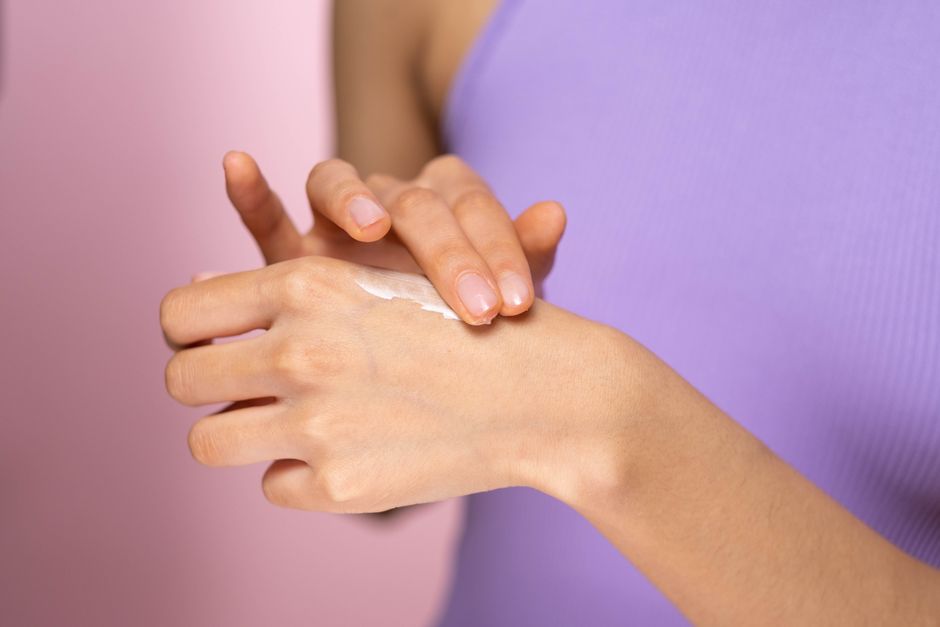
Progesterone cream is applied to areas of the body with thin skin and good blood flow, such as the inner arms, inner thighs, chest, or abdomen. You rotate application sites to prevent the skin from becoming saturated and to keep absorption consistent. The specific location matters less than the method: use a small amount, rub it in well, and rotate the site each day.
Does Progesterone Cream Actually Help With Weight Loss?
No clinical evidence confirms that progesterone cream causes weight loss. Some women report feeling less bloated or less prone to cravings when using it, but those reports are not the same as data from controlled trials.
Progesterone is a reproductive hormone. It does not have a direct metabolic effect like thyroid hormone or insulin. The idea that it changes body weight comes from the fact that hormone shifts during menopause and perimenopause often coincide with weight gain, especially around the abdomen. But correlation is not causation.
Some research suggests that estrogen dominance — a state where estrogen is high relative to progesterone — may contribute to water retention and fat storage. In theory, balancing hormones could help. In practice, no large human study has shown that applying progesterone cream reverses or prevents weight gain.
If you are using progesterone cream for menopausal symptoms like hot flashes or sleep disturbances, the evidence is stronger. For weight loss specifically, the evidence is weak. Do not expect the cream to change your weight on its own.
How Does Progesterone Absorb Through the Skin?
Progesterone is a fat-soluble steroid hormone. It passes easily through the outer layer of skin and enters the bloodstream through the capillaries below. This is why transdermal (through the skin) delivery works for this particular hormone.
Not all skin is the same. Areas with thinner skin and more blood vessels absorb hormones more efficiently. These include the inner arms, inner thighs, neck, chest, and abdomen. Areas with thick skin, like the palms of the hands or the soles of the feet, absorb poorly and should be avoided.
Fat tissue also matters. Progesterone is stored in fat. Applying the cream to areas with more fat may slow absorption into the bloodstream. This is one reason clinicians suggest rotating sites rather than using the same spot every day.
Body temperature and skin hydration also affect absorption. Warm, well-hydrated skin absorbs more quickly. Some women apply the cream after a shower for this reason. There is no strong evidence that this makes a meaningful difference, but it does not hurt.
Where to Apply Progesterone Cream for Weight Loss
If you are using progesterone cream and hoping for metabolic benefits, apply it to areas where absorption is best. The inner arms and inner thighs are the most commonly recommended sites. The abdomen and upper chest are also acceptable.
Rotate the site each day. If you apply to the left inner arm on Monday, use the right inner arm on Tuesday. On Wednesday, move to the left inner thigh. This rotation prevents the skin in one spot from becoming saturated, which can reduce absorption over time.
Do not apply progesterone cream to the breasts. Some sources suggest this for breast health, but there is no evidence it helps, and the breast tissue is sensitive to hormonal stimulation.
Avoid applying the cream to broken or irritated skin. Open skin allows faster absorption than intended, which can lead to higher blood levels than expected.
Use the amount your clinician recommended or the amount listed on the product label. More cream does not mean more weight loss. It means more hormone in your system, which can cause side effects.





What Dose of Progesterone Cream Is Typical?
Over-the-counter progesterone creams typically contain 20 to 50 milligrams of progesterone per application, measured by a pump or a marked scoop. Prescription creams and compounded formulations vary widely.
For menopausal symptom relief, common clinical practice uses 20 to 40 milligrams daily, applied in one or two doses. For cycle support in premenopausal women, some clinicians recommend using the cream only during the second half of the menstrual cycle, roughly days 14 through 28.
No established dosing guidelines exist for weight loss because no clinical evidence supports progesterone cream as a weight loss treatment. If you are using it for another reason, follow the dosing for that purpose. Do not increase the dose hoping for a metabolic effect.
Blood tests can measure progesterone levels, but they are not routinely used to adjust cream dosing. The hormone is absorbed into tissue and blood levels fluctuate. Testing is more useful for confirming that absorption is happening than for fine-tuning a dose.
What Are the Side Effects and Risks?
Progesterone cream is generally well tolerated when used at recommended doses. The most common side effects are mild and include breast tenderness, headache, mood changes, and drowsiness.
Some women feel fatigued after applying the cream, especially at higher doses. This is expected. Progesterone has a calming effect on the brain, which is why it is sometimes used for sleep support.
Drowsiness is a reason to consider applying the cream in the evening rather than the morning. If you feel sedated during the day, move your application time.
Serious risks are rare but real. Progesterone can affect blood clotting in susceptible individuals. If you have a history of blood clots, stroke, or liver disease, talk to your doctor before using any progesterone product.
Do not use progesterone cream during pregnancy. It can interfere with fetal development. If you are trying to conceive, discuss progesterone use with your obstetrician first.
Does Oral Progesterone Work Differently?
Oral progesterone and topical progesterone are not interchangeable. They are processed differently by the body and have different effects.
Oral progesterone passes through the liver, where most of it is broken down before reaching the bloodstream. This is called first-pass metabolism. Only a fraction of the dose becomes active. The rest becomes metabolites, some of which cause drowsiness.
Transdermal progesterone bypasses the liver. More of the dose reaches the bloodstream intact. This means lower doses can achieve similar blood levels compared to oral forms.
For weight-related effects, neither form has strong evidence. Some small studies have looked at oral micronized progesterone and weight changes, but results have been inconsistent. No study has compared the two forms for weight loss outcomes.
If a clinician prescribes progesterone for you, they will choose the form based on your specific condition. Do not switch between oral and topical forms on your own. The dosing is not equivalent.
What Else Should You Consider for Hormone-Related Weight Gain?
Hormone shifts can contribute to weight changes, but they are rarely the whole story. Diet, physical activity, sleep, and stress all play larger roles for most people.
Estrogen decline during menopause is associated with a shift in fat distribution. Fat tends to accumulate around the abdomen rather than the hips and thighs. This is a real physiological change, not a lack of willpower.
Muscle mass also declines with age, which lowers resting metabolic rate. This means the same food intake that maintained weight at age 30 may cause weight gain at age 50.
Resistance training helps preserve muscle mass. Protein intake matters too. These interventions have stronger evidence for managing age-related weight gain than hormone creams do.
If you are struggling with weight gain and hormonal symptoms, talk to a clinician. They can check for other causes, including thyroid conditions, insulin resistance, and sleep apnea. These are common and treatable.
Can You Use Progesterone Cream With Other Weight Loss Methods?
There is no known interaction between progesterone cream and diet or exercise programs. Using the cream does not interfere with calorie restriction or physical activity.
Some women report that progesterone cream helps them sleep better. Better sleep is associated with better appetite regulation. If improved sleep leads to better food choices, the weight effect is indirect but real.
Do not combine progesterone cream with other hormone products without medical supervision. Estrogen creams, testosterone creams, and thyroid medications all interact with each other. Stacking them without guidance can cause unpredictable hormone levels.
The safest approach is to treat the cream as one piece of a larger plan. Use it for the symptom it is meant to address — hot flashes, sleep, cycle support — and pursue weight loss through diet, activity, and sleep habits that have proven benefit.
Frequently Asked Questions
How long does it take for progesterone cream to absorb?
Most of the cream absorbs within 10 to 20 minutes of application. Wait at least that long before showering or swimming so the hormone has time to enter the skin.
Can I apply progesterone cream to my stomach for weight loss?
The abdomen is an acceptable application site, but no evidence shows it targets belly fat specifically. Absorption happens into the bloodstream, not directly into local fat tissue.
How many times a day should I apply progesterone cream?
Most products are used once or twice daily, depending on the dose and the reason for use. Follow the label or your clinician’s instructions rather than increasing frequency on your own.
Will progesterone cream make me gain weight?
Some women experience temporary water retention or increased appetite when starting progesterone, which can cause a small weight increase. This is not the same as permanent fat gain, and it does not happen for everyone.
