
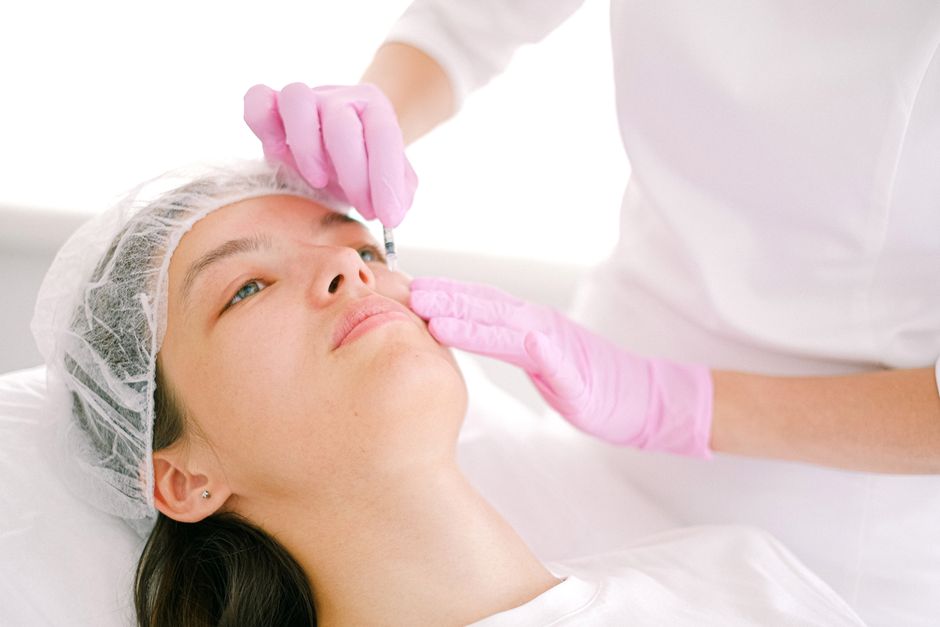
Botox injections go into specific muscles, not into general areas of skin. The most common sites on the face are the glabellar complex between the eyebrows, the frontalis muscle across the forehead, the orbicularis oculi around the outer eyes, and the muscles around the mouth and jaw. Each site is chosen because a particular muscle is pulling the skin into a line or fold.
Where the needle goes and where the wrinkle appears are not always the same place. That distinction matters more than most people realize, and it explains why the same treatment can look natural on one face and frozen on another.
Where On Your Face To Get Botox Injections?
Botox is placed into the muscle that creates the line, not into the line itself. A horizontal forehead crease comes from the frontalis muscle that runs up the forehead. The vertical “11” lines between the brows come from the corrugator and procerus muscles. Crow’s feet at the outer corners of the eyes come from the orbicularis oculi.
Each of these muscles has a name, a location, and a predictable effect on the skin above it. Injecting the correct muscle relaxes it, and the skin it was pulling flattens. Injecting the wrong spot, or too much into the wrong muscle, can change how the whole upper face moves.
There is a reason the upper face dominates the list. The muscles there are small, close to the surface, and their pull on the skin is easy to trace. Lower-face muscles are larger, more intertwined, and tied to functions like smiling, chewing, and speaking. That makes them harder to treat without side effects.
What Are the Common Injection Sites on the Upper Face?
The upper face is where most Botox treatment happens, and for good reason. The muscles there are responsible for the lines that show up first and most consistently with age.
- Glabella — the area between the eyebrows. The corrugator supercilii and procerus muscles pull the brows inward and down, creating vertical lines. This is one of the most studied and most commonly treated areas.
- Forehead — the frontalis muscle runs vertically up the forehead. When it contracts, it creates horizontal lines. Treating it requires care because the frontalis also lifts the eyebrows.
- Crow’s feet — the orbicularis oculi wraps around the eye. Its outer edge creates the fan of lines at the corners. This muscle also closes the eyelid, so precision matters.
- Brow lift — a small amount placed in specific spots can relax the muscles that pull the brow down, letting the brow-levating muscle work with less opposition.
The glabella is the site with the longest track record. It was the first facial area approved for cosmetic Botox in the United States, and it remains the most studied. That history is why it is often the starting point for someone new to treatment.
Can Botox Be Used on the Lower Face and Neck?
Yes, but the lower face is a different problem. The muscles there are larger and do more work. They control smiling, chewing, and the shape of the mouth. Relaxing them incorrectly can affect how you eat, speak, or express emotion.
Common lower-face targets include the masseter muscles at the jaw, the mentalis muscle at the chin, and the muscles around the mouth that create lip lines. The masseter is sometimes treated for jaw clenching or for a slimmer jawline. That use has grown, though the evidence for cosmetic jaw slimming is not as strong as the evidence for the upper face.
The neck is treated in some practices for vertical bands. The platysma muscle runs down the neck and can create cord-like bands with age. Treating it is more technically demanding, and results vary more than in the upper face.
One point worth stating plainly: the further you move from the upper face, the less predictable the outcome and the more skill the injector needs. That is not a marketing line. It reflects the anatomy.





Why Does Injection Placement Matter So Much?
Botox works by blocking the signal from nerve to muscle. When the muscle cannot receive that signal, it cannot contract. The skin it was pulling relaxes, and the line softens.
That mechanism is why placement is everything. If the needle lands in the wrong muscle, the wrong muscle relaxes. The line you wanted to treat stays. Meanwhile, a muscle you needed keeps working, or one you did not want to touch goes quiet.
A common example is the forehead. The frontalis lifts the eyebrows. If it is treated too heavily or too low, the brows can drop. That can create a heavy look or, in some cases, affect the upper eyelid. Experienced injectors account for this by adjusting dose and placement based on how each person’s muscles behave.
This is also why two people with similar-looking lines may need different treatment plans. Muscle strength, muscle position, and how the face moves are not identical from person to person.
Which Areas Are Not Good Candidates for Botox?
Botox treats lines caused by muscle movement. It does not treat lines caused by sun damage, gravity, or lost volume. That distinction decides which areas respond and which do not.
Static lines that are visible even when the face is at rest may not fully respond to Botox. They may soften, but they often need a different approach. Volume loss in the cheeks, hollowing under the eyes, and deep folds that run from the nose to the mouth are generally not Botox problems. Those are structural, not muscular.
Some areas are avoided or treated with heavy caution because of what sits nearby. Injections close to the eye can affect eyelid position. Injections near the mouth can affect the smile. These risks are not common in experienced hands, but they are real, and they are the reason training and anatomy knowledge matter.
Does the Injection Site Match Where the Wrinkle Shows?
No, and this is the point most people miss. The needle goes into the muscle, not the crease. A line between the brows is treated by injecting the muscles that pull the brows together, which sit slightly above and to the sides of the visible line.
This is why a skilled injector spends time watching the face move before deciding where to place anything. Asking a patient to frown, raise the brows, and squint reveals which muscles are active and how strongly. That information shapes the plan more than the resting appearance does.
It also explains why results are not instant. The muscle takes time to stop signaling, so the full effect develops over several days rather than appearing immediately after the appointment.
What Should You Know Before Choosing a Provider?
Botox is a prescription treatment, and in the United States it is typically administered by a licensed medical professional. Who is legally allowed to inject varies by state, so the rules where you live may differ from somewhere else.
What does not vary is the importance of facial anatomy knowledge. The difference between a good result and a complication often comes down to knowing exactly where a muscle sits, how deep it runs, and how it interacts with the muscles around it.
It is reasonable to ask about a provider’s training and experience with the specific areas you want treated. It is also reasonable to expect a conversation about your goals, your facial movement, and what Botox can and cannot do for you. Anyone who promises a specific result without examining how your face moves is skipping a step that matters.
If you have a neuromuscular condition, are pregnant or breastfeeding, or take medications that affect nerve or muscle function, that information belongs in the conversation before any treatment. Guidance for those situations should come from your own clinician, not from a general article.
Frequently Asked Questions
Where is Botox most commonly injected on the face?
The most common sites are the glabella between the eyebrows, the forehead, and the outer corners of the eyes. These upper-face areas have the longest track record and the most predictable results.
Can Botox be injected under the eyes?
It can be, but the area is treated with caution because the muscle there also controls the lower eyelid. Injecting it incorrectly can affect eyelid position, so this area needs an experienced injector.
Does Botox go into the wrinkle itself?
No. Botox goes into the muscle that pulls the skin into the wrinkle, which is often slightly away from the visible line. Treating the muscle is what relaxes the overlying skin.
Is Botox effective for lines around the mouth?
It can soften some movement-based lines there, but results are less predictable than in the upper face. Lines caused by volume loss or sun damage generally do not respond to Botox.
