
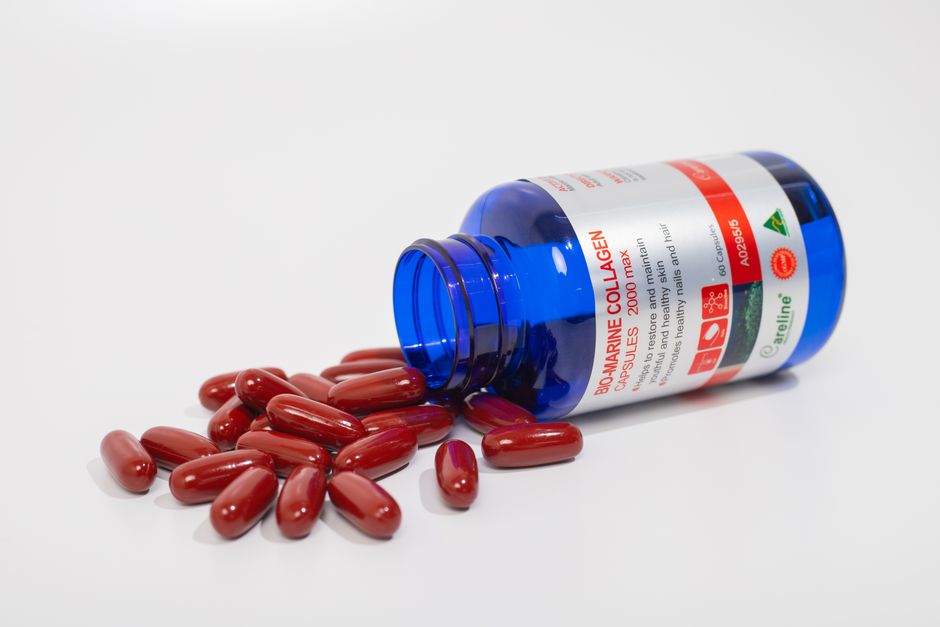
Hydrolyzed collagen comes from animal connective tissue — primarily cattle hides and bones, pig skin, and fish skin and scales. Those raw materials are rich in collagen protein, which is then broken down with heat, water, and enzymes into smaller peptide fragments. The result is a powder that dissolves in cold water and is sold as collagen peptides or collagen hydrolysate.
That is the short answer. The longer answer involves what collagen actually is, why the hydrolysis step matters, and how the source animal affects the final product. It also involves a fair amount of marketing noise, which this guide will separate from what research actually shows.
What Is Collagen and Where Does It Come From in the Body?
Collagen is the most abundant protein in the human body. It forms the structural scaffolding of skin, tendons, ligaments, bone, cartilage, and blood vessel walls.
The word comes from the Greek for “glue.” That is essentially what it does. Collagen molecules assemble into long triple-helix structures that give tissue its tensile strength. A tendon holds up under load because of how these fibers are arranged. Skin keeps its shape for the same reason.
The body makes its own collagen from amino acids, using vitamin C as a required cofactor. This is why severe vitamin C deficiency causes scurvy — the body cannot assemble stable collagen, and connective tissue breaks down.
Endogenous collagen production declines with age. This decline is well documented and contributes to skin thinning, joint stiffness, and bone density loss over time. It is also why the supplement industry has a market. Whether swallowing collagen peptides meaningfully replaces what the body loses is a separate question, addressed further down.
Where Does Hydrolyzed Collagen Come From? The Raw Materials
Commercial hydrolyzed collagen comes from animal byproducts — the parts of the animal that would otherwise be discarded or used for lower-value purposes.
The main sources are:
- Bovine — cattle hides, bones, and connective tissue. The most common source globally.
- Porcine — pig skin and bones. Common in Europe and Asia; less common in products marketed to US consumers who avoid pork for religious or dietary reasons.
- Marine — fish skin and scales, usually from cold-water species. Often labeled “marine collagen.”
- Eggshell membrane — a smaller category, marketed separately from standard collagen peptides.
- Chicken — cartilage and sternum, used in some products.
These are food-industry byproducts. A cattle hide that would otherwise go to leather processing or rendering becomes the raw material for collagen peptides. This is not a synthetic process — the starting material is real animal tissue.
For readers who avoid animal products: hydrolyzed collagen is not vegan and cannot be. There is no plant source of collagen. Products marketed as “vegan collagen” contain no collagen at all. They typically contain amino acids, vitamin C, or plant extracts that the body uses as building blocks for its own collagen production. That is a different mechanism with different evidence behind it.
How Is Collagen Turned Into Hydrolyzed Collagen?
The process has three main steps: extraction, hydrolysis, and purification.
First, raw connective tissue is cleaned and treated with heat and water, sometimes with acid or alkali, to extract the collagen protein. At this stage the collagen is still in its large native form — a triple helix with a molecular weight in the hundreds of thousands of daltons. In this form it is poorly soluble and poorly absorbed.
Second, the extracted collagen undergoes hydrolysis. Enzymes — typically proteases — break the protein chains into shorter fragments called peptides. This is the defining step. “Hydrolyzed” means the protein has been chemically split by the addition of water.
The resulting peptides are much smaller. Most commercial hydrolyzed collagen has an average molecular weight in the range of a few thousand daltons, though products vary. This smaller size makes the powder dissolve in cold water and, importantly, changes how it behaves in the digestive tract.
Third, the mixture is filtered, sometimes decolorized and deodorized, and spray-dried into the familiar powder.




Does Hydrolyzed Collagen Get Absorbed?
Yes — but not as intact collagen. This is where a lot of marketing language gets loose.
When you swallow hydrolyzed collagen, digestive enzymes break the peptides down further. Some small peptides are absorbed intact across the intestinal wall into the bloodstream. Research using labeled collagen peptides has detected these fragments in blood after oral intake.
What does not happen: intact collagen does not travel to your skin or joints and get inserted directly into your own connective tissue. That is not how it works. The absorbed peptides are broken down into amino acids, which the body uses wherever it needs them.
There is a more interesting finding here. Some absorbed collagen peptides appear to act as signaling molecules rather than just amino acid building blocks. Certain dipeptides and tripeptides — particularly proline-hydroxyproline and hydroxyproline-glycine — have been detected in blood after oral collagen intake and studied for their effects on cells that produce collagen. This is a genuinely non-obvious point: the proposed benefit may come from signaling, not from the raw material being reused.
That mechanism is plausible and is the subject of ongoing research. It is not the same as proven clinical benefit. Biological plausibility and demonstrated outcomes are different things.
Is Hydrolyzed Collagen the Same as Gelatin?
No, though they come from the same raw materials and the difference is only a matter of degree.
Gelatin is also hydrolyzed collagen, but the hydrolysis is less complete. Gelatin peptides are larger, which is why gelatin gels when cooled — the longer chains tangle and form a network. Hydrolyzed collagen peptides are smaller, so they do not gel. They dissolve and stay dissolved.
This matters practically. If a recipe calls for gelatin to set a dessert, collagen peptides will not work. If you want a powder that dissolves in coffee without clumping, gelatin will not work either.
Both contain the same amino acids. The difference is chain length, which affects solubility, texture, and possibly absorption rate.
What Does the Evidence Actually Show?
This is where honesty matters more than enthusiasm.
Research on hydrolyzed collagen has been conducted in several areas — skin elasticity and hydration, joint pain, and bone density. Results are mixed. Some studies show modest improvements; others show no significant difference from placebo. Many studies are small, short in duration, or industry-funded, which affects how much weight they should carry.
For skin, some randomized trials have reported improvements in elasticity and hydration after several weeks of daily collagen peptide supplementation. Effect sizes tend to be modest, and measurement methods vary between studies, which makes comparison difficult.
For joint pain, particularly in athletes and people with knee osteoarthritis, some studies report reduced pain scores. Other studies find no meaningful difference. The evidence is not consistent enough to call this settled.
For bone density, the data is thinner. Some research suggests a possible effect when collagen peptides are combined with calcium and vitamin D, but the independent contribution of the collagen is unclear.
The honest summary: hydrolyzed collagen is generally well tolerated, and some evidence suggests modest benefits in specific areas. It is not a proven treatment for any medical condition. Anyone with joint pain, skin conditions, or bone loss should treat collagen supplements as a possible adjunct — not a substitute for established treatment.
What to Check on a Hydrolyzed Collagen Label
Labels vary widely, and the source is not always obvious.
- Source animal — “bovine,” “porcine,” “marine,” or “fish” should appear. “Collagen peptides” alone does not tell you the origin.
- Peptide size — some brands list average molecular weight. Smaller is not automatically better; the research does not establish an optimal size.
- Third-party testing — look for testing by an independent lab. Heavy metal contamination in collagen products has been reported in some independent analyses, particularly in lower-quality products.
- Additives — many powders contain flavoring, sweeteners, or added vitamins. These do not affect the collagen itself but may matter to you.
For people with fish or shellfish allergies, marine collagen is a genuine concern. For those with alpha-gal syndrome, a tick-borne allergy to mammalian meat, bovine and porcine collagen may be a problem. These are not theoretical risks and are worth discussing with a clinician.
Common Myths About Hydrolyzed Collagen
A few claims circulate widely and do not hold up.
“Vegan collagen exists.” It does not. Collagen is by definition an animal protein. Products labeled vegan collagen contain no collagen.
“Collagen goes straight to your skin.” It does not. Absorbed peptides are broken down and distributed throughout the body. Any benefit to skin is indirect.
“More collagen means more results.” There is no established dose-response relationship showing that higher intakes produce greater benefits. More is not demonstrated to be better.
“Collagen replaces lost collagen.” The body does not simply install dietary collagen into existing tissue. It uses amino acids and, possibly, signaling peptides. This is a meaningfully different process.
Frequently Asked Questions
Where does hydrolyzed collagen come from?
It comes from animal connective tissue — mainly cattle hides and bones, pig skin, and fish skin and scales. These raw materials are broken down by heat, water, and enzymes into smaller peptides.
Is hydrolyzed collagen vegan?
No. Collagen is an animal protein and there is no plant source. Products marketed as vegan collagen contain no collagen — usually amino acids or plant extracts instead.
Does hydrolyzed collagen actually work?
Some studies suggest modest benefits for skin elasticity and joint comfort, but results are mixed and many studies are small or industry-funded. It is not a proven treatment for any medical condition.
What is the difference between collagen and hydrolyzed collagen?
Hydrolyzed collagen has been broken into smaller peptides, which makes it dissolve in cold water and easier to absorb. Regular collagen and gelatin have larger protein chains that gel when cooled.
