
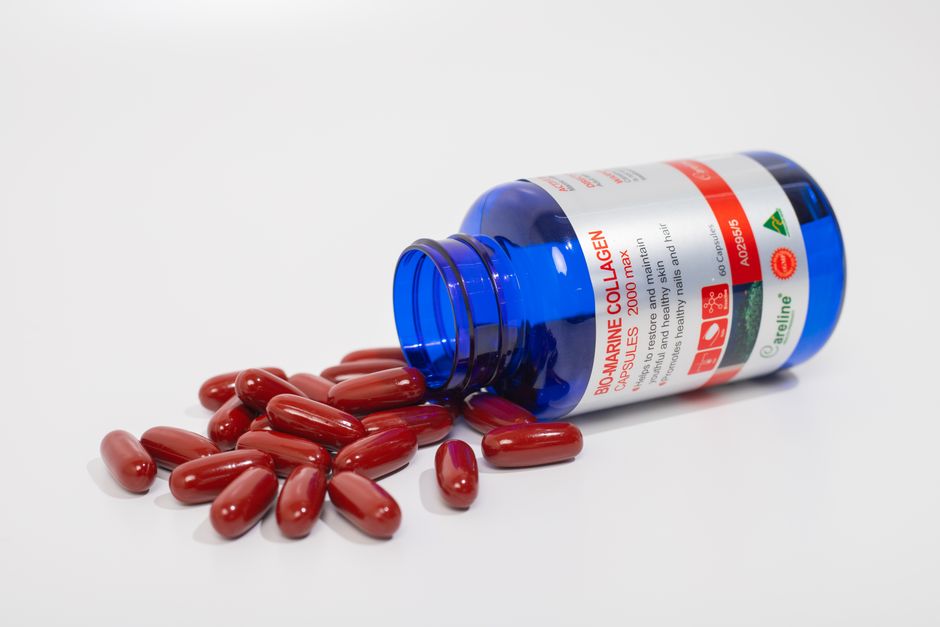
Collagen is the most abundant protein in the human body, and the collagen in your joints, skin, and bones is made by your own cells — not absorbed directly from food. The source of collagen in the body is your body’s own production. Cells called fibroblasts and osteoblasts assemble collagen from amino acids, vitamin C, copper, zinc, and other nutrients. No food delivers ready-made human collagen. Instead, food supplies the raw materials your body needs to build it.
What Is The Source Of Collagen Body Food More?
The source of collagen in your body is internal production. Your cells build collagen from amino acids, primarily glycine, proline, and hydroxyproline, along with vitamin C, copper, zinc, and iron as cofactors. Food provides these building blocks. It does not provide collagen itself in a form your body can use directly.
This distinction matters because it changes what you should look for in a diet. You are not hunting for collagen. You are hunting for the nutrients that let your body make it.
When you eat a chicken breast or a bowl of beans, your digestive system breaks the protein down into individual amino acids. Those amino acids enter your bloodstream and become available to cells throughout your body. Your fibroblasts then use them to assemble collagen fibers. The process is internal. It happens in your connective tissue, your bones, your skin, and your blood vessels.
Collagen is not a single substance. There are at least 28 known types in the human body. Type I dominates in skin, bone, and tendon. Type II is the main collagen in cartilage. Type III is found in blood vessels and skin. Each type has a different structure and role, but all are built by your cells from the same basic raw materials.
Which Foods Provide The Building Blocks For Collagen?
Protein-rich foods supply the amino acids your body needs to make collagen. Vitamin C is required for the enzymes that stabilize collagen molecules. Copper and zinc support the cross-linking steps that give collagen its strength.
Foods that supply these nutrients include:
- Meat, poultry, and fish — complete proteins with all essential amino acids
- Eggs — rich in glycine and proline
- Bone broth — contains collagen fragments, but these are digested into amino acids before absorption
- Beans and legumes — provide amino acids, though not a complete protein on their own
- Citrus fruits, bell peppers, strawberries, and broccoli — high in vitamin C
- Nuts, seeds, and whole grains — sources of copper and zinc
Notice that bone broth and collagen supplements appear on this list alongside ordinary foods. That is deliberate. When you eat collagen from any source, your digestive system breaks it into amino acids and short peptides. Some of those peptides may have biological activity, but they are not assembled into human collagen directly.
Vitamin C deserves special mention. Without it, the enzymes that add hydroxyl groups to proline and lysine cannot function. Those hydroxyl groups are what allow collagen molecules to form stable triple helices. Severe vitamin C deficiency causes scurvy, a disease characterized by poor wound healing, bleeding gums, and fragile blood vessels. This is a well-established mechanism dating back centuries.
Does Eating Collagen Directly Increase Collagen In Your Body?
Eating collagen does not directly increase the collagen content of your skin, joints, or bones. The collagen you eat is digested. What enters your bloodstream is a mixture of amino acids and small peptides, not intact collagen molecules.
Some research suggests that specific collagen peptides may stimulate fibroblasts to produce more collagen. This is an active area of study. Small trials have reported improvements in skin elasticity and joint comfort with collagen supplementation, but results vary across studies. Many of these trials are short, use different collagen sources, and measure outcomes differently. The evidence is not strong enough to say that eating collagen reliably increases collagen in your body.
The peptides that survive digestion may act as signaling molecules. They might tell your cells to ramp up production. That is a plausible mechanism, and some studies support it. But biological plausibility is not the same as proven clinical benefit. Larger, longer trials with consistent methods are needed before this can be stated as established fact.
What is well established: your body needs adequate protein, vitamin C, copper, zinc, and iron to make collagen. If any of these are deficient, collagen production suffers. Correcting a deficiency helps. Adding extra collagen on top of an already adequate diet has not been proven to provide additional benefit.




What Nutrients Are Required For Collagen Synthesis?
Collagen synthesis requires a specific set of nutrients. Each plays a defined role in the process. A deficiency in any of them can impair collagen production.
| Nutrient | Role In Collagen Production | Common Food Sources |
|---|---|---|
| Vitamin C | Cofactor for enzymes that hydroxylate proline and lysine | Citrus, bell peppers, strawberries, broccoli |
| Copper | Cofactor for lysyl oxidase, which cross-links collagen | Nuts, seeds, organ meats, whole grains |
| Zinc | Supports cell division and protein synthesis | Meat, shellfish, legumes, seeds |
| Iron | Cofactor for prolyl hydroxylase | Red meat, beans, spinach, fortified cereals |
| Protein (glycine, proline) | Provides the amino acid backbone | Meat, poultry, fish, eggs, dairy, legumes |
The roles of vitamin C, copper, and iron in collagen synthesis are well established in biochemistry and clinical nutrition. Scurvy, caused by vitamin C deficiency, is the classic example. Copper deficiency, though rare, is known to cause connective tissue problems. These are not speculative mechanisms. They are documented in medical literature.
Zinc’s role is broader. It supports protein synthesis generally, including collagen. Severe zinc deficiency impairs wound healing, which involves collagen deposition. But zinc is not a specific collagen cofactor in the way vitamin C and copper are.
Does Collagen Production Decline With Age?
Collagen production does decline with age. This is well documented. Fibroblasts in the skin produce less collagen over time. Existing collagen fibers become more fragmented and less organized. The result is visible in skin that loses firmness and in joints that feel stiffer.
The decline is gradual. It is not a disease. It is a normal part of aging. The reasons are not fully understood, but several factors contribute:
- Fibroblasts become less responsive to growth signals
- Oxidative stress damages existing collagen
- Enzymes that break down collagen become more active relative to those that build it
- Hormonal changes, particularly estrogen decline after menopause, affect collagen in skin and bone
This decline is one reason collagen supplements have become popular. The logic seems straightforward: if collagen decreases with age, adding more should help. But the body does not work that way. Eating more collagen does not automatically mean producing more collagen. The rate-limiting steps are cellular and enzymatic, not just the availability of raw material.
What does help: maintaining adequate protein intake, getting enough vitamin C, avoiding smoking, and protecting skin from excessive sun exposure. These are well-established factors. They support your body’s ability to produce and maintain collagen. They do not reverse aging, but they support normal function.
Are Collagen Supplements Worth Taking?
Collagen supplements are not necessary for most people. A balanced diet with adequate protein and vitamin C provides the nutrients your body needs to make collagen. Whether supplements provide additional benefit is not clearly established.
Some studies suggest that collagen peptides may improve skin hydration and elasticity. Others report reduced joint pain in athletes. But the evidence is mixed. Many studies are small, industry-funded, or use different outcome measures. Some show benefit. Others show none. The overall picture is not strong enough to recommend collagen supplements as a proven treatment for aging skin or joint pain.
If you choose to take a collagen supplement, know what you are getting. Collagen peptides are generally recognized as safe. They are broken down into amino acids like any other protein. They are not a drug. They do not cure anything. The evidence for specific benefits is limited and inconsistent.
What is not in question: protein deficiency impairs collagen production. Vitamin C deficiency causes scurvy. These are established. If your diet is adequate in these nutrients, adding collagen is unlikely to make a measurable difference in most people.
Some clinicians recommend collagen supplements for specific situations, such as wound healing or joint recovery. This is not the same as saying the evidence strongly supports it. It is a judgment call based on limited data and low risk of harm.
What Actually Supports Healthy Collagen In The Body?
The most reliable way to support collagen production is to give your body what it needs to build it. That means adequate protein, vitamin C, copper, zinc, and iron. It also means avoiding things that damage collagen, like smoking and excessive UV exposure.
Protein intake matters. The general recommendation for adults is 0.8 grams of protein per kilogram of body weight per day, though needs vary with age, activity level, and health status. This is an established guideline. It is not specific to collagen, but it covers the amino acids your body needs for all protein synthesis, including collagen.
Vitamin C recommendations vary by age and sex. The current Recommended Dietary Allowance for adults ranges from 75 to 90 milligrams per day, with higher needs for smokers. These are official guidelines from the National Academies. They are not collagen-specific, but they ensure the cofactor is available.
Copper and zinc have established RDAs as well. Most people meet them through diet. Deficiency is uncommon in the absence of malabsorption or other medical conditions.
What does not help: smoking. Smoking damages collagen and accelerates skin aging. This is well documented. UV exposure also breaks down collagen over time. Sunscreen and sun avoidance protect it. These are established preventive measures, not speculative claims.
The bottom line is straightforward. Your body makes its own collagen. Food provides the raw materials. No food or supplement delivers ready-made human collagen. The best support is a balanced diet, adequate protein, enough vitamin C, and avoiding things that damage collagen. Everything else is either unproven or marginal.
Frequently Asked Questions
What is the primary source of collagen in the human body?
Your body produces its own collagen through cells called fibroblasts and osteoblasts. Food provides amino acids and cofactors like vitamin C, but not ready-made human collagen.
Does eating bone broth increase collagen in your joints?
No. Bone broth contains collagen, but digestion breaks it into amino acids before absorption. It provides protein and some minerals, but it does not directly become collagen in your joints.
Can collagen supplements reverse skin aging?
No. Some studies suggest collagen peptides may improve skin hydration or elasticity, but the evidence is mixed and not strong enough to claim they reverse aging. They are not a proven treatment.
What nutrient deficiency most directly affects collagen production?
Vitamin C deficiency causes scurvy, which directly impairs collagen synthesis. This is the most well-established link between a nutrient deficiency and collagen production.
