
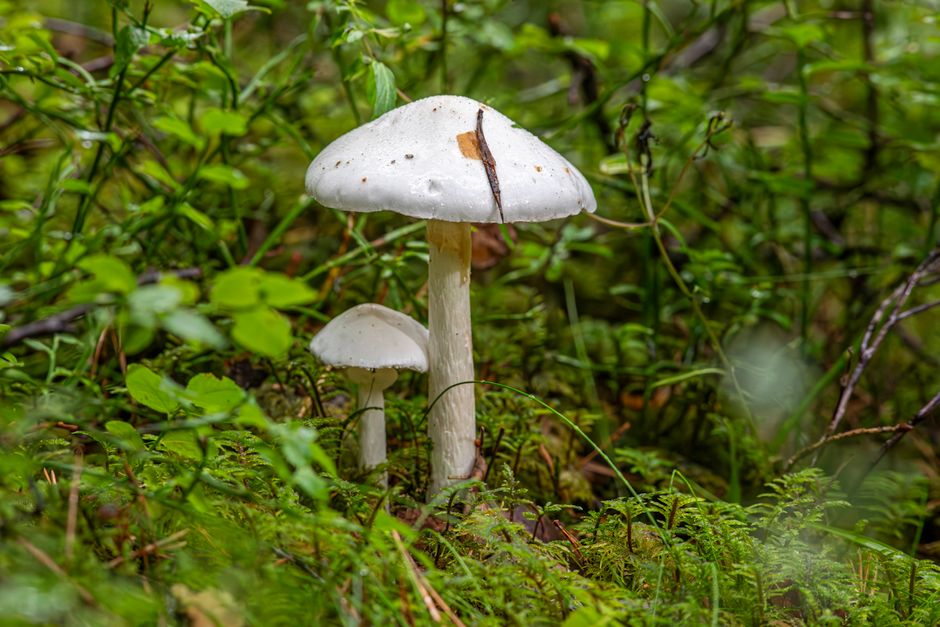
The death cap mushroom, Amanita phalloides, is found across Europe, parts of North America, North Africa, the Middle East, and scattered regions of Asia and Australia. It is native to Europe and has been introduced to new continents largely by accident, traveling on the roots of imported trees. Today it is considered the most dangerous mushroom in the world, responsible for the majority of fatal mushroom poisonings globally.
Where Death Cap Mushrooms Are Found Worldwide?
Europe is the death cap’s native home. The mushroom grows throughout the continent, from the Mediterranean to southern Scandinavia and the British Isles. It is common in oak, chestnut, and beech forests, and it also appears in parks, gardens, and tree-lined streets in cities.
North America is more complicated. Amanita phalloides has been confirmed in California, where it grows under coast live oaks and other introduced trees, and in scattered locations along the eastern seaboard. In some parts of the United States, a closely related species called Amanita phalloides var. alba or similar Amanita species produce the same toxins. The situation is still being mapped by researchers, and new locations are reported periodically.
In the Southern Hemisphere, the death cap has been documented in Australia, particularly in Victoria and parts of New South Wales, and in New Zealand. It is not native there. It arrived with imported European trees, most likely oak.
North Africa and the Middle East also have native or established populations. The mushroom appears in parts of Morocco, Algeria, and Turkey. Reports from Iran and surrounding regions exist but are less thoroughly documented.
Parts of Asia, including China and Japan, have their own Amanita species that produce the same class of toxins. Whether these are the same species or closely related ones is a question that mycologists continue to study.
Why the Death Cap Spread to New Continents
The death cap does not spread by wind over oceans. It spreads because it lives in partnership with tree roots.
Amanita phalloides is mycorrhizal. That means it forms a symbiotic relationship with certain trees, wrapping its underground threads around the tree’s roots and exchanging nutrients. When Europeans brought oak, chestnut, and other trees to new continents for landscaping and forestry, they brought the fungus along in the soil.
This is why death caps in California tend to grow near coast live oaks and other trees that were planted. They are not everywhere. They follow their tree partners.
This also explains why the mushroom can appear in cities. A single oak in a park or along a sidewalk can support death caps for years. People who forage in urban areas sometimes encounter them without realizing it.
What Makes the Death Cap So Dangerous
The death cap contains amatoxins, a group of toxins that shut down protein production inside cells. The liver is hit hardest because it processes everything absorbed from the gut. The kidneys are also damaged.
The toxins are heat-stable. Cooking, drying, freezing, or pickling does not destroy them. This is one of the few mushrooms where cooking offers no protection at all.
The mushroom itself looks unremarkable. It has a greenish-yellow or olive cap, white gills, a white ring on the stem, and a cup-like sac at the base. But these features vary. Young specimens can look like edible puffballs. Older ones can lose their ring or have their cap color fade. Color alone is not a reliable way to identify it.
One clarification that matters: the death cap is not the only deadly Amanita. The destroying angel, several Galerina species, and some Lepiota species also contain amatoxins. The death cap is the most common cause of fatal poisonings, but it is not the only one.



How Death Cap Poisoning Progresses
Symptoms usually begin 6 to 24 hours after eating the mushroom. That delay is part of what makes it so dangerous. A person can eat a meal, feel fine, and go to sleep before anything happens.
The first phase brings severe vomiting, diarrhea, and abdominal cramps. This can last for a day or more. Then comes a deceptive phase where the person feels better. The vomiting stops. They may think they have recovered.
During that quiet period, the liver is being damaged. Within a few days, liver failure can develop. Signs include jaundice, confusion, bleeding problems, and reduced urine output. Without treatment, this stage can be fatal.
There is no antidote that reverses amatoxin poisoning. Treatment focuses on removing toxins from the gut, supporting the liver, and in severe cases, liver transplant. Some clinicians use silibinin, a compound derived from milk thistle, and other medications, but the evidence for these treatments is limited and results vary. Anyone who suspects they have eaten a death cap should seek emergency care immediately, even if they feel fine.
Why Identification Is So Difficult
Death caps are mistaken for edible mushrooms all the time. In Europe, they are often confused with the edible field mushroom and other Agaricus species. In Asia, they are confused with edible paddy straw mushrooms. In North America, young death caps can resemble edible puffballs.
The problem is that mushroom identification requires more than a photo or a description. Cap color, stem features, habitat, spore print, and sometimes microscopic examination all matter. A single feature is never enough.
Even experienced foragers make mistakes. In several documented cases, entire families have been poisoned after eating mushrooms they were confident were safe. This is not a failure of intelligence or care. It is a failure of a system that relies on visual matching.
If you are not absolutely certain of a mushroom’s identity, do not eat it. That is not a cautious suggestion. It is the only reliable rule.
What to Do If You Suspect Poisoning
Call emergency services or a poison control center immediately. Do not wait for symptoms. The delay between eating and symptoms is one of the reasons death cap poisoning is so often severe by the time people seek help.
If possible, save the remaining mushroom or a photo of it. Do not eat more to confirm. Do not try to make yourself vomit unless a medical professional tells you to.
In the United States, poison control can be reached at 1-800-222-1222. Similar services exist in most countries. Time matters, and early contact with a poison center or emergency department gives the best chance of a good outcome.
Frequently Asked Questions
Are death cap mushrooms found in the United States?
Yes, they have been confirmed in California and in scattered locations along the eastern seaboard, typically growing near introduced oak and other trees. They are not native to North America and their distribution is still being mapped.
Can you survive eating a death cap mushroom?
Survival is possible, especially with early aggressive medical care, but the death cap causes the majority of fatal mushroom poisonings worldwide. Anyone who suspects they have eaten one should seek emergency care immediately.
Does cooking destroy death cap toxins?
No. The amatoxins in death caps are heat-stable, so cooking, drying, freezing, or pickling does not make them safe. There is no preparation method that removes the danger.
How long after eating a death cap do symptoms start?
Symptoms typically begin 6 to 24 hours after eating, often with severe vomiting and diarrhea. A deceptive period of feeling better can follow before liver damage becomes apparent.
