
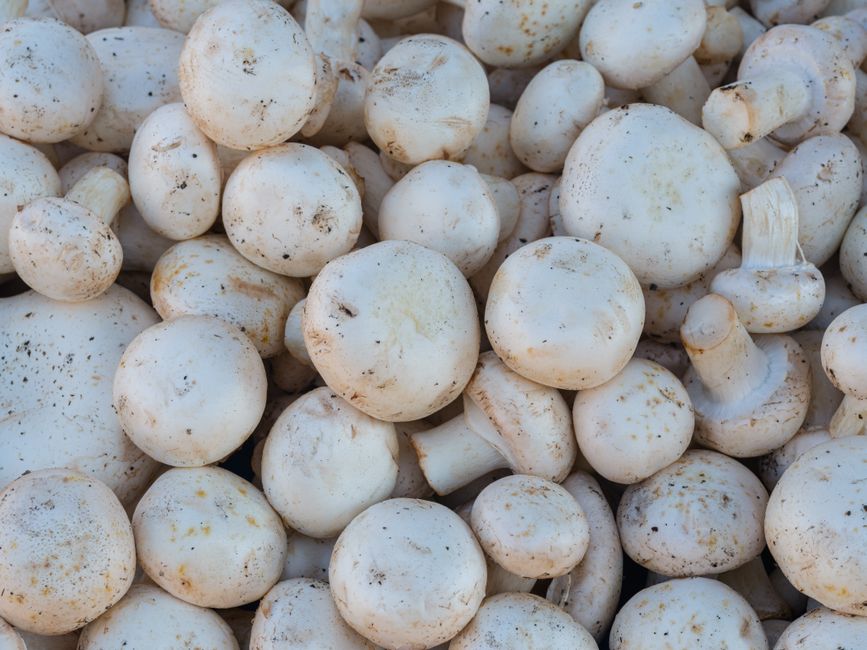
Mushrooms do not naturally contain vitamin B12 in any meaningful amount. Most mushrooms provide zero B12, with one very specific exception that only applies under certain conditions. If you eat mushrooms hoping to meet your B12 needs, you will likely fall short. This article explains what the science actually shows, which mushrooms might contain some B12, and what that means for your diet.
Do Mushrooms Have Vitamin B12 The Real Answer?
The direct answer is no for nearly all common mushrooms. White button, cremini, portobello, shiitake, and oyster mushrooms contain no significant vitamin B12. The only exception involves certain mushrooms exposed to specific bacteria during growth, and even then the amounts are small and inconsistent.
Vitamin B12 is unique among vitamins because it is almost exclusively produced by bacteria and archaea, not by plants or fungi. Animals get B12 because those bacteria live in their digestive systems or because they eat foods contaminated with B12-producing bacteria. Mushrooms, growing on decaying matter, simply do not accumulate this vitamin on their own.
Why Some Mushrooms Show B12 on Nutrition Labels
You may have seen mushroom products listed as containing B12. This is not a trick, but it is also not the whole story. Some mushroom species, particularly shiitake and black trumpet mushrooms, can contain small amounts of B12 when they absorb it from their growing environment.
The B12 in these mushrooms comes from bacteria living in the soil or compost where the mushrooms grow. If those bacteria produce B12 and the mushroom absorbs it, traces can appear in the final product. The amounts vary widely depending on growing conditions, harvest time, and processing. One batch of shiitake might show measurable B12 while the next batch shows none.
Research published in the Journal of Agricultural and Food Chemistry has confirmed that some wild and cultivated mushrooms contain small amounts of B12. However, the levels are far below what your body needs daily.
How Much B12 Do Mushrooms Actually Contain?
To understand the numbers, you first need a reference point. The recommended daily intake of vitamin B12 for most adults is 2.4 micrograms per day. A microgram is one-millionth of a gram, so the requirement itself is tiny.
Studies measuring B12 in mushrooms have found amounts ranging from undetectable to roughly 0.1 to 0.5 micrograms per 100 grams of dried mushroom. Fresh mushrooms contain even less because they are mostly water. To put that in perspective, you would need to eat several kilograms of fresh shiitake mushrooms daily to approach the recommended intake.
For comparison, a single large egg contains about 0.6 micrograms of B12. A 3-ounce serving of cooked beef provides roughly 1.5 micrograms. Mushrooms simply cannot compete with animal sources for B12 content.



Can Fermented Mushroom Products Provide B12?
Fermentation changes the picture somewhat. Some fermented foods, including certain mushroom-based products, can contain B12 because the fermentation process introduces B12-producing bacteria.
Research has shown that fermented shiitake and other mushroom preparations can develop measurable B12 levels. One study found that fermenting shiitake mushrooms with certain bacteria increased their B12 content significantly. However, these are specialty products, not the mushrooms you find in the produce section.
The key distinction is that fermentation adds bacteria that produce B12. The mushroom itself is not the source. If you buy a fermented mushroom product, check whether it is fortified or fermented in a way that adds B12. Standard fresh or dried mushrooms will not provide this benefit.
What About Mushroom Supplements?
Mushroom supplements are a different category entirely. Some mushroom powders and extracts are marketed as B12 sources, but this claim deserves careful scrutiny. Most mushroom supplements contain no measurable B12 unless the manufacturer specifically adds it.
Some companies now offer mushroom supplements with added B12, often derived from bacterial fermentation. These products can be legitimate B12 sources, but the B12 comes from the added bacteria, not the mushroom. Read the label carefully. If a supplement claims to contain B12, look for “cyanocobalamin” or “methylcobalamin” in the ingredients. If neither appears, the B12 claim is likely marketing rather than fact.
No clinical evidence currently confirms that mushroom supplements alone can maintain healthy B12 status in humans. If you rely on supplements for B12, choose products with clearly labeled B12 content rather than assuming mushroom extracts provide it.
Who Needs to Worry About B12 Intake?
Some groups face higher risk of B12 deficiency than others. Vegans and strict vegetarians are the most obvious groups because they avoid animal products entirely. Since mushrooms do not provide reliable B12, plant-based eaters need to find other sources.
Older adults also face increased risk. As people age, the stomach produces less acid, which reduces the body’s ability to absorb B12 from food. This condition, called atrophic gastritis, affects up to 30 percent of adults over 50. Even if they eat enough B12, their bodies may not absorb it efficiently.
People with digestive disorders such as Crohn’s disease or celiac disease may also struggle with B12 absorption. The same applies to anyone who has had weight-loss surgery that affects the stomach or small intestine. These individuals often need B12 injections or high-dose oral supplements regardless of their diet.
Reliable Plant-Based Sources of Vitamin B12
If mushrooms are not a reliable B12 source, what should you eat instead? For people avoiding animal products, fortified foods are the most dependable option. Many breakfast cereals, plant milks, and nutritional yeast products are fortified with B12.
Nutritional yeast deserves special mention because it is often confused with a natural B12 source. Unfortified nutritional yeast contains no B12. Only the fortified versions provide it, typically around 2.4 micrograms per serving. Check the label to confirm the product is fortified.
Some algae and seaweed products are marketed as B12 sources, but this is controversial. Research has found that certain types of algae contain compounds that look like B12 in lab tests but do not function as B12 in the human body. These are called B12 analogs, and they may actually block the absorption of real B12. Do not rely on spirulina, chlorella, or nori for B12.
Signs of B12 Deficiency
B12 deficiency develops slowly, sometimes over years. Early symptoms are subtle and easy to dismiss. Fatigue, weakness, and lightheadedness are common. Some people notice a sore tongue or mouth ulcers. Others experience numbness or tingling in their hands and feet.
More serious symptoms include memory problems, difficulty concentrating, and mood changes. In severe cases, B12 deficiency can cause nerve damage that may be partially reversible with treatment. The longer deficiency goes untreated, the greater the risk of permanent neurological damage.
If you suspect B12 deficiency, ask your doctor for a blood test. A simple test measuring serum B12 or methylmalonic acid levels can confirm the diagnosis. Do not guess based on symptoms alone, because many conditions produce similar symptoms.
How to Meet Your B12 Needs Without Animal Products
For most people, meeting B12 needs is straightforward. Eat animal products regularly, including meat, fish, eggs, and dairy. These foods provide B12 in forms your body can use directly.
For vegans and vegetarians, the approach requires more intention. Include fortified foods daily and consider a B12 supplement. Many health organizations recommend that people on fully plant-based diets take a daily B12 supplement of 25 to 100 micrograms, or a weekly dose of 2,000 micrograms. These are general guidelines, not specific medical advice for your situation.
Talk to your healthcare provider about your individual needs. Blood tests can tell you whether your current intake is adequate. If your levels are low, your doctor can recommend the right supplement dose or form for you.
Frequently Asked Questions
Do mushrooms have vitamin B12 naturally?
No, most mushrooms contain no naturally occurring vitamin B12. A few varieties may absorb trace amounts from bacteria in their growing environment, but the levels are too low to meet your daily needs.
Can I get enough B12 from eating mushrooms?
No. Even the mushrooms with the highest measured B12 content would require eating several kilograms daily to approach the recommended intake. Mushrooms are not a practical B12 source.
Are mushroom supplements a good source of B12?
Only if the supplement label specifically lists added B12. Most mushroom supplements contain no B12 unless the manufacturer fortifies them with it.
What foods are the best plant-based B12 sources?
Fortified foods such as breakfast cereals, plant milks, and fortified nutritional yeast are the most reliable plant-based B12 sources. Always check labels to confirm fortification.
