
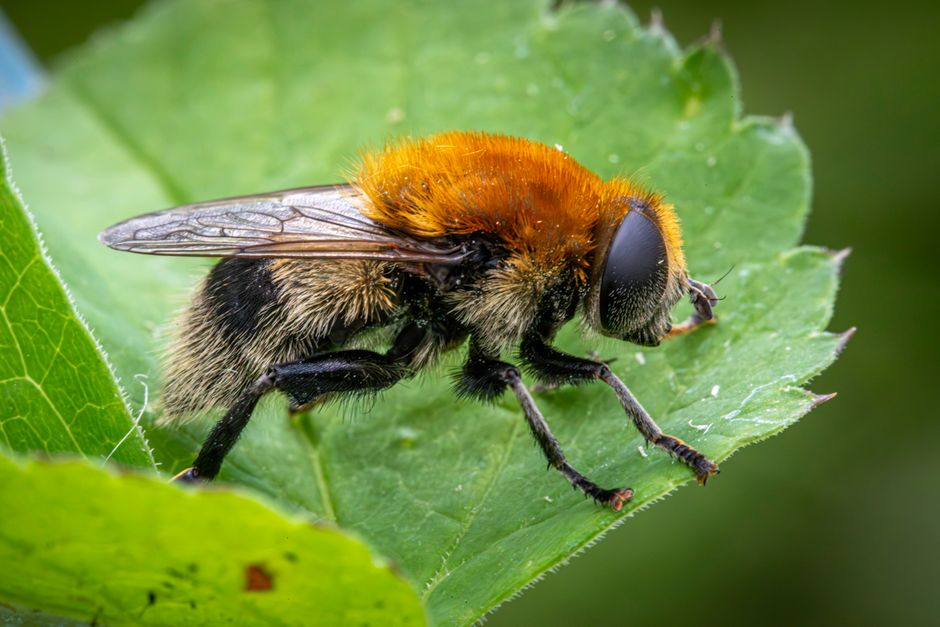
Botflies are parasitic flies found mainly in the Americas, from the southern United States down through Mexico, Central America, and into South America. They find hosts by laying eggs on mosquitoes or other biting insects, which then carry the botfly eggs to a warm-blooded animal or person when they bite for a blood meal. The heat of the host’s body triggers the eggs to hatch, and the larvae then burrow into the skin to develop.
Where Are Botflies Found In The World?
The human botfly, Dermatobia hominis, is native to tropical and subtropical regions of the Americas. Its range extends from parts of Mexico through Central America and into South America, including countries like Brazil, Colombia, Peru, and Argentina. It is not found in Europe, Asia, Africa, or Australia in any natural or established way.
Other types of botflies exist in different parts of the world, but they behave differently. Horse botflies and deer botflies are found in the United States, Europe, and other temperate regions. These species do not typically infest humans the way the human botfly does. They target livestock and wildlife, and their larvae develop inside the animal’s stomach or nasal passages rather than under the skin.
If you are traveling to Central or South America, the human botfly is the species to be aware of. It thrives in humid, forested, and agricultural areas where its mosquito carriers are common. Rural areas with livestock tend to have higher botfly activity, though cases do occur in urban settings too.
How Do Botflies Actually Find Their Hosts?
The botfly does not land on its host directly. This is what makes it unusual among parasitic flies. The female botfly captures a mosquito, a tick, or another biting fly mid-air and glues her eggs onto its body. This carrier is called a vector.
When the mosquito or tick later bites a warm-blooded animal or a person, the body heat from the host causes the botfly eggs to hatch quickly. The larvae drop off the vector and onto the skin, where they immediately begin burrowing. They create a small hole and settle into the tissue just beneath the skin, where they will feed and grow for several weeks.
This indirect method of transmission means people rarely notice the actual moment of infestation. There is no sensation of a fly landing or biting. The first sign is usually a small, itchy bump that slowly grows into a painful, boil-like lesion days or weeks later.
What Does A Botfly Infestation Look Like?
A botfly larva living under the skin causes a condition called myiasis. The infected area looks like a red, swollen bump similar to an insect bite or a boil. The bump often has a tiny opening in the center, and fluid may drain from it periodically.
People often report a strange crawling or moving sensation under the skin. This is the larva moving and feeding. The lesion can be painful, especially as the larva grows larger, and secondary bacterial infections are possible if the area is not kept clean.
The larva breathes through a small opening in the skin, so it keeps a tiny pore open at the surface. Sometimes the tip of the larva can be seen moving within this opening. This is a key feature that helps doctors distinguish a botfly infestation from a regular boil or an infected insect bite.





How Long Does A Botfly Stay In The Skin?
A botfly larva develops under the skin for about 5 to 12 weeks. During this time it grows significantly, reaching about 1 to 2 centimeters in length. When fully mature, the larva exits the skin on its own, drops to the ground, and pupates in the soil to become an adult fly.
If left alone, the larva will eventually complete its development and leave. However, most people seek medical removal well before this happens because the lesion becomes increasingly uncomfortable. Leaving it untreated also raises the risk of infection or scarring.
Medical removal is the recommended approach. A doctor will typically numb the area, make a small incision, and remove the larva whole. If the larva is broken during removal, parts left behind can cause an inflammatory reaction or infection.
What Are The Treatment Options For A Botfly Infestation?
Doctors have several methods for removing botfly larvae. The most reliable is surgical removal under local anesthesia. The doctor enlarges the breathing hole slightly and extracts the larva with forceps. This is quick and effective, and it removes the larva in one piece.
Some clinicians use a technique of occluding the breathing hole with petroleum jelly, nail polish, or a similar substance. This blocks the larva’s air supply and forces it to migrate toward the surface, making removal easier. This method is sometimes used before surgical extraction, but it is not a standalone cure. The larva needs to be physically removed once it surfaces.
There is no oral medication approved specifically for treating botfly infestations in humans. Ivermectin, an antiparasitic drug, has been used in some case reports with mixed results. It is not considered a standard first-line treatment, and removal of the larva remains the definitive approach.
How Can Travelers Prevent Botfly Infestations?
Prevention focuses on avoiding mosquito bites in botfly-endemic areas. Using an effective insect repellent containing DEET or picaridin is the most practical measure. Wearing long sleeves and pants, especially during dawn and dusk when mosquitoes are most active, also reduces exposure.
Sleeping under a mosquito net is important in rural or forested areas. Treating clothing with permethrin adds another layer of protection. Because botfly eggs ride on mosquitoes, any measure that prevents mosquito bites also prevents botfly infestation.
People who spend time in rural livestock areas of Central or South America face the highest risk. Travelers staying in screened hotels in major cities are far less likely to encounter botflies. The risk is real but relatively low for most tourists, and it is entirely avoidable with consistent mosquito protection.
Are Botfly Infestations Dangerous?
For healthy people, a botfly infestation is rarely dangerous. The main issues are discomfort, pain, and the risk of secondary bacterial infection at the site. Once the larva is removed, the wound typically heals well, though some scarring is common.
Serious complications are uncommon but possible. If the larva migrates to a sensitive area, such as near the eye, inside the nose, or into the mouth, it can cause more significant problems. Cases of botfly larvae in the eye or sinuses have been reported, and these require prompt specialist care.
People with weakened immune systems or poor wound healing should seek medical attention early. As with any skin wound, keeping the area clean after removal is important to prevent infection. Most people recover fully without any lasting effects beyond a small scar.
Frequently Asked Questions
Can botflies infest humans in the United States?
Yes, but it is rare and almost always linked to travel to Central or South America. Native U.S. botfly species target livestock and wildlife, not humans.
How do you know if you have a botfly larva under your skin?
You would notice a tender, boil-like bump with a small central opening that may drain fluid. A sensation of movement under the skin and seeing the larva move in the opening are strong signs.
Can a botfly infestation go away on its own?
Yes, the larva will eventually exit the skin on its own after 5 to 12 weeks. Medical removal is still recommended to avoid infection and reduce discomfort.
What should you do if you find a botfly larva in your skin?
See a doctor for professional removal. Do not try to squeeze or dig the larva out yourself, as breaking it can cause infection.
