
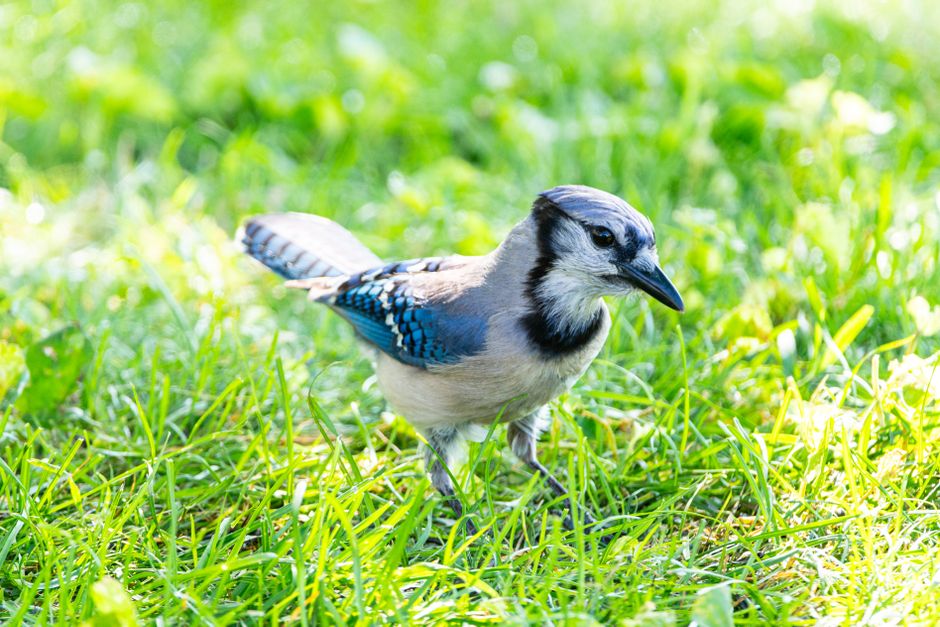
Blue jays are loud, smart, and hard to miss. When you see blue jays, their behavior and activity tell you a lot about what they are doing and why. These birds are bold, curious, and highly social. They also have a complex side that surprises many people. Understanding what their actions mean can help you enjoy watching them even more.
What Does a Blue Jay’s Behavior Mean?
Blue jays are members of the corvid family, which includes crows, ravens, and magpies. Corvids are known for being among the most intelligent birds in the world. Research consistently shows that blue jays have strong memory, problem-solving skills, and even social awareness.
When you see a blue jay at your feeder, its behavior is usually purposeful. A jay that lands, grabs a peanut, and leaves quickly is likely caching food. Caching means hiding food for later. Blue jays do this constantly in the fall. They store thousands of acorns and seeds in scattered locations and remember most of them months later.
If a blue jay sits still and watches you through a window, it is probably assessing you. These birds learn to recognize individual human faces. Some studies indicate that jays remember people who have been kind to them and people who have threatened them.
Why Do Blue Jays Scream and Make So Much Noise?
Blue jays are among the loudest backyard birds in North America. Their calls serve specific purposes. The harsh jay jay call is an alarm signal. When a jay spots a hawk, owl, cat, or snake, it lets out this call to warn other birds in the area.
This alarm behavior often attracts a mob. Mobbing is when several birds gather around a predator, calling loudly and diving at it. Blue jays are famous for mobbing owls and hawks. They do this to drive the predator away from their territory and nesting areas.
Not all blue jay sounds are alarms. They also make soft musical notes, rattles, and bell-like tones. These quieter sounds happen during social interactions between mates or family groups. Blue jays also mimic the calls of other birds, especially hawks. Some research suggests they use hawk calls to warn other jays, while other observations suggest they may do it to scare other birds away from food.
When You See Blue Jays Their Behavior and Activity Changes by Season
Blue jay activity follows a seasonal rhythm. In spring and early summer, they focus on nesting and raising young. You will see them carrying twigs, grass, and mud to build nests. They are also much quieter during nesting season. Loud calls would draw attention to their nest location.
In late summer and fall, their behavior shifts dramatically. This is peak caching season. Blue jays become very active at feeders, taking food and flying off to hide it. They also travel in small family groups. You may notice them moving through trees in a coordinated way, calling to each other as they go.
Winter brings another change. Blue jays that bred in the northern parts of their range may migrate south, while others stay year-round. Some research indicates that a blue jay’s decision to migrate depends on food availability and weather conditions. In winter, jays rely heavily on the food they cached in the fall. Watching them retrieve hidden food is a remarkable display of spatial memory.
Spring is also when you may see blue jays behaving aggressively. They defend nesting territories fiercely. They will chase away other birds, squirrels, and even humans who come too close to their nest. This aggression is temporary and mostly limited to the breeding season.





Are Blue Jays Aggressive to Other Birds?
Blue jays have a reputation for being bullies. Some of that reputation is deserved. They will raid other birds’ nests and eat eggs or nestlings. They also chase smaller birds away from feeders. These behaviors are real and documented.
However, the picture is more complicated than simple aggression. Research published in ornithological journals shows that blue jays eat mostly plant material. Acorns, nuts, seeds, and fruits make up the majority of their diet. Insects and other animal matter are a smaller portion. Nest raiding is more common during the breeding season when protein needs are highest.
At feeders, blue jays often intimidate smaller birds. But they also serve a useful role. Their loud alarm calls warn other birds about predators. Many backyard birdwatchers notice that when a blue jay screams, other birds freeze or take cover. The jay is effectively acting as a sentinel for the whole bird community.
What Does It Mean When a Blue Jay Follows You?
If a blue jay follows you around your yard, it usually means one of two things. The first is curiosity. Blue jays are intelligent and investigate new things in their environment. A jay may follow you simply to see what you are doing.
The second reason is food. If you have ever fed blue jays peanuts, they will remember you. A jay that follows you is often waiting for a handout. These birds form strong associations between people and food sources. Some birdwatchers report that individual jays come when called and land on their hands.
There is no evidence that blue jays can predict the future or deliver spiritual messages. These ideas come from folklore and internet content, not science. What you are seeing is a smart bird making a practical decision based on past experience.
How Smart Are Blue Jays Really?
Blue jays are among the most intelligent birds studied by scientists. Controlled experiments have shown that they can plan for the future. In one well-known line of research, jays were observed caching food in locations where they would be hungry the next morning. This suggests they can think about their future needs, not just their current ones.
They also understand cause and effect. Blue jays learn quickly to solve puzzles that require pulling strings, opening lids, or sliding doors to reach food. Their problem-solving ability rivals that of crows and ravens, which are considered the most intelligent birds.
Blue jays also show signs of complex social intelligence. They recognize individual birds and remember past interactions. They can tell which birds are related to them and adjust their behavior accordingly. In one study, jays were shown to avoid areas where they had seen another jay stealing food, suggesting they understand theft and adjust their caching strategy to protect their stores.
How to Observe Blue Jay Behavior in Your Yard
You do not need special equipment to watch blue jays. A pair of binoculars and a quiet spot near a feeder is enough. The best observations happen early in the morning and late in the afternoon when jays are most active.
Offer whole peanuts in the shell. Blue jays love them and their handling behavior is fascinating to watch. A jay will pick up a peanut, test its weight, and sometimes reject several before choosing one. This is not random. They are selecting peanuts that feel heavy and full.
Watch what they do after taking food. Some jays eat immediately. Others fly away to cache. You can track where they hide food and watch them retrieve it later. This gives you a window into their memory and planning abilities.
Keep a notebook if you want to identify individual birds. Blue jays have subtle differences in their facial markings and body size. Over weeks, you may notice that certain jays behave differently. One might be bold and come close. Another might be cautious and stay in the trees. These individual differences are real and visible with patience.
Common Myths About Blue Jay Behavior
One common myth is that blue jays are always aggressive. They can be aggressive, but they also show gentle social behavior. Mated pairs preen each other and share food. Parents feed their young for weeks after they leave the nest.
Another myth is that blue jays chase away all other birds. While they do dominate feeders, many bird species coexist with them. Cardinals, chickadees, titmice, and woodpeckers regularly share the same feeding areas. The presence of blue jays does not automatically drive other birds away.
A third myth is that blue jays are rare or disappearing. Their populations are stable across most of their range. They are one of the most widespread backyard birds in eastern North America. If you are not seeing them, it is more likely due to local habitat or food availability than a population decline.
Frequently Asked Questions
Why does a blue jay scream at me?
It is giving an alarm call because it sees you as a potential threat. If you move away and give it space, the screaming usually stops.
Do blue jays remember humans?
Yes, blue jays recognize individual human faces and remember past experiences with them. They approach people who have fed them and avoid people who have threatened them.
What does it mean when a blue jay follows me?
It is either curious about you or hoping you have food. Blue jays quickly learn which people provide food and will follow them to get it.
Are blue jays good to have in my yard?
Yes, they help control insect populations and their loud alarm calls warn other birds about predators. They are also highly entertaining to watch.
