
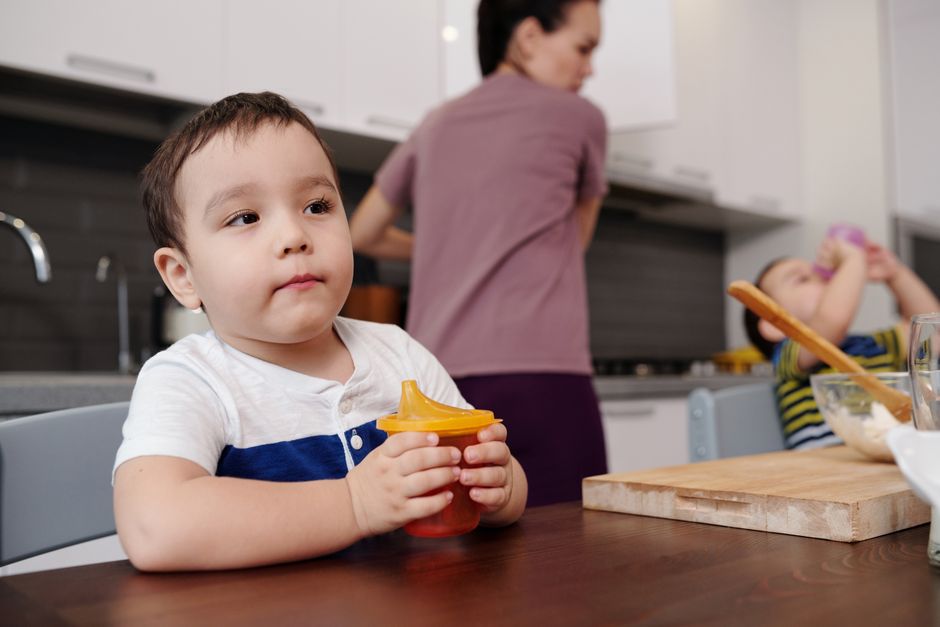
Most babies are ready to start practicing with a sippy cup between 6 and 12 months of age, roughly the same window when they begin eating solid foods. The cup is a training tool, not a replacement for breast milk or formula, and it is not meant to carry a baby’s main nutrition until closer to 12 months. Expect a messy learning curve. Spilling, chewing on the spout, and dropping the cup are all normal parts of the process.
When To Introduce Sippy Cup: What Age Is Right?
The American Academy of Pediatrics has long suggested offering a cup around 6 months, when most babies can sit with support and bring objects to their mouth. Those two skills matter more than the calendar. A baby who can hold a spoon, grab a toy, and sit upright in a high chair has the basic mechanics for cup drinking.
Some babies take to a cup at 6 months. Others show no interest until 9 or 10 months. Both are within the normal range. There is no developmental deadline that says a baby must drink from a cup by a certain month.
What matters more is what happens after the introduction. Pediatric guidance generally encourages moving away from the bottle and toward an open cup or straw cup during the second year. The sippy cup sits in the middle of that transition, useful for a while but not meant to be the final destination.
Why Do Pediatricians Suggest a Cup Before Age 1?
Two reasons drive the timing. The first is oral development. Drinking from a bottle uses a suckling pattern that babies are born with. Drinking from a cup uses a different set of muscles and a different swallowing pattern. Practicing that pattern earlier makes the switch easier later.
The second reason is dental and dietary. Prolonged bottle use, especially with milk or juice, keeps sugar in contact with teeth for long stretches. The American Academy of Pediatric Dentistry has pointed to extended bottle feeding as a risk factor for early childhood cavities. A cup shortens the time liquid spends in the mouth and reduces that exposure.
There is also a nutrition angle. Toddlers who stay on the bottle often drink more milk than they need, which can crowd out solid food and iron-containing foods. Moving to a cup is one way to shift that balance.
What Cups Should You Try First?
There is no single best cup. The right one is the one your baby will actually use. That said, the options fall into a few categories, and each has trade-offs.
- Open cup (small, two-handled): Best for developing mature drinking skills, but the messiest and hardest to master early on.
- Straw cup: Uses a sucking motion closer to breastfeeding than a hard spout. Many speech and feeding specialists favor straws over hard spouts for this reason.
- Hard-spout sippy cup: Easiest to learn, most spill-resistant, but the spout can resemble a bottle nipple and may slow the transition away from bottle feeding.
- Soft-spout sippy cup: Similar to a hard spout but gentler on gums. Same spill-resistance trade-off.
Some feeding therapists and pediatric dentists have raised concerns that long-term hard-spout use could affect tongue position and speech development. The evidence here is limited. No large studies have confirmed that sippy cups cause speech problems in children who use them for a normal period of time. The concern is mainly about extended, all-day use over many months or years.
A practical approach many parents use: offer a straw cup or open cup during meals, and keep a sippy cup available for travel or when spills are a real problem. Rotate rather than commit to one style.





How Do You Actually Teach a Baby to Use a Cup?
You do not teach it in a single session. You offer, model, and repeat. Most babies need weeks of exposure before they drink reliably from a cup.
Start with a small amount of liquid. One or two ounces of water or expressed milk is enough. Too much liquid means too much cleanup and a baby who gets overwhelmed.
Hold the cup to your baby’s lips at first. Tilt it slowly. Let them feel the rim and taste what comes out. Some babies will push it away. Offer again in a few days.
Once your baby can grip the handles, let them try holding it. Expect them to tip it too far, dump it, or chew the spout. That is exploration, not failure.
Mealtimes work better than playtime for practice. Your baby is already sitting, already focused on putting things in their mouth, and already watching you eat and drink. Model drinking from your own cup. Babies copy what they see.
If your baby is breastfed, offering expressed breast milk in the cup can help. The taste is familiar. If formula-fed, use formula. Do not introduce juice just to make the cup more appealing.
What Should Go in the Cup?
Water and milk are the two main options. For babies under 12 months, breast milk or formula remains the primary drink, and the cup is for practice and small amounts.
Water is fine in small amounts starting around 6 months, alongside solid foods. The American Academy of Pediatrics notes that most healthy babies do not need large amounts of water before 12 months. A few ounces a day in a cup is generally considered reasonable once solids are started, but water should not replace breast milk or formula.
Juice is a different story. The American Academy of Pediatrics recommends no juice at all before 12 months. After 12 months, if juice is offered, it should be 100 percent juice and limited to a few ounces a day, served in a cup rather than a bottle. Juice in a sippy cup that a toddler carries around all day is one of the more common ways young children take in excess sugar.
Cow’s milk is generally not recommended as a primary drink before 12 months. Whole milk is typically introduced after the first birthday. Your pediatrician can advise on timing if there are growth or allergy concerns.
What Are the Common Mistakes to Avoid?
The biggest one is letting the cup become a constant companion. A toddler walking around with a sippy cup of milk or juice all day keeps sugar on their teeth for hours. That pattern is linked to early cavities.
Another mistake is using the cup as a pacifier or a sleep aid. Do not put a baby to bed with a cup. Do not leave a cup in the crib.
Some parents switch entirely to a sippy cup and stop offering the bottle too quickly. That can work, but it can also lead to a drop in milk intake if the baby is not yet drinking well from the cup. A gradual switch over a few weeks is usually easier on everyone.
Finally, do not stress about the mess. Spilled water is part of learning. A bib, a mat under the high chair, and a small amount of liquid make cleanup manageable.
How Long Should a Child Use a Sippy Cup?
A sippy cup is a bridge, not a long-term tool. Most pediatric guidance points toward moving children to open cups and straw cups during the toddler years, generally by around age 2. Some children make the switch much earlier.
There is no hard rule that says a sippy cup must be gone by a specific month. The general direction from pediatric dentists and pediatricians is the same: shorter use is better than longer use, and the goal is a regular cup.
If your child is still using a sippy cup at age 3, it is worth mentioning to your pediatrician or dentist. It is not an emergency. It is a habit worth gently shifting.
Frequently Asked Questions
When should I introduce a sippy cup to my baby?
Most babies are ready between 6 and 12 months, once they can sit with support and bring objects to their mouth. Starting around 6 months, when solid foods begin, is a common approach.
Can I put formula or breast milk in a sippy cup?
Yes. Expressed breast milk or formula in a cup is fine and can help a baby adjust to the new drinking style. The cup should not replace regular bottle or breastfeeding sessions until your baby is drinking well from it.
Is it bad for my baby to use a sippy cup for a long time?
Extended all-day use, especially with milk or juice, is linked to a higher risk of early cavities. Pediatric guidance generally favors moving to an open cup or straw cup during the toddler years.
Should I put juice in a sippy cup?
No juice before 12 months, per American Academy of Pediatrics guidance. After 12 months, if offered, 100 percent juice should be limited and served in a cup at mealtimes, not carried around all day.
