
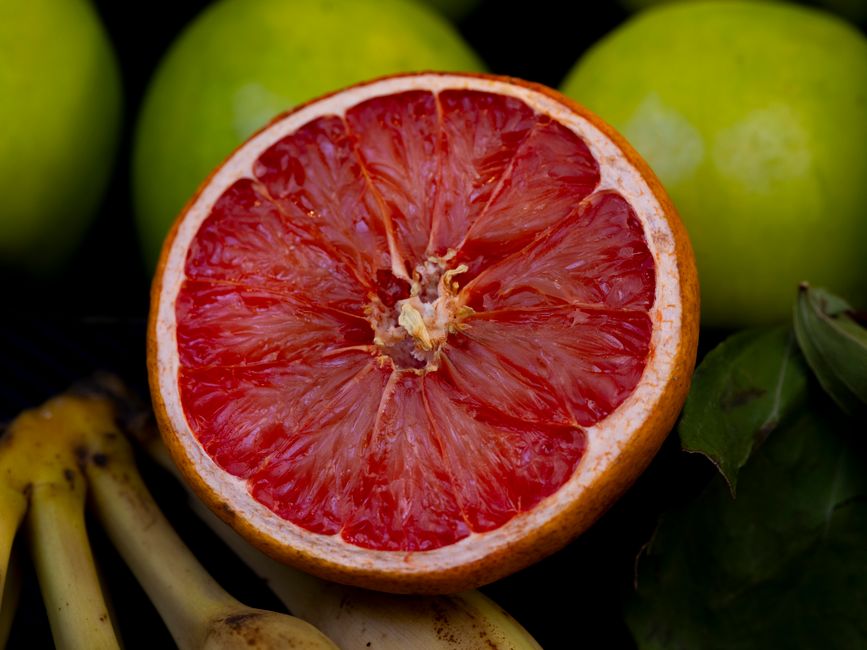
There is no specific time of day or point in your cycle when drinking grapefruit juice will improve fertility. No clinical guideline recommends grapefruit juice for fertility at any time. The more important fact is that grapefruit interacts with a long list of medications, including some used in fertility treatment, so timing is not the real question — safety is.
Grapefruit does contain nutrients that matter for general health. But the leap from “contains folate and vitamin C” to “boosts fertility” is not supported by research. Here is what the evidence actually shows, and where the risks sit.
Does Grapefruit Juice Actually Improve Fertility?
No human study has shown that grapefruit juice improves fertility. That is the plain position, and it has not changed.
The fertility claim traces back to a single 2008 study that looked at grapefruit consumption and ovulation in a small group of women. It was observational, which means it can show a pattern but cannot prove cause and effect. Women who eat more fruit in general may differ in many ways from women who eat less. The study did not establish that grapefruit itself does anything to fertility.
Since then, no larger trial has confirmed the finding. Some wellness content still presents that single study as proof. It is not proof. It is one weak signal that has not replicated.
Grapefruit is a healthy fruit. It provides vitamin C, potassium, and some fiber. None of those nutrients has been shown to raise fertility rates in people who are not deficient. Eating fruit as part of a balanced diet supports general health. That is a real benefit. It is not the same as a fertility treatment.
When To Drink Grapefruit Juice For Fertility: What Timing Changes
Timing changes nothing about fertility. There is no window in your cycle, no phase of a treatment protocol, and no time of day when grapefruit juice becomes more useful for conception.
Some online sources suggest drinking it around ovulation or during a fertility treatment cycle. No clinical guidance supports either idea. If you are undergoing IVF or taking fertility medications, the timing question becomes actively important in the other direction — see the medication section below.
What timing does affect is how grapefruit interacts with drugs. The interaction depends on when the juice reaches your gut relative to the medication, not on your cycle. That is the only timing that has real clinical meaning here.
Why Grapefruit Interacts With So Many Medications
Grapefruit blocks an enzyme in the gut called CYP3A4. This enzyme normally breaks down many drugs before they enter the bloodstream. When grapefruit blocks it, more of the drug gets absorbed, and blood levels can rise.
This is not a small effect. For some drugs, a single glass of grapefruit juice can meaningfully raise blood levels. The interaction can last a day or more after you drink it, because the effect on the enzyme is not instant to clear.
Whole grapefruit, grapefruit juice, and grapefruit extract all carry the same risk. So do pomelos and Seville oranges, which contain similar compounds. Sweet oranges and lemons do not have this effect.
The list of affected drugs is long and includes some common ones:
- Certain statins used for cholesterol
- Some blood pressure medications, including certain calcium channel blockers
- Some anti-arrhythmic drugs for the heart
- Certain immunosuppressants
- Some anti-anxiety medications
- Certain anticoagulants
- Some drugs used in cancer treatment
This is a partial list. If you take any prescription medication, check with a pharmacist before adding grapefruit to your routine. Pharmacists have direct access to interaction data and can check your specific drugs.





Grapefruit and Fertility Medications: A Real Concern
Some medications used in fertility treatment are affected by grapefruit. This is where the fertility question and the drug interaction question meet, and it deserves direct attention.
Certain hormone-modulating drugs and some medications used around IVF or egg retrieval are processed through the same enzyme grapefruit blocks. If blood levels of a fertility drug rise unpredictably, that matters — dosing in fertility treatment is carefully controlled, and unexpected changes are not something to take lightly.
This does not mean grapefruit is dangerous for everyone in fertility treatment. It means the combination needs to be checked, not assumed safe. Ask your fertility clinic directly. They know your protocol and can tell you whether grapefruit is a concern for your specific medications.
Do not stop or change any prescribed medication on your own based on what you read online, including here.
What Nutrients in Grapefruit Matter for Reproductive Health
Grapefruit provides nutrients that support normal body function. Whether they specifically support fertility is a different question, and the evidence is thin.
One half of a pink or red grapefruit provides a meaningful dose of vitamin C and some potassium. It also contains folate, though in modest amounts compared with leafy greens, legumes, and fortified foods. Folate matters before and during early pregnancy — that part is well established. The established guidance is to get folate from a supplement and a varied diet, not from any single fruit.
Vitamin C supports normal immune function and helps the body absorb iron from plant foods. These are real, established roles. They are not fertility treatments.
Red and pink grapefruit also contain lycopene and other plant compounds. Some research has looked at these compounds in general health. No clinical evidence currently confirms that they improve fertility in humans.
Here is the non-obvious point: a nutrient being present in a food does not mean eating more of that food fixes a fertility problem. Most fertility issues are not caused by a single nutrient gap. They involve hormones, timing, age, medical conditions, or factors that no fruit can address.
What the Evidence Actually Supports for Fertility
The strongest evidence for lifestyle and fertility involves things other than grapefruit. These are worth knowing because they are where the real signal is.
Maintaining a healthy body weight is associated with better fertility outcomes in both men and women. So is not smoking. So is limiting alcohol. These are well supported across many studies and are standard parts of fertility guidance.
For women trying to conceive, taking a folate supplement is a well-established recommendation to reduce the risk of certain birth defects. The specific dose should come from your clinician or current public health guidance, not from a general article.
For anyone with concerns about fertility, the most useful step is a conversation with a clinician. Fertility problems have many causes, and some are treatable. A fruit juice is not a substitute for an evaluation. If you have been trying to conceive without success, that is a reason to seek medical advice, not to change your breakfast.
Some clinicians discuss diet patterns, like Mediterranean-style eating, as part of general fertility support. The evidence there is reasonable but not definitive, and it concerns whole diets, not single foods.
Risks and Cautions Before You Add Grapefruit
The main risk with grapefruit is drug interaction, and it is a genuine one. It is not a rare or theoretical concern — it is well documented and clinically significant for specific medications.
If you take any prescription drug, treat grapefruit as something to check, not something to add freely. This applies to blood pressure medicines, cholesterol medicines, heart rhythm drugs, immunosuppressants, and many others. A pharmacist can review your full list quickly.
Grapefruit juice is also acidic and can bother people with acid reflux or sensitive stomachs. That is a comfort issue, not a fertility one, but it is worth knowing.
There is no established safe upper limit specific to grapefruit for fertility purposes, because no fertility benefit has been established. No clinical guidelines currently exist for using grapefruit juice to support fertility in any population.
Frequently Asked Questions
When should I drink grapefruit juice for fertility?
There is no recommended time, because no clinical guideline supports grapefruit juice for fertility at any time of day or cycle phase. If you take prescription medication, check with a pharmacist before drinking it at all.
Does grapefruit juice help you get pregnant?
No human study has shown that grapefruit juice improves fertility or pregnancy rates. A single small observational study from 2008 looked at grapefruit and ovulation, but it did not prove cause and effect and has not been confirmed by larger trials.
Can I drink grapefruit juice during IVF?
Ask your fertility clinic first, because grapefruit can raise blood levels of some medications used in fertility treatment. Do not assume it is safe during a treatment cycle without checking your specific drug list.
Is grapefruit juice safe with all medications?
No, grapefruit interacts with many prescription drugs by blocking an enzyme in the gut, which can raise drug levels in the blood. The list includes certain statins, blood pressure drugs, heart rhythm drugs, immunosuppressants, and others, so a pharmacist check is the reliable way to know.
