
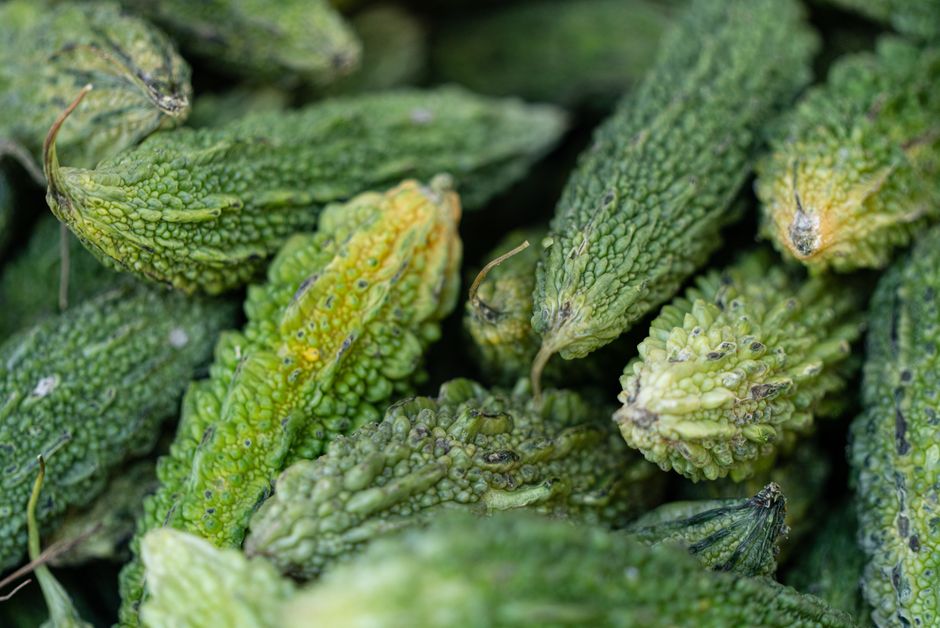
Bitter gourd juice is made by blending or juicing raw or lightly cooked bitter melon, then straining the pulp. Bitterness drops sharply if you remove the seeds and white pith, salt and rest the slices, blanch them briefly, and balance the juice with lemon, salt, or a small amount of sweeter fruit or vegetable. Most people drink it in small amounts, often 30 to 60 milliliters, because the taste is intense and large volumes can upset the stomach.
Bitter melon is a genuine food with a long culinary and traditional-medicine history. It is also surrounded by a lot of overstated health marketing. This guide covers how to make the juice taste manageable and what the actual evidence says about it — including where the claims run ahead of the science.
What Is Bitter Gourd And Why Is It So Bitter?
Bitter gourd is the fruit of Momordica charantia, a vine in the cucurbit family, related to cucumber and melon. In the US it is usually sold as bitter melon. It appears in South Asian, Southeast Asian, and Chinese cooking, most often in stir-fries and soups rather than as a drink.
The bitterness comes from a group of compounds called cucurbitacins, along with other bitter-tasting molecules concentrated in the seeds, the pith, and the skin. These compounds are part of the plant’s natural defense against being eaten. The same chemistry that makes the fruit bitter is why it has been used medicinally for centuries — and why it is an acquired taste.
Bitterness varies enormously between varieties. The long, pale green Chinese type is generally milder. The small, knobbly, dark green Indian type tends to be sharply bitter. If you are buying for juice, ask the vendor or check the label, because choosing a milder variety does more for palatability than any single preparation trick.
How To Make Bitter Gourd Juice And Reduce Bitterness?
The core method is simple: wash, slice, remove the seeds and pith, treat the slices to pull out bitterness, blend with water, and strain. Each step below reduces bitterness a little more.
Step 1: Choose and prepare the fruit
Pick firm, unblemished gourds. Smaller ones are often more bitter than larger, mature ones, though this varies. Wash thoroughly under running water. Cut off both ends, slice lengthwise, and scoop out the seeds and the soft white pith with a spoon. Scrape until you reach the firmer green flesh. Most of the bitterness lives here, so this step matters more than any other.
Step 2: Salt and rest
Slice the flesh thinly and toss with a pinch of salt. Let it sit for 10 to 15 minutes. The salt draws out moisture carrying bitter compounds, which you then rinse away. This is the same principle used for eggplant. Do not over-salt — a light coating is enough, and you rinse it off afterward.
Step 3: Blanch briefly (optional)
Dropping the slices into boiling water for one to two minutes, then into cold water, reduces bitterness further. It also softens the flesh so it blends more smoothly. The trade-off is that brief blanching can leach some water-soluble nutrients, including vitamin C. If nutrient retention matters more to you than taste, skip this step and rely on the others.
Step 4: Blend and strain
Add the treated slices to a blender with water — roughly one part gourd to two or three parts water, adjusted to taste. Blend until smooth, then strain through a fine mesh sieve or cheesecloth. Straining removes fibrous pulp and some remaining bitter solids. Drink it fresh, since the taste and vitamin content degrade with storage.
Step 5: Balance the flavor
A squeeze of lemon or lime, a pinch of salt, and a small piece of ginger cut through bitterness well. Some people add a little cucumber, mint, or a spoon of honey. Adding sweet fruit like apple or pineapple makes it far more drinkable, though it also adds sugar. If you are drinking bitter gourd juice for blood sugar reasons, sweetening it with fruit or honey works against that goal.
Does Cooking Or Blanching Destroy The Benefits?
Heat reduces some compounds and preserves others, so there is no single answer. Vitamin C is heat-sensitive and leaches into cooking water, so raw or briefly blanched juice retains more of it than boiled preparations. The cucurbitacins that give bitterness are relatively stable, which is why cooked bitter melon still tastes bitter.
The compounds most studied for blood sugar effects — charantin, polypeptide-p, and certain saponins — behave differently under heat. Some laboratory work suggests certain insulin-like proteins are degraded by cooking, while other active compounds are not. The honest position is that researchers have not settled which preparation method preserves the most biologically active compounds in a way that matters for human health. Traditional use includes both raw juice and cooked dishes.
What Does The Evidence Say About Bitter Gourd And Blood Sugar?
The evidence is mixed and does not support treating bitter gourd as a diabetes remedy. Some small clinical trials have reported modest reductions in fasting blood glucose with bitter melon preparations, while others found no meaningful difference compared with placebo. Many of these studies were small, short, and used different extracts and doses, which makes them hard to compare.
Several reviews of the human research have concluded that the quality of evidence is low and that larger, better-designed trials are needed before any clinical recommendation can be made. That is a meaningfully different statement from “bitter gourd lowers blood sugar.” Laboratory and animal studies show real biological activity, but biological plausibility is not the same as proven benefit in people.
This matters for safety as well as expectations. Bitter melon may lower blood glucose, and combining it with diabetes medication — especially insulin or sulfonylureas — could in theory push blood sugar too low. Anyone taking glucose-lowering medication should talk to their clinician before drinking it regularly rather than self-managing.
Is Bitter Gourd Juice Safe For Everyone?
No. Bitter melon is not appropriate for everyone, and some groups should avoid it.
- Pregnant women should avoid bitter melon and its juice. It has traditionally been used to induce menstruation and abortion, and animal studies raise concerns about pregnancy. This is a well-recognized caution, not a fringe one.
- People with diabetes on medication should speak to their clinician first because of the potential for additive blood sugar lowering.
- People with liver or kidney concerns should be cautious, as concentrated juices place load on these organs and safety data are limited.
- Anyone with a sensitive stomach may find it causes nausea, cramping, or diarrhea, especially in larger amounts.
There are no established clinical dosing guidelines for bitter gourd juice in any population, including children and pregnant women. The amounts people typically drink — a small shot of roughly 30 to 60 milliliters — reflect traditional practice, not a researched dose. Do not give it to children as a “health drink.”
One more caution: very bitter gourds contain higher levels of cucurbitacins, and extremely bitter varieties of related cucurbits have caused gastrointestinal illness. If a gourd tastes overwhelmingly, sharply bitter, discard it rather than drinking the juice.
How Should You Drink It And What Should You Expect?
Drink it fresh, in small amounts, and do not expect dramatic results. Most people take it as a morning shot on an empty stomach, a practice rooted in tradition rather than trials. There is no strong evidence that timing changes its effects.
Expect a strong bitter taste even after every reduction step — the goal is “drinkable,” not “mild.” Expect possible stomach upset if you drink a lot at once. Do not expect it to replace medication, diet, or exercise for managing blood sugar. It is a food, and it should be treated as one.
If you want the potential nutritional benefits without the intensity, eating bitter melon cooked in a stir-fry is a reasonable alternative. Cooking with garlic, chili, and a little oil masks bitterness effectively and is how the vegetable is eaten across much of the world. The juice is a concentrated, acquired-taste delivery method, not a superior one.
Frequently Asked Questions
How do you remove bitterness from bitter gourd juice?
Remove the seeds and white pith, salt the slices and rest them for 10 to 15 minutes, rinse, then briefly blanch if desired. Straining the blended juice and adding lemon, salt, or ginger further reduces bitterness.
How much bitter gourd juice should I drink daily?
There are no established clinical dosing guidelines, but traditional practice is a small shot of roughly 30 to 60 milliliters. Larger amounts are more likely to cause stomach upset.
Can bitter gourd juice lower blood sugar?
Some small trials suggest a modest effect, but the overall evidence is mixed and considered low quality. It is not a proven treatment for diabetes and should not replace medication.
Is it safe to drink bitter gourd juice during pregnancy?
No. Bitter melon should be avoided during pregnancy because of its traditional use to induce menstruation and abortion, along with animal study concerns.
