
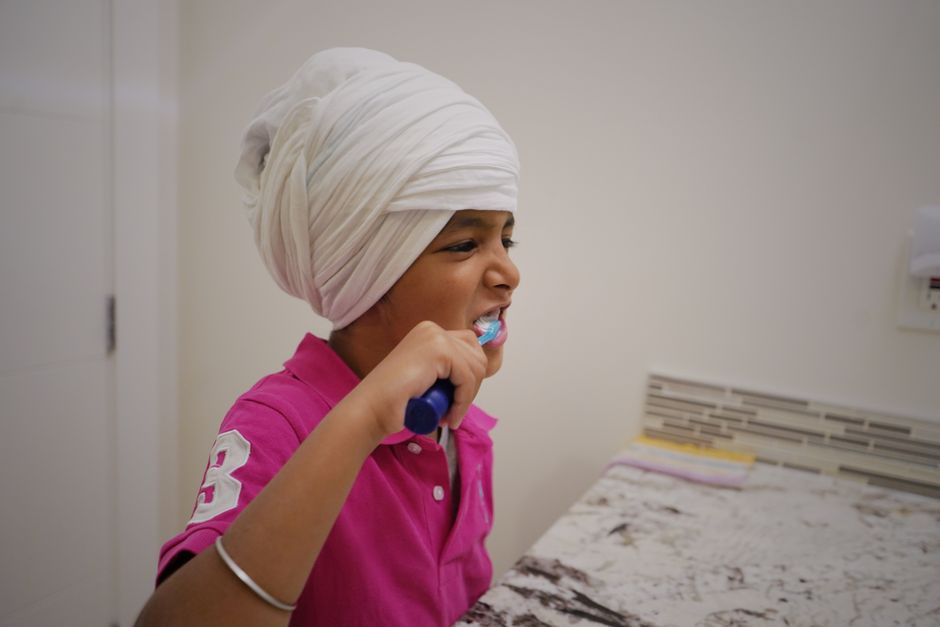
Most dentists recommend you start brushing your baby’s teeth as soon as the first tooth appears, which usually happens around 6 months of age. You should use a soft, infant-sized toothbrush with a tiny smear of fluoride toothpaste no bigger than a grain of rice. This early start protects that new enamel and gets your child used to the daily routine before more teeth arrive.
When Should I Start Brushing My Baby’s Teeth?
The first tooth is the starting line. Once that first white tip breaks through the gums, plaque can begin to form on it. That plaque produces acids that attack the thin enamel of baby teeth, which is why cleaning must begin immediately.
Before the first tooth appears, you can wipe your baby’s gums with a clean, damp washcloth after feedings. This removes bacteria and gets your baby comfortable with having their mouth touched. It also makes the transition to a toothbrush easier.
Do not wait until your child has a mouth full of teeth. Decay can start on the very first tooth, and baby teeth can decay quickly once it begins.
What Kind of Toothbrush and Toothpaste Should I Use?
Use a toothbrush designed for infants. Look for a small head, soft bristles, and a large handle that is easy for you to grip. Replace the brush every 3 months or sooner if the bristles look frayed or worn.
For toothpaste, the recommendation depends on your child’s age. For children under 3 years old, use a smear of fluoride toothpaste about the size of a grain of rice. For children aged 3 to 6, a pea-sized amount is appropriate. Fluoride is important because it strengthens enamel and helps prevent cavities.
Swallowing a tiny smear of toothpaste is not harmful. The amount is so small that it does not pose a risk of fluorosis, which is a mild cosmetic condition that can occur from excessive fluoride intake during tooth development.
How Should I Brush a Baby’s Teeth?
Position your baby so you can see inside their mouth easily. Sitting on the floor with your baby’s head in your lap works well. You can also stand behind your child in front of a mirror.
Gently brush the front and back of each tooth using small circular motions. Pay attention to the gumline where plaque tends to collect. Brush for about 2 minutes, twice a day — once in the morning and once before bed. The bedtime brushing is the most important one because saliva flow decreases during sleep, leaving teeth more vulnerable to acid attacks.
Do not rinse your baby’s mouth with water after brushing. Rinsing washes away the fluoride that needs to stay on the teeth to protect them. Simply spit out the excess toothpaste, or let your baby spit if they are old enough to learn.



When Should I Start Flossing My Child’s Teeth?
Flossing becomes necessary when two teeth touch each other. For many children, this happens around age 2 or 3, but it varies. Once teeth are side by side, a toothbrush cannot reach between them, and food and plaque will collect there.
Start flossing gently once a day. You can use traditional floss or child-friendly floss picks, which are often easier for parents to manage. Continue to floss for your child until they develop the manual dexterity to do it properly themselves, which usually happens around age 8 to 10.
When Should My Child See a Dentist for the First Time?
The American Academy of Pediatric Dentistry and the American Dental Association both recommend that a child see a dentist by their first birthday or within 6 months of their first tooth coming in, whichever comes first. This early visit is about prevention and education, not treatment.
The dentist will check for early signs of decay and assess how the teeth and jaw are developing. The visit also gives you a chance to ask questions about brushing technique, fluoride, thumb sucking, and diet. Establishing a dental home early makes future visits less stressful for your child because they become familiar with the environment.
Skipping this first visit is a common mistake. Many parents wait until age 3 or until a problem appears, but by then, early decay may already be present.
Why Do Baby Teeth Matter If They Fall Out Anyway?
Baby teeth serve several important jobs beyond chewing. They hold space in the jaws for the permanent teeth that will eventually replace them. If a baby tooth is lost too early due to decay, nearby teeth can shift into the empty space, causing crowding problems when adult teeth try to come in.
Baby teeth also help with speech development. The tongue and lips need teeth to form certain sounds correctly. And healthy baby teeth teach children good habits that carry into adulthood — brushing twice a day becomes a normal part of life rather than a battle.
Decay in baby teeth can also cause pain and infection. A dental abscess in a young child can be serious and may require treatment in a hospital setting. Preventing decay is far easier than treating it.
What Should I Do If My Baby Resists Brushing?
Resistance is normal. Many babies and toddlers do not like having something in their mouths. The key is consistency and making it a non-negotiable part of the routine, just like a bath or changing a diaper.
Some strategies that help include letting your child hold their own toothbrush while you brush with another one. Singing a song during brushing can make the time pass more pleasantly. Letting your child brush a favorite stuffed animal’s teeth first can also build familiarity.
If your child clamps their mouth shut, try brushing while they are lying down or distracted. Some parents find it easier to brush in front of a mirror so the child can watch what is happening. Do not give up or skip brushings because of a tantrum. Consistent routines eventually win over resistance.
What Are the Signs of Tooth Decay in Babies?
Early decay can look like a white spot near the gumline on a front tooth. This is the first sign of demineralization, and it is reversible at this stage with fluoride and improved brushing. If the spot turns brown or black, the decay has progressed and needs professional treatment.
Other signs include visible holes or pits in the teeth, swelling or bleeding gums, bad breath that does not go away, and sensitivity to hot or cold foods. If you notice any of these signs, make an appointment with a pediatric dentist rather than waiting for the next scheduled checkup.
One common cause of early decay is putting a baby to bed with a bottle of milk, formula, or juice. The liquid pools around the teeth during sleep, and the sugars feed bacteria that produce acid. This condition is sometimes called baby bottle tooth decay. If your baby needs a bottle to fall asleep, fill it with plain water instead.
Frequently Asked Questions
When should I start brushing my baby’s teeth?
Start brushing as soon as the first tooth appears, usually around 6 months of age. Use a soft infant toothbrush and a rice-grain-sized smear of fluoride toothpaste.
Do I need to brush baby teeth that have not come in yet?
No, but you should wipe your baby’s gums with a clean, damp cloth after feedings. This removes bacteria and gets your baby comfortable with mouth cleaning.
Is fluoride toothpaste safe for babies?
Yes, when used in the correct amount. Use a rice-grain-sized smear for children under 3, and a pea-sized amount for children aged 3 to 6.
When should my child first visit the dentist?
By their first birthday or within 6 months of their first tooth appearing. This early visit focuses on prevention and catching problems early.
