
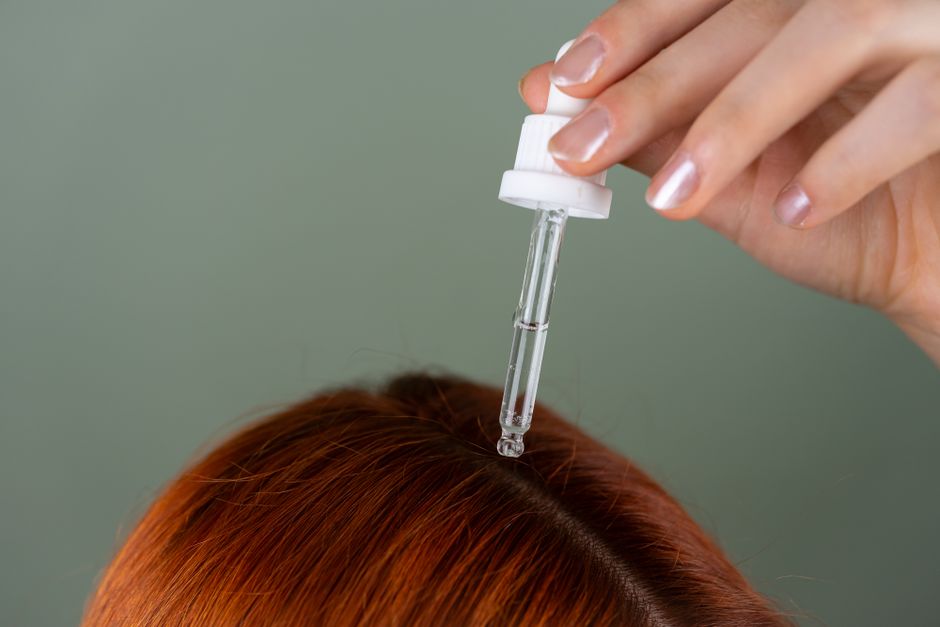
Hair growth oil works best when applied to a clean, dry scalp and left on for at least a few hours — often overnight. The timing matters less than the routine: consistent application, steady scalp contact, and not washing it out immediately are what give the oil a chance to do anything at all. If you apply it and rinse it off twenty minutes later, you are mostly conditioning your hair, not your scalp.
When To Apply Hair Growth Oil For Best Results?
The practical answer is: on a clean scalp, at a time when the oil can stay in contact with your skin for several hours. For most people that means evening application before bed, or a few hours before your next wash.
Why clean? Sebum, dead skin cells, and leftover styling product sit on the scalp surface. Oil applied over that layer mostly coats the buildup rather than reaching the skin. A gentle wash first removes that barrier.
Why several hours? The skin on your scalp is a barrier, not a sponge. It takes time for anything to absorb. A short contact window gives very little opportunity for that.
Overnight application is popular because it fits into a period when you are not doing anything else. You are not adding a step to your morning. You are not walking around with an oily head in public. And you are giving the oil a long, uninterrupted stretch against the skin.
One clarification worth making: “absorption” is often described in marketing as if the follicle drinks the oil directly. Hair follicles sit deep in the dermis, well below the surface. Most of what you apply stays on the surface or in the upper layers of skin. That does not make application pointless — it just means the realistic mechanism is conditioning and scalp environment, not direct feeding of the follicle.
Does the Time of Day Actually Matter?
No. There is no evidence that morning versus evening application changes results. What matters is contact time and consistency, not the clock.
Evening tends to win in practice for a simple reason: it is easier to leave oil on your scalp for hours while you sleep than while you are at work or running errands. People who apply in the morning often wash it out sooner because of how it looks and feels.
If your schedule makes mornings easier, apply in the morning and leave it as long as you reasonably can. The routine you actually keep beats the routine that is theoretically better.
How Long Should You Leave It On?
Longer contact gives more opportunity for the oil to sit against the scalp. Overnight — roughly six to eight hours — is the common approach. A few hours is a reasonable minimum if overnight does not work for you.
There is no established clinical guideline that specifies an exact contact time for cosmetic hair oils. This is not a regulated treatment with a dosing schedule. The “leave it on for hours” advice comes from practical experience and the basic logic of skin contact time, not from controlled trials comparing two hours against eight.
What is clear: rinsing after a few minutes defeats the purpose. If you are going to apply oil, give it real contact time or skip it that day.



Should You Apply Oil to Wet or Dry Hair?
Dry scalp, or very nearly dry. Water and oil do not mix well. A wet scalp dilutes the oil and can make it run rather than stay where you put it.
There is a common belief that damp skin absorbs products better. On the scalp, that is not well supported for oil-based products. If anything, water on the surface interferes with even coverage.
If you have just washed your hair, let it dry first. Then apply. This also makes it easier to part the hair and reach the scalp rather than just coating the strands.
How Often Should You Apply It?
Most people who use hair oils apply them a few times a week, often the night before a wash day. Daily use is common too, but it depends on your scalp type and how your hair handles the residue.
Consistency over weeks and months is what people report mattering, not intensity in a single session. This is not a product where one application changes anything.
A word of caution here. Applying oil frequently and not washing it out can lead to buildup, clogged pores, and irritation for some people. If your scalp starts itching, flaking, or breaking out, cut back. Oily scalps generally tolerate less frequent application than dry ones.
What Hair Growth Oils Can and Cannot Do
This is where honesty matters more than enthusiasm. Most hair growth oils on the market are cosmetic products. They are not drugs. They are not required to prove they grow hair.
What oils can reasonably do:
- Condition the hair shaft and reduce breakage, which can make hair look thicker over time
- Improve the feel and manageability of dry or brittle hair
- Support a scalp environment that is not dry or irritated
What they generally cannot do:
- Reverse genetic hair loss (androgenetic alopecia)
- Regrow hair in areas where the follicle has stopped producing hair
- Substitute for treatments that have actual clinical evidence behind them
Some ingredients have more research behind them than others. Rosemary oil has been studied in small trials for hair growth, with results that some researchers describe as comparable to a low-concentration minoxidil preparation — though the evidence base is small and the studies have limitations. Peppermint, pumpkin seed, and a few others have early or limited data. Coconut oil is well studied for reducing protein loss from hair during washing, which is a different claim than growth.
No oil currently has the level of evidence that minoxidil or finasteride has for treating pattern hair loss. If you are losing hair in a pattern, oils are unlikely to be the answer on their own.
What Actually Affects Results
Several factors shape whether you notice anything from a hair oil routine.
Your type of hair loss. Temporary shedding after illness, stress, or childbirth often resolves on its own. Pattern hair loss does not. Oils may help the first and will not fix the second.
How you apply it. Parting the hair in sections and applying to the scalp, not just the strands, matters. Massaging it in gently may help with coverage. There is some evidence that scalp massage itself supports circulation, though whether that translates to measurable hair growth is not firmly established.
How long you keep it up. Hair grows slowly. A typical scalp hair grows roughly half an inch per month. Any real change takes months to become visible, which is why short trials tell you almost nothing.
Whether you are also treating the underlying cause. If you have a medical reason for hair loss — thyroid issues, iron deficiency, medication side effects — an oil will not address it. That requires a doctor.
Common Mistakes That Undermine Results
Applying to a dirty scalp. Rinsing too soon. Using so much oil that it drips and clogs pores. Applying only to the ends of the hair instead of the scalp. Expecting visible change in two weeks.
Another one: using oil as a replacement for proven treatment. If you have pattern hair loss and you are using oil instead of talking to a clinician about options with actual evidence, you may be losing time. Hair follicles that have been inactive for a long time are harder to revive.
Frequently Asked Questions
Is it better to apply hair growth oil at night or in the morning?
Night is generally more practical because you can leave it on for several hours without it interfering with your day. There is no evidence that time of day itself changes results.
How long should I leave hair oil on my scalp?
Overnight, roughly six to eight hours, is the common approach, with a few hours as a reasonable minimum. No clinical guideline specifies an exact contact time for cosmetic hair oils.
Can hair growth oil regrow hair?
No oil has evidence comparable to proven treatments like minoxidil for pattern hair loss. Oils may improve conditioning and reduce breakage, which can make hair appear fuller.
Should I apply hair oil to wet or dry hair?
Dry or nearly dry. Water dilutes the oil and makes it harder to apply evenly to the scalp.
