
Male pattern hair loss affects roughly half of men by age 50, and the search for a fix has produced an enormous market of sprays, supplements, and shampoos. Most of it does not work. A small number of methods do have real evidence behind them, and they share one thing: they slow or partially reverse a process driven by genetics and hormones rather than “feeding” the hair.
The proven methods for increasing hair growth in men are limited and specific. Two medications — minoxidil and finasteride — have the strongest human trial evidence. Low-level laser therapy has moderate supporting evidence. Hair transplant surgery physically relocates hair and works, but it does not stop future loss. Everything else, from biotin to rosemary oil to “scalp detox” treatments, ranges from unproven to clearly ineffective for male pattern baldness.
What follows separates those categories honestly. It also explains why the distinction matters so much: hair loss has several different causes, and a treatment that helps one cause does nothing for another.
Why Do Men Lose Their Hair in the First Place?
Androgenetic alopecia — male pattern baldness — is the cause in the large majority of men who notice a receding hairline or thinning crown. It is driven by genetics and by the hormone dihydrotestosterone, or DHT.
Here is the mechanism. Testosterone is converted to DHT by an enzyme called 5-alpha reductase, which is active in hair follicles. In men who are genetically predisposed, DHT binds to receptors in susceptible follicles and gradually shrinks them. The medical term is miniaturization. Each growth cycle produces a thinner, shorter hair until the follicle stops producing visible hair at all.
The follicles are not dead. That distinction matters, because it is why some treatments can restore growth rather than only preserve what is left.
Pattern matters too. Androgenetic alopecia typically starts at the temples or the crown and follows a recognizable progression. Hair loss that is patchy, sudden, accompanied by itching or scaling, or that affects the sides and back of the scalp equally is more likely to have a different cause — thyroid problems, iron deficiency, alopecia areata, or a medication side effect. Those situations call for a doctor’s evaluation, not a bottle of minoxidil.
Which Treatments Actually Have Evidence Behind Them?
Two medications carry the strongest evidence in men, and both are approved by the FDA for this purpose.
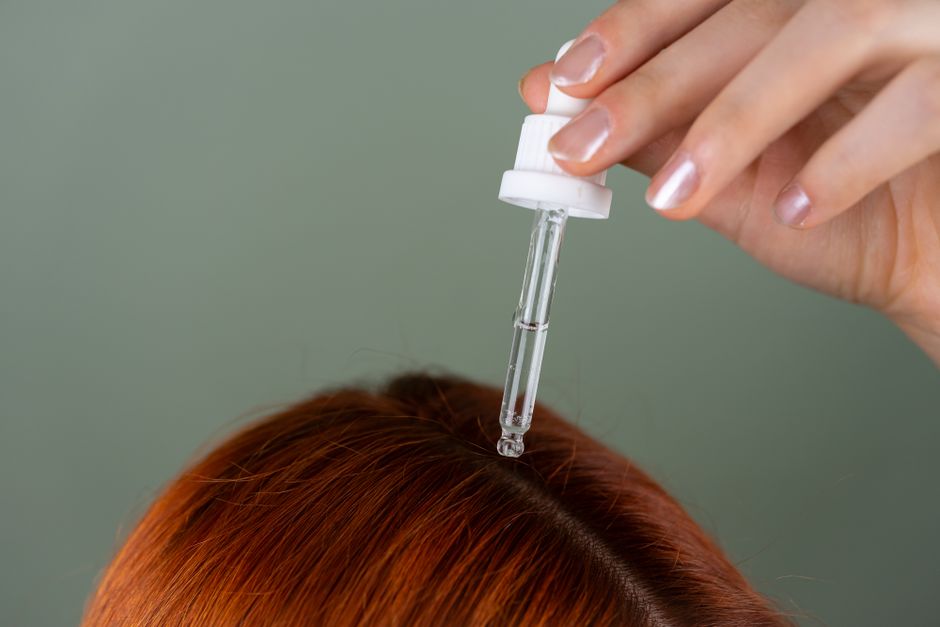
Minoxidil, applied to the scalp, is available over the counter. It extends the growth phase of the hair cycle and widens miniaturized follicles. It does not block DHT. It works best on the crown and is generally less effective at the temples. Visible results typically take several months, and stopping it reverses the benefit within months.
Finasteride, taken as an oral pill, is available by prescription. It blocks the enzyme that converts testosterone to DHT, lowering scalp DHT levels substantially. It is generally more effective than minoxidil for pattern hair loss, and it works on the hairline as well as the crown. Like minoxidil, it only helps while it is being taken.
Low-level laser therapy — delivered through caps or combs — has moderate evidence. Some trials show improvement in hair density, and the FDA has cleared several devices for marketing. The evidence is weaker than for the two medications, results are modest, and device quality varies widely.
Finasteride carries real risks that deserve a direct statement rather than a footnote. A minority of men experience sexual side effects, including reduced libido and erectile difficulty. Most who experience them recover after stopping the drug. A smaller group reports persistent symptoms after discontinuation; this is debated in the medical literature, and the evidence on how often it occurs and how long it lasts is not settled. Anyone considering finasteride should discuss this with a clinician rather than deciding from a forum thread.
How To Increase Hair Growth For Men Proven Methods Compared
These categories are not equivalent, and the table reflects that. “Evidence strength” refers to how consistently human trials have shown benefit for male pattern hair loss specifically.
| Method | How it works | Evidence strength | Requires ongoing use |
|---|---|---|---|
| Minoxidil (topical) | Extends growth phase, widens follicles | Strong | Yes |
| Finasteride (oral) | Lowers DHT production | Strong | Yes |
| Low-level laser therapy | Proposed stimulation of follicle activity | Moderate | Yes |
| Hair transplant surgery | Relocates DHT-resistant follicles | Strong for coverage | No, but loss continues |
| Biotin, rosemary oil, scalp massage | Various proposed mechanisms | Weak or absent for pattern loss | — |
One clarification worth making: biotin supplements are heavily marketed for hair, but in people who are not biotin deficient, there is no established evidence that they increase hair growth. Biotin deficiency is rare in adults eating a normal diet. Some lab tests can also be distorted by high-dose biotin, which is a genuine safety consideration.





Does Hair Transplant Surgery Actually Work?
Yes, for the right candidate. Hair transplant surgery takes follicles from the back and sides of the scalp — areas that are genetically resistant to DHT — and moves them to thinning areas. Those relocated follicles tend to keep their resistant characteristics, which is why transplanted hair usually persists.
The limits are important. Surgery redistributes existing hair; it does not create new follicles or stop the underlying process. If a man’s native hair continues to thin around the transplanted grafts, the result can look unnatural over time. Many surgeons therefore recommend combining surgery with medication to protect the surrounding hair. Cost is significant, results depend heavily on surgeon skill, and it is not a one-time fix for a progressing condition.
What About Supplements, Oils, and Drugstore Shampoos?
This is where most money is spent and least benefit is found.
Rosemary oil has become popular online, often described as “as effective as minoxidil.” That claim traces back to a small comparison study, and it has been repeated far beyond what the evidence supports. The evidence is limited and has not been reproduced at the scale needed to treat it as equivalent to an FDA-approved drug.
Caffeine shampoos, saw palmetto, pumpkin seed oil, onion juice, and “scalp detox” products all fall into a similar category: some preliminary data, no large confirmatory human trials for male pattern hair loss, and marketing that outruns the science. Saw palmetto in particular is sometimes described as a natural DHT blocker. It has been studied, but the evidence is not strong enough to place it alongside finasteride.
Shampoos in general cannot treat pattern hair loss. They contact the scalp briefly and rinse away. A shampoo can help with dandruff or a flaky scalp, and treating those conditions is reasonable — but it will not regrow hair lost to DHT.
There is one non-obvious point worth stating plainly. Many of these products are not harmful, and some men report benefit. But “I noticed a difference” is not the same as evidence, because hair growth varies naturally and because people who spend money on a treatment tend to look for signs it worked. That is why controlled trials exist.
What Else Affects Hair Growth That Men Overlook?
Not all thinning is pattern baldness, and treating the wrong cause wastes time.
Nutritional deficiencies can cause diffuse shedding. Iron deficiency and low vitamin D have both been associated with hair loss, though the evidence for vitamin D supplementation improving hair growth in people who are not deficient is weak. Thyroid disorders — both underactive and overactive — commonly cause hair thinning, and treating the thyroid often restores hair.
Several medications list hair loss as a side effect, including some antidepressants, blood pressure medications, and testosterone therapies. Sudden, widespread shedding weeks after a major stressor, illness, or surgery is usually telogen effluvium, a temporary condition that typically resolves on its own.
A doctor can distinguish these with a history, an exam, and sometimes blood tests. That step is worth taking before committing to years of treatment for the wrong problem.
How Long Before You See Results?
Hair grows slowly, and no treatment changes that. Hair follicles cycle through growth, transition, and rest phases, and a visible change requires follicles to move through at least one full cycle.
With minoxidil and finasteride, noticeable improvement generally takes several months, and the full effect may not appear for a year or more. Early shedding in the first weeks of minoxidil use is common and usually temporary — it reflects follicles shifting into a new growth phase. Stopping treatment during that phase is a common reason men conclude a treatment “did not work.”
Consistency matters more than any single product. A treatment used sporadically produces sporadic results.
Frequently Asked Questions
What is the most proven way to increase hair growth for men?
Finasteride and topical minoxidil have the strongest evidence from human trials for male pattern hair loss, and finasteride is generally the more effective of the two. Both require ongoing use to maintain results.
Can rosemary oil really regrow hair as well as minoxidil?
The evidence does not support that claim. It comes from a small study, and it has not been confirmed at the scale needed to treat rosemary oil as equivalent to an FDA-approved medication.
Do hair growth supplements and biotin actually work?
In men who are not nutrient deficient, there is no established evidence that biotin or most hair supplements increase hair growth. Biotin deficiency is uncommon in adults eating a normal diet.
How long does it take to see results from hair loss treatment?
Noticeable improvement usually takes several months, and the full effect may take a year or longer. Early shedding in the first weeks of minoxidil use is common and typically temporary.
