

Brushing your teeth twice a day is the standard recommendation from dental professionals worldwide. The most common guidance is to brush once in the morning and once before bed, with the bedtime brushing being the more critical of the two. How you brush, when you brush relative to eating, and what you do between brushing sessions all affect whether those two minutes actually protect your teeth.
When Should You Brush Your Teeth Each Day?
Twice daily is the baseline. The American Dental Association recommends brushing for two minutes, twice a day, using a soft-bristled toothbrush and fluoride toothpaste.
The morning brushing matters, but the evening one matters more. Here is why.
During the day, saliva production stays relatively high. Saliva contains minerals like calcium and phosphate that help neutralize acids and begin repairing early damage to tooth enamel. Chewing also stimulates saliva flow. Your mouth has a built-in defense system running while you are awake.
At night, saliva production drops significantly. Your mouth dries out. Bacteria that feed on sugar and produce acid have a quieter environment to work in. If food particles and plaque are left on your teeth overnight, the acid exposure lasts longer and does more damage. That is why skipping the bedtime brush is worse for your teeth than skipping the morning one.
Some people brush after every meal. That is not harmful in itself, but it is not required for most people. The evidence supporting twice-daily brushing as sufficient for cavity prevention is well established. Brushing more often does not appear to provide additional protection and can irritate gums if done aggressively.
Should You Brush Before or After Breakfast?
Brushing before breakfast is generally the safer choice. The reason has to do with how acid softens enamel.
When you eat, especially foods containing sugar or acid, the pH in your mouth drops. Acidic environments temporarily soften the outer layer of tooth enamel. If you brush immediately after eating, you are scrubbing a softened surface. Over time, this can contribute to enamel wear.
Waiting about 30 minutes after eating gives saliva time to neutralize the acid and allows enamel to re-harden. Some dentists suggest waiting 60 minutes after acidic foods or drinks like citrus, coffee, or soda.
If you prefer to brush after breakfast, waiting at least 30 minutes is a reasonable approach. Brushing first thing in the morning before you eat avoids the problem entirely and still removes the plaque that built up overnight.
One practical note: if you drink something acidic in the morning, like orange juice or coffee, rinsing your mouth with plain water afterward helps clear the acid faster. Chewing sugar-free gum also stimulates saliva and can speed up the pH recovery.
Why Is Brushing Before Bed So Important?
The overnight period is when your teeth are most vulnerable. Understanding why helps explain the emphasis on bedtime brushing.
Plaque is a sticky film of bacteria that forms on teeth continuously. It starts rebuilding within hours of brushing. When you sleep, you are not swallowing as frequently, not chewing, and not producing much saliva. Bacteria sit undisturbed on tooth surfaces, producing acid that dissolves minerals from enamel.
This process is called demineralization. Your saliva normally reverses it through a process called remineralization, but that repair system is running at low capacity overnight. If you go to bed with plaque and food debris on your teeth, the demineralization has hours of uninterrupted time to work.
Brushing before bed removes the day’s accumulation of plaque and food. Using fluoride toothpaste adds a layer of protection. Fluoride helps remineralize enamel and makes it more resistant to acid attacks. That fluoride stays on your teeth overnight, which is part of why the bedtime brushing is so valuable.
Flossing before bed also matters. Toothbrush bristles cannot reach between teeth. Plaque that builds up in those tight spaces can only be removed with floss or another interdental cleaner. Doing this at night means the spaces between your teeth are clean during the hours when your mouth produces the least saliva.


How Long and How Hard Should You Brush?
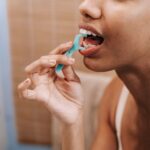
Two minutes is the standard recommendation. Most people brush for far less — often under 45 seconds. Research has consistently found that people significantly overestimate how long they brush.
Electric toothbrushes with built-in timers help with this. If you use a manual brush, timing yourself or using a timer can make a difference.
Pressure matters too. Brushing hard does not clean better. It damages gums and wears down enamel over time. The goal is gentle, thorough contact with every tooth surface.
A common technique recommended by dental professionals:
- Hold the brush at a 45-degree angle toward the gum line
- Use short, gentle back-and-forth strokes
- Brush the outer surfaces, inner surfaces, and chewing surfaces of all teeth
- Tilt the brush vertically to brush behind the front teeth
- Brush your tongue or use a tongue scraper to remove bacteria
Soft bristles are the right choice for almost everyone. Medium and hard bristles are more likely to cause gum recession and enamel wear without cleaning any better.
Does the Type of Toothpaste Matter?
Fluoride is the one ingredient with strong evidence behind it. Toothpaste containing fluoride has been shown in decades of research to reduce cavities compared to non-fluoride toothpaste.
The concentration of fluoride in most commercial toothpaste is within a range that has been studied extensively and is considered effective for cavity prevention in the general population. For children under 3, the recommendation is a smear of fluoride toothpaste the size of a grain of rice. For children 3 to 6, a pea-sized amount is recommended.
Other ingredients — whitening agents, antibacterial compounds, desensitizing agents — vary in what they do and how well they work. Some whitening toothpastes remove surface stains through mild abrasives. Whether they produce meaningful whitening over time depends on the product and the type of stain.
What has not been established: that any specific toothpaste formulation is superior to fluoride toothpaste for preventing cavities in the general population. Fluoride remains the core active ingredient with the strongest evidence base.
What About Brushing After Snacks or Sugary Drinks?
Rinsing with water is the better immediate response after acidic or sugary foods. Brushing right away can be counterproductive if the food was acidic.
Here is the mechanism. Acidic foods and drinks lower the pH in your mouth. When pH drops below a certain level, enamel begins to dissolve. This is a well-established process in dental science. The enamel softens temporarily. Brushing during that window can abrade the softened surface.
Water rinses away acid and food particles without causing abrasion. Chewing sugar-free gum stimulates saliva, which naturally brings pH back up. Waiting 30 minutes before brushing gives your saliva time to do its job.
For sugary snacks that are not acidic — like crackers or bread — the concern is different. Bacteria ferment the sugar and produce acid as a byproduct. The acid attack lasts for about 20 minutes after you eat. Frequent snacking throughout the day means repeated acid attacks. This is one reason grazing on snacks all day is harder on teeth than eating meals.
Do You Need to Brush More Often If You Have Braces or Dental Work?
Yes, and your orthodontist or dentist will typically give you specific instructions. Braces, retainers, crowns, and bridges create more surfaces where plaque can accumulate.
With braces, food gets trapped around brackets and wires. Plaque builds up faster in those areas. Many orthodontists recommend brushing after every meal and using additional tools like interdental brushes or water flossers.
For people with gum disease or a history of cavities, a dentist may recommend a specific brushing routine. That guidance is individualized and should come from your dental provider, not from general recommendations.
What is well established: two minutes, twice a day, with fluoride toothpaste and a soft-bristled brush, is the foundation. Everything else — timing around meals, flossing, mouthwash, interdental brushes — builds on that base.
Frequently Asked Questions
Is it better to brush before or after breakfast?
Brushing before breakfast avoids scrubbing enamel that has been softened by acidic foods. If you prefer to brush after eating, wait at least 30 minutes.
What happens if you only brush once a day?
Brushing once a day leaves plaque on your teeth for longer periods, increasing acid exposure and cavity risk. The bedtime brushing is the more important one to keep if you can only manage one.
Can you brush your teeth too much?
Brushing more than twice a day is not necessary for most people and brushing aggressively can damage gums and enamel. Twice daily for two minutes with gentle pressure is the standard recommendation.
Should you rinse after brushing?
Many dental professionals suggest spitting out excess toothpaste without rinsing with water. Rinsing washes away the fluoride that continues protecting your teeth after brushing.
