
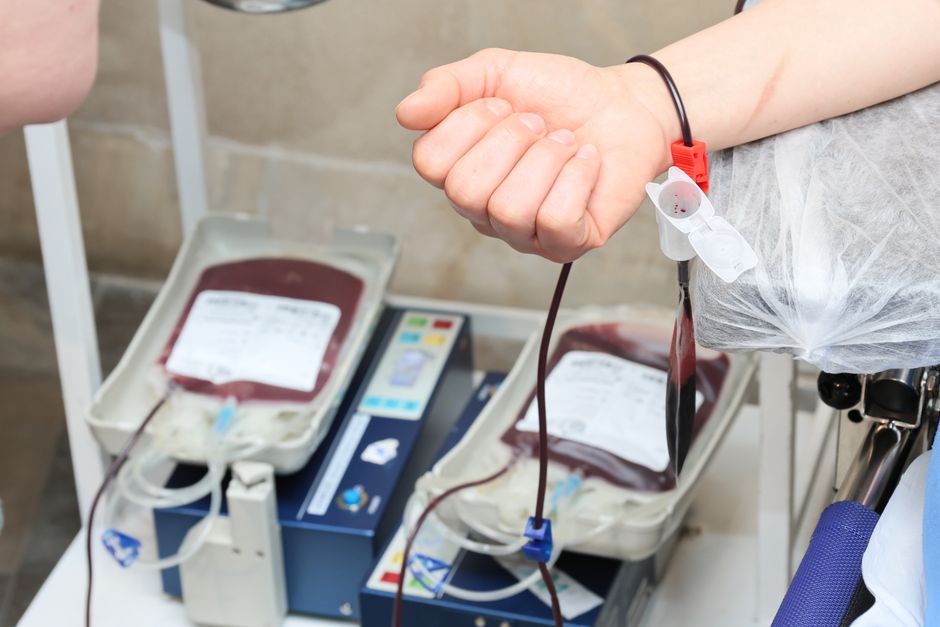
A blood transfusion is needed when your body does not have enough healthy red blood cells to carry oxygen to your tissues, or when you have lost blood faster than your body can replace it. This can happen after major surgery, a serious injury, or from medical conditions that destroy blood cells or prevent your bone marrow from making new ones. The goal of a transfusion is simple: restore the blood’s ability to do its job so your organs can function normally and you can recover safely.
When Is A Blood Transfusion Needed And Why
Doctors order blood transfusions for two main reasons: acute blood loss and chronic anemia. Acute blood loss means you lost a large volume of blood quickly. Think of a car accident, a severe gastrointestinal bleed, or childbirth complications. In these situations, your blood pressure can drop dangerously low, and your organs may not get enough oxygen. A transfusion replaces the lost volume and the red blood cells quickly.
Chronic anemia is different. Your body loses blood slowly or fails to produce enough red blood cells over time. This is common in kidney disease, cancer, and certain inherited conditions like sickle cell disease. The body often adapts to slow blood loss, but eventually the oxygen-carrying capacity drops too low. At that point, symptoms like severe fatigue, shortness of breath, and chest pain appear, and a transfusion becomes necessary.
What Blood Loss Levels Require a Transfusion?
There is no single number that triggers a transfusion for everyone. The decision depends on your overall health, age, and how fast you are losing blood. A common threshold used in hospitals is a hemoglobin level of 7 to 8 grams per deciliter (g/dL) for stable patients. Hemoglobin is the protein in red blood cells that carries oxygen. Normal levels are roughly 13.5 to 17.5 g/dL for men and 12 to 15.5 g/dL for women.
For patients with heart disease, doctors often use a higher threshold, around 8 to 9 g/dL. The heart works harder when blood oxygen is low, so these patients need more support. For someone actively bleeding, doctors do not wait for a lab result. They transfuse based on vital signs, blood pressure, and how much blood has been lost. The clinical picture matters more than a single lab value.
Research in recent years has shifted toward restrictive transfusion practices. This means doctors transfuse less often and use lower hemoglobin thresholds than they did in the past. Studies have found that many stable patients do just as well with fewer transfusions. Transfusions carry risks, so giving them unnecessarily is not harmless.
Medical Conditions That Cause Transfusion Dependence
Several chronic conditions can make transfusions a regular part of life. Kidney disease is a major cause. The kidneys produce erythropoietin, a hormone that tells your bone marrow to make red blood cells. When kidneys fail, this signal stops, and anemia develops. Many kidney patients receive transfusions or medications that stimulate red blood cell production.
Cancer and its treatments also cause transfusion dependence. Chemotherapy suppresses the bone marrow, which reduces the production of all blood cells. Radiation therapy can do the same. Patients undergoing intensive treatment for leukemia or lymphoma often need regular transfusions until their marrow recovers.
Sickle cell disease is another condition where transfusions play a central role. The abnormal hemoglobin in sickle cell causes red blood cells to become rigid and crescent-shaped. These cells block blood vessels and cause severe pain. Transfusions provide normal red blood cells that improve oxygen delivery and reduce the risk of complications like stroke.
Bone marrow disorders such as aplastic anemia and myelodysplastic syndromes prevent the marrow from producing enough cells. These conditions often require ongoing transfusion support while patients await more definitive treatments like stem cell transplants.





The Process of Getting a Blood Transfusion
A transfusion is a straightforward procedure, but it involves careful safety checks. Before any blood is given, a sample of your blood is typed and cross-matched. This confirms your blood type — A, B, AB, or O — and your Rh factor, positive or negative. Giving incompatible blood triggers a serious immune reaction that can be fatal. The matching process prevents this.
The transfusion itself takes one to four hours. A nurse inserts an intravenous line, usually in your arm, and the blood flows in slowly. Vital signs are checked regularly throughout the process. Most people feel nothing beyond the needle stick. Some experience a mild chill or a slight fever, which is usually manageable.
You will be monitored closely during and after the transfusion. Nurses watch for signs of a reaction, such as hives, itching, fever, or difficulty breathing. Serious reactions are rare but can occur. That is why transfusions are given in a medical setting, never at home unless under very specific supervised programs.
What Are the Risks of Blood Transfusions?
Blood transfusions are safer today than at any point in history, but they are not risk-free. The blood supply is screened extensively for infectious diseases including HIV, hepatitis B and C, and West Nile virus. The risk of contracting HIV from a transfusion in the United States is estimated at about 1 in 1.5 million units. Hepatitis C risk is approximately 1 in 1.1 million units. These numbers reflect current screening methods.
The most common risks are non-infectious. Febrile non-hemolytic reactions cause fever and chills and occur in about 1 in 50 transfusions. Transfusion-related acute lung injury is a rare but serious complication where fluid builds up in the lungs. Transfusion-associated circulatory overload happens when too much blood is given too quickly, especially in patients with heart or kidney problems.
There is also a risk of iron overload for patients who receive many transfusions over time. The body has no efficient way to remove excess iron. When red blood cells break down, the iron from them accumulates in organs like the liver and heart. Patients who need regular transfusions often take medication to help remove this excess iron.
Alternatives to Blood Transfusions
Doctors explore alternatives before resorting to transfusion when possible. Iron supplementation is the first line for iron deficiency anemia. Oral iron tablets or intravenous iron can rebuild hemoglobin stores over weeks. This works well when there is no active bleeding and the bone marrow is functioning.
Erythropoiesis-stimulating agents are medications that mimic erythropoietin. They encourage the bone marrow to produce more red blood cells. These are used in kidney disease and some cancer-related anemias. They take time to work, so they are not useful for acute blood loss.
Blood salvage is a technique used during surgery. The patient’s own blood is collected from the surgical site, cleaned, and returned to the body. This avoids the risks of donor blood entirely. It is used in cardiac surgery, orthopedic surgery, and some trauma cases.
When a Transfusion Is Not Necessary
Not every low blood count requires a transfusion. Many patients tolerate mild anemia well. The body compensates by increasing heart rate and breathing. The heart pumps more blood per beat, and oxygen delivery improves. For a healthy young person with mild anemia, rest, hydration, and treating the underlying cause may be enough.
Doctors also consider the patient’s symptoms. A transfusion is not needed if someone feels fine and has no signs of organ distress, even with a hemoglobin level that looks low on paper. The decision is individualized.
Signs That You May Need a Transfusion
Certain symptoms indicate that anemia is affecting your body’s function. Shortness of breath at rest or with minimal exertion is a warning sign. Chest pain or palpitations suggest the heart is struggling. Severe fatigue that interferes with daily activities matters. Dizziness or fainting can indicate that the brain is not getting enough oxygen.
These symptoms are not specific to anemia. They can result from other conditions. But when combined with a known low hemoglobin level or recent blood loss, they point toward the need for transfusion. If you experience these symptoms, seek medical attention for evaluation. Do not wait until the situation becomes an emergency.
Frequently Asked Questions
How long does a blood transfusion take?
A typical transfusion takes one to four hours depending on the volume of blood and your tolerance. Your nurse will monitor your vital signs throughout the entire process.
Can you refuse a blood transfusion?
Yes, you can refuse a blood transfusion as long as you are mentally competent to make that decision. Doctors will discuss the risks of refusing and may offer alternative treatments if available.
What is the hemoglobin level that requires a transfusion?
For stable patients, a hemoglobin level of 7 to 8 g/dL is the common threshold. Patients with heart disease may receive a transfusion at a higher level of 8 to 9 g/dL.
How long does a blood transfusion last in the body?
Red blood cells survive in the circulation for about 90 to 120 days. The benefit of a transfusion lasts until those cells naturally break down, which is why some patients need repeat transfusions.
