
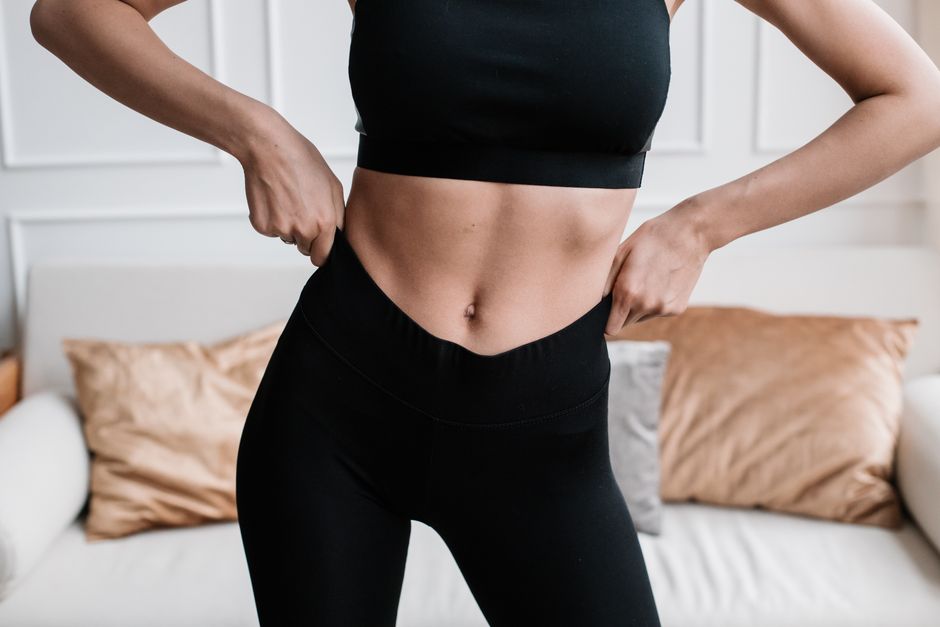
Your belly button usually pops out during the second or third trimester, most often between weeks 26 and 34. For many women, it happens slowly as the uterus expands and pushes the abdominal wall forward. Some women never pop at all, and that is completely normal too.
What Does It Mean When Your Belly Button Pops Out?
An “outie” during pregnancy is not a sign of a problem. It is simply a physical response to your growing uterus. As your baby grows, your abdominal cavity has less room. The pressure pushes your belly button outward because it is the thinnest, weakest point in the abdominal wall.
Think of it like a balloon being inflated. The surface stretches evenly, but the weakest spot gives way first. Your belly button sits over an area where the abdominal muscles come together. That area has less tissue and less fat, so it yields to pressure more easily than the rest of your belly.
The change is temporary. For most women, the belly button returns to its normal shape within a few months after delivery. The skin may look a little looser or darker afterward, but the structural change usually reverses on its own.
Why Do Some Pregnant Women Pop and Others Do Not?
There is no single factor that predicts whether your belly button will pop. Body type plays a role. Women with a shorter torso often pop earlier because the uterus has less vertical space and pushes forward more. Women with a longer torso may carry the baby differently and never pop at all.
Muscle tone matters too. Stronger abdominal muscles hold the belly button in place longer. But even very fit women can pop, so do not treat muscle tone as a guarantee. The position of the baby, the amount of amniotic fluid, and the number of pregnancies you have had all influence the timing.
In a second or third pregnancy, the abdominal muscles are already stretched from before. The belly button often pops earlier and more noticeably. First-time mothers may not pop until late in the third trimester, if at all.
Is a Popped Belly Button a Sign of Diastasis Recti?
Not exactly. Diastasis recti is a separation of the two large bands of muscle that run down the middle of your abdomen. It is very common in pregnancy, affecting roughly two-thirds of pregnant women in the third trimester. The belly button popping is related to this separation, but it is not the same thing.
When the rectus abdominis muscles separate, the connective tissue between them stretches thin. The belly button sits right in that midline area. When the tissue stretches, the belly button is pushed outward. So a popped belly button often accompanies diastasis recti, but you can have one without the other.
Some women develop diastasis recti and never pop. Others pop without a significant muscle separation. The two conditions overlap but are not identical.
If you are concerned about diastasis recti, ask your provider to check for it. The standard test involves lying on your back, lifting your head slightly, and feeling for a gap between the abdominal muscles. This is a simple office check that takes about a minute.


Can You Prevent Your Belly Button from Popping Out?
No reliable method prevents it. Some online sources suggest belly buttons or taping the area, but no clinical evidence supports these practices. The popping is a natural result of physical pressure. You cannot train your belly button to stay flat.
What you can do is keep your abdominal muscles as healthy as possible. Gentle prenatal exercise, proper posture, and avoiding heavy lifting can reduce strain on the abdominal wall. But even with perfect habits, your belly button may still pop. That is normal.
Do not try to push the belly button back in. It will not stay, and pressing on it can cause discomfort. There is also no benefit to doing so. The pop is harmless and temporary.
When Should You Worry About Your Belly Button During Pregnancy?
A popped belly button itself is never a reason for concern. But certain symptoms around the belly button deserve attention. Pain is the main one. Mild stretching discomfort is normal, but sharp or persistent pain in the belly button area is not.
Redness, warmth, or discharge from the belly button can signal an infection. This is rare but possible, especially if you have a deep belly button that traps moisture. If you notice any of these signs, contact your provider.
An umbilical hernia is another possibility. This happens when a small part of the intestine pushes through the abdominal wall near the belly button. Hernias are more common in pregnancy because of the increased pressure. Most umbilical hernias during pregnancy are harmless and resolve after delivery, but a hernia that becomes painful, firm, or causes nausea needs immediate medical attention.
Contact your provider right away if you feel a hard lump near the belly button that does not go away when you lie down, or if you have vomiting with belly button pain. These can be signs of a strangulated hernia, which is a surgical emergency.
How Long Does the Belly Button Stay Popped After Birth?
For most women, the belly button returns to its pre-pregnancy shape within 2 to 6 months after delivery. The timeline depends on how much weight you gained, how stretched your abdominal skin became, and your overall muscle tone.
Breastfeeding does not affect the belly button directly. The return to normal shape is driven by the uterus shrinking and the abdominal organs settling back into place. As the pressure decreases, the belly button gradually recedes.
Some women notice their belly button never looks exactly the same again. It may be slightly wider, darker, or more shallow than before. This is a cosmetic change, not a medical problem. The skin has been stretched for months, and some permanent change is expected.
What Does a Popped Belly Button Feel Like?
Many women describe the sensation as a stretching or pulling feeling around the belly button. Some feel a mild ache, especially when moving from sitting to standing. Others feel nothing at all and simply notice the change in the mirror.
The skin around the belly button may become more sensitive. Clothing and waistbands can irritate the area. Some women find that a soft belly band or loose clothing helps reduce the discomfort. If the area feels raw, keeping it clean and dry can prevent irritation.
Itching is also common. The skin is stretching rapidly, and the belly button area has less elasticity than the rest of the abdomen. A gentle, fragrance-free moisturizer can help, but check with your provider before using any topical product during pregnancy.
Frequently Asked Questions
Can your belly button pop out in the first trimester?
It is very unlikely. The uterus is still too small to create enough pressure to push the belly button outward in the first trimester. Most women notice the change in the second or third trimester.
Does a popped belly button mean you are having a boy or a girl?
No. The sex of your baby has no connection to how your belly button changes. This is an old wives’ tale with no medical basis.
Will my belly button go back to normal after pregnancy?
For most women, yes. The belly button typically returns to its normal shape within 2 to 6 months after delivery, though it may look slightly different than before.
Is it safe to wear a belly button ring while pregnant?
Most providers recommend removing the ring as your belly grows. The skin stretches and the ring can become tight, increasing the risk of tearing or infection. If you keep it in, switch to a flexible plastic retainer.
