
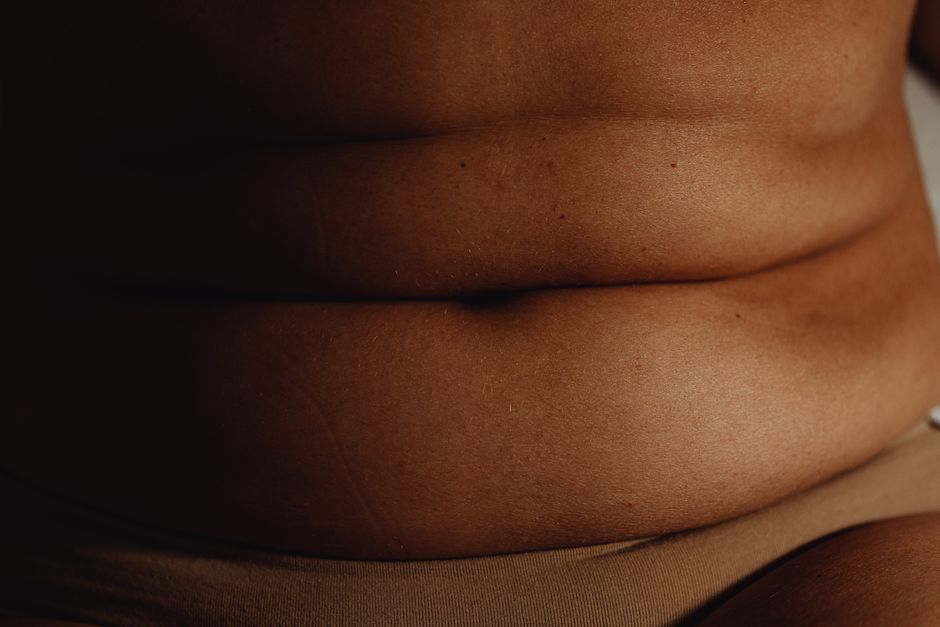
If you carry extra weight around your midsection that seems impossible to lose, stress hormones may be part of the reason. This is often called “cortisol belly” — fat stored deep in the abdomen linked to high levels of the stress hormone cortisol. The most direct way to reduce it is to lower your cortisol levels through consistent sleep, balanced blood sugar, and targeted lifestyle changes that calm your nervous system.
What Is Cortisol Belly and How Does It Work?
Cortisol is a hormone your adrenal glands release when you face stress. It is not bad — it helps you wake up in the morning and react to danger. But when cortisol stays high for weeks or months, it tells your body to store fat in the belly area. This is visceral fat, the kind that wraps around your organs and is harder to lose than fat under the skin.
Research published in the journal Obesity has found that people with higher cortisol levels tend to carry more abdominal fat regardless of their total body weight. The connection is strong enough that the National Institutes of Health lists chronic stress as a known risk factor for central obesity.
High cortisol also breaks down muscle tissue and makes your body crave high-calorie foods. This combination — more belly fat, less muscle, and stronger cravings — creates a cycle that is hard to break with diet alone. That is why simply eating less does not always work for this type of weight gain.
How To Reduce Cortisol Belly by Fixing Your Sleep
Sleep is the single most effective lever you can pull for lowering cortisol. A study from the University of Chicago found that sleeping only four to five hours per night raised cortisol levels by about 50 percent the following evening. Over time, that shift directly increases abdominal fat storage.
Your body releases cortisol in a daily rhythm. It peaks in the morning to help you wake up and drops at night so you can fall asleep. When you sleep poorly, this rhythm flattens. Your cortisol stays higher at night than it should, and that night-time elevation is strongly linked to belly fat gain.
To fix this, aim for seven to nine hours of sleep per night on a consistent schedule. Going to bed and waking at the same time — even on weekends — helps reset your cortisol rhythm. Keep your bedroom cool, dark, and quiet. Avoid screens for at least 60 minutes before bed because blue light suppresses melatonin and delays the natural drop in cortisol.
If you wake up feeling unrefreshed after seven or eight hours, consider getting checked for sleep apnea. The American Academy of Sleep Medicine reports that untreated sleep apnea keeps cortisol elevated all night and is linked to increased belly fat independent of body weight.
How Exercise Affects Cortisol Belly — The Right Kind Matters
Exercise can lower cortisol, but only if you do the right type. Long, intense workouts — like running for an hour at high effort — actually raise cortisol during and after exercise. For someone already dealing with high stress, this can make the problem worse.
Moderate exercise, on the other hand, reduces cortisol. A study in the Journal of Endocrinological Investigation found that 30 to 45 minutes of moderate aerobic exercise — brisk walking, cycling at a conversational pace, or swimming — significantly lowered cortisol levels in adults with chronic stress. The effect lasted for several hours after exercise stopped.
Strength training also helps, but the key is recovery. Lifting heavy weights raises cortisol during the workout, but the drop afterward is more important. If you lift three times per week with rest days in between, your overall cortisol balance improves. If you lift every day without rest, your cortisol stays elevated.
- Best for lowering cortisol: Brisk walking, yoga, tai chi, light cycling, swimming
- Moderate effect: Strength training with adequate rest days
- Can raise cortisol if overdone: High-intensity interval training, long-distance running, CrossFit-style workouts done daily
The CDC recommends 150 minutes of moderate activity per week for general health. For cortisol belly specifically, consistency matters more than intensity. A 30-minute walk every day is likely better than an hour of hard running three times per week.





What You Eat Directly Affects Cortisol Levels
Blood sugar swings trigger cortisol release. When your blood sugar drops sharply — after eating a high-sugar meal or skipping a meal — your body releases cortisol to bring it back up. Over time, this repeated cycle keeps cortisol higher than it should be.
Eating regular meals with protein, fiber, and healthy fat helps keep blood sugar stable. A breakfast with eggs and vegetables, for example, causes a much smaller cortisol response than a breakfast of cereal or a pastry. Research from the University of California found that meals with at least 20 grams of protein reduced the cortisol spike after eating by about 30 percent compared to high-carb meals.
Caffeine is another factor. It directly stimulates cortisol release. A study in Psychosomatic Medicine showed that a single 300 mg dose of caffeine — about three cups of coffee — raised cortisol levels by 30 percent in healthy adults. If you drink coffee all day, your cortisol stays elevated. Limiting caffeine to the morning hours helps your cortisol rhythm drop naturally in the afternoon and evening.
Alcohol also raises cortisol. Even moderate drinking — one or two drinks per evening — has been shown to increase night-time cortisol levels. The National Institute on Alcohol Abuse and Alcoholism reports that alcohol disrupts the HPA axis, the system that controls cortisol release. Cutting back on alcohol, especially in the evening, directly supports lower cortisol and less belly fat storage.
Stress Management Techniques That Actually Lower Cortisol
Not all stress management is equal. Watching TV or scrolling social media does not lower cortisol — it may even raise it if the content is stressful. The techniques that work have been studied directly.
Mindfulness meditation is one of the most well-supported methods. A meta-analysis of 47 studies published in JAMA Internal Medicine found that mindfulness-based programs reduced cortisol levels by an average of 15 percent in participants with elevated stress. The key was consistency — people who meditated daily for at least eight weeks saw the largest drops.
Deep breathing exercises also work. Slow, diaphragmatic breathing — inhaling for four seconds, holding for four, exhaling for six — activates the vagus nerve and signals your body to lower cortisol. A study from the Journal of Clinical Endocrinology & Metabolism found that 20 minutes of slow breathing reduced cortisol by about 25 percent in healthy adults.
Social connection is often overlooked but matters. Talking to a trusted friend or partner for even 15 minutes can lower cortisol, especially if the conversation is supportive rather than venting. The American Psychological Association notes that people with strong social networks have lower baseline cortisol levels than those who are socially isolated.
Time in nature also helps. A study from the University of Michigan found that walking in a natural setting for 20 minutes reduced cortisol levels significantly more than walking on a city street. The effect was measurable within 10 minutes.
Common Mistakes That Worsen Cortisol Belly
Many people try to lose belly fat by eating very few calories or doing intense cardio every day. Both approaches backfire when cortisol is the issue. Severe calorie restriction raises cortisol because your body perceives it as a threat. A study in Psychoneuroendocrinology found that women who ate less than 1,200 calories per day had cortisol levels 20 percent higher than those eating a moderate diet.
Over-exercising is another trap. If you feel exhausted after workouts rather than energized, your cortisol may already be too high to benefit from more training. Taking a rest week or switching to gentle movement like walking and stretching can lower cortisol faster than pushing harder.
Relying on supplements without addressing sleep, diet, or stress is also ineffective. Many supplements claim to lower cortisol, but the evidence is mixed. Ashwagandha has the strongest research behind it — a 2019 study in Medicine found that 600 mg daily for eight weeks reduced cortisol by about 15 percent. But no supplement works if your lifestyle is still spiking cortisol every day.
| Factor | Lowers Cortisol | Raises Cortisol |
|---|---|---|
| Sleep | 7-9 hours on a consistent schedule | Less than 6 hours, irregular timing |
| Exercise | Moderate walking, yoga, strength with rest | Daily high-intensity training without recovery |
| Diet | Regular meals with protein and fiber | Skipping meals, high sugar, excess caffeine |
| Stress management | Meditation, deep breathing, social connection | Chronic overwork, poor boundaries, isolation |
How Long Does It Take To Reduce Cortisol Belly?
This depends on how high your cortisol is and how consistently you address it. Some people see a difference in waist measurement within two to four weeks of fixing their sleep and cutting back on caffeine and alcohol. For others, especially those with long-term high stress, it may take two to three months of consistent lifestyle changes before belly fat noticeably decreases.
Visceral fat is more metabolically active than subcutaneous fat, which means it responds faster to changes in your hormones. When cortisol drops, your body starts breaking down visceral fat for energy more readily than fat stored elsewhere. The scale may not change quickly, but waist circumference often shrinks faster than total body weight.
Blood tests for cortisol are not always reliable. A single blood draw captures only one moment in time, and cortisol fluctuates throughout the day. Salivary cortisol tests taken at multiple times — morning, noon, evening, and night — give a clearer picture. If you suspect your cortisol is high, ask your doctor about a multi-point saliva test rather than a single blood test.
Frequently Asked Questions
Can you lose cortisol belly without losing weight everywhere else?
Yes, visceral fat responds faster to cortisol changes than fat in other areas. Reducing cortisol often shrinks your waistline before the scale moves.
How quickly can I reduce cortisol belly with lifestyle changes?
Some people see changes in two to four weeks. Most need at least two months of consistent sleep, diet, and stress management for noticeable results.
Does walking help reduce cortisol belly?
Yes, moderate walking for 30 to 45 minutes daily is one of the most effective exercises for lowering cortisol and reducing belly fat.
What foods should I avoid to lower cortisol belly?
High-sugar foods, refined carbs, and excessive caffeine are the main culprits. These cause blood sugar swings that trigger cortisol release.
