
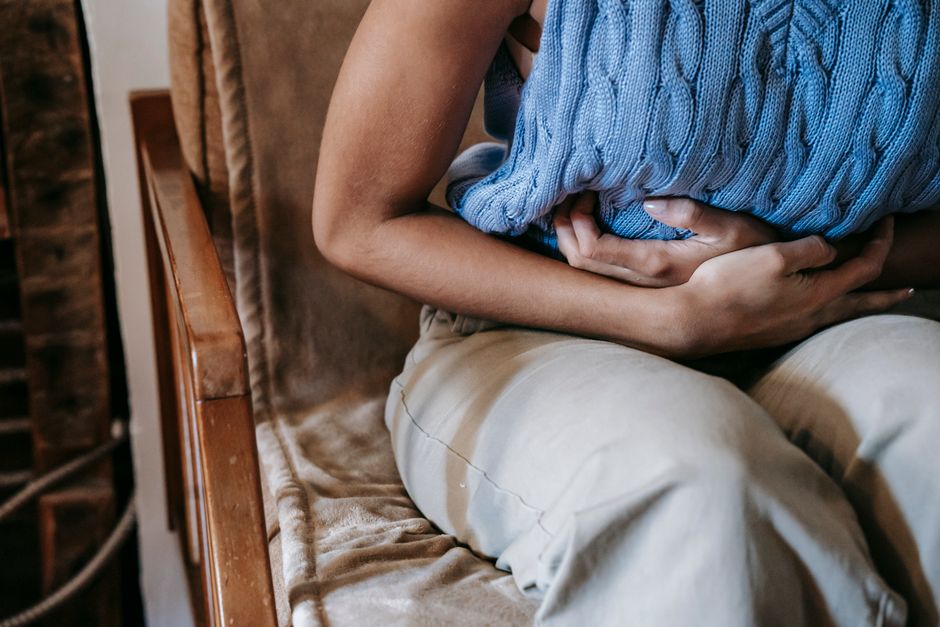
Bloating from hormonal shifts usually fades within a few days after your period starts. For most people, the worst of it lifts in the first two to three days of bleeding. By the time your period ends, most of the puffiness and water weight is gone.
That timeline is the typical pattern, not a rule. Some people feel relief the same day bleeding begins. Others stay bloated through the full period or notice a smaller second wave around ovulation. What happens after depends on what caused the bloating in the first place.
Why Does Bloating Happen Before a Period?
Premenstrual bloating is driven mostly by hormones, not by how much you ate. In the days before bleeding starts, levels of the hormone progesterone rise and then fall. Estrogen moves in its own pattern. Together they affect how your body handles salt and water, and how your gut moves.
Two things tend to happen at once. First, the body holds more fluid than usual. This is real water retention, not imagined weight, and it can show up as puffiness in the belly, hands, and face. Second, the muscles of the digestive tract slow down. Food and gas move through more slowly, which adds a feeling of fullness and pressure.
Progesterone is thought to play a role in that slowdown. It relaxes smooth muscle, and the gut is made of smooth muscle. When transit slows, gas builds up and the belly feels tight. Estrogen is also involved in fluid balance, which is why the two hormones rising and falling together can produce a few uncomfortable days.
This is why premenstrual bloating often feels different from the bloating you get after a big meal. It comes with other symptoms, like breast tenderness, mood shifts, and changes in appetite. It also tends to follow a predictable schedule tied to your cycle.
When Does Bloating Go Away After Period? The Timeline
Bloating typically begins to ease once bleeding starts and hormone levels drop. The shift is fairly quick. Many people notice the tightness loosening within a day or two of the first day of their period.
A reasonable way to think about the timeline:
- Days 1 to 3 of your period: most people feel the pressure start to lift. Water retention often drops first.
- Days 3 to 5: gut movement tends to return toward normal, and gas-related fullness settles.
- End of your period: for most people, bloating is gone or close to it.
These are typical patterns, not fixed rules. Cycle length, flow, age, and individual hormone sensitivity all shift the picture. If your periods are irregular, the timing of relief can be harder to predict.
Why Does Bloating Sometimes Last Longer?
If bloating lingers past your period, the menstrual cycle may not be the whole story. Hormonal bloating usually resolves when hormones reset. Bloating that stays put often has another driver.
Common reasons bloating outlasts your period include:
- Digestive causes. Constipation, irritable bowel syndrome, food intolerances, and slow gut transit can produce bloating on any day of the cycle.
- Diet and salt. A high-salt diet increases water retention and can keep the puffiness going.
- Fibroids or other structural issues. Uterine fibroids can cause a feeling of fullness or pressure in the lower belly that does not follow the hormonal pattern.
- Endometriosis. This condition can cause pelvic pressure and bloating that is not tied neatly to the cycle.
- Perimenopause. Hormone levels become erratic, so cycle-linked symptoms can become less predictable.
This is where an important distinction helps. “Bloating” is used for two different feelings. One is water retention and puffiness under the skin. The other is gas and pressure inside the gut. Hormones can cause both, but they respond to different things. If your belly feels hard and full of gas rather than soft and puffy, the gut is more likely the main driver.




What Helps Menstrual Bloating Go Away Faster?
No remedy makes hormonal bloating vanish on command. The evidence for most at-home approaches is modest, and some popular fixes have little support. Still, a few steps are reasonable and low-risk for most people.
Reducing salt intake in the days before your period is a sensible step. Sodium pulls water into the body, so cutting back can reduce how much fluid you hold. Drinking enough water sounds backward but helps the body regulate fluid balance normally.
Gentle movement, like walking, supports normal gut movement and may ease the gas-related side of bloating. Some people find heat helps relax the belly. Avoiding large, very salty, or heavily processed meals in the premenstrual days may reduce symptoms for some.
Be cautious with supplements marketed for bloating. No large human trials confirm that most of these products reliably reduce menstrual bloating. Some clinicians suggest magnesium or vitamin B6 for premenstrual symptoms generally, but the evidence is mixed and dosing should be discussed with a clinician rather than guessed.
If bloating comes with cramping, over-the-counter pain relief may help the cramping, though it does not specifically target bloating. Anyone with kidney problems, heart conditions, or who takes prescription medication should check with a clinician before using diuretics or new supplements.
When Should You See a Doctor About Bloating?
Bloating tied to your cycle is usually harmless. Bloating that is new, persistent, or comes with other warning signs deserves a medical look. The key question is whether the pattern still fits your cycle.
See a clinician if you notice:
- Bloating that does not ease after your period and lasts for weeks
- Bloating along with weight loss, changes in bowel habits, or blood in the stool
- A feeling of fullness that makes it hard to eat normal amounts
- Severe pelvic pain, especially pain during sex or with bowel movements
- Very heavy bleeding, bleeding between periods, or bleeding after menopause
- Sudden swelling of the belly, or swelling with shortness of breath
Persistent bloating is common and most often has a benign cause. Still, ongoing bloating that does not follow your cycle is worth checking, because it can occasionally point to a condition that needs treatment. A clinician can help sort out whether the cause is hormonal, digestive, or something else.
Does Bloating Come Back at Other Points in the Cycle?
Yes. For many people, a smaller round of bloating shows up around ovulation, roughly mid-cycle. Estrogen rises sharply around this time, and some people notice mild fluid retention or a bit of belly fullness.
The premenstrual bloating is usually the more noticeable one. It tends to build in the days before bleeding and ease once your period starts. Ovulation bloating is often milder and shorter. Tracking your symptoms across a couple of cycles can help you see your own pattern clearly.
Keeping a simple log of bloating, flow, and other symptoms is one of the most useful things you can do. It shows whether your bloating follows the expected hormonal rhythm or whether something else may be going on. That record is also helpful if you decide to talk with a clinician.
Frequently Asked Questions
How long after your period does bloating go away?
Bloating usually eases within the first two to three days of your period and is mostly gone by the time bleeding ends. If it lasts well beyond your period, another cause may be involved.
Does bloating go away when your period starts?
For many people it starts to lift on the first day or two of bleeding as hormone levels drop. Relief is often gradual rather than instant.
Why am I still bloated after my period?
Bloating that outlasts your period often has a digestive cause, such as constipation or irritable bowel syndrome, or is linked to a condition like fibroids. Persistent bloating that does not follow your cycle is worth discussing with a clinician.
What helps period bloating go away faster?
Cutting back on salt, staying hydrated, and gentle movement like walking may help. No remedy reliably makes hormonal bloating disappear on command.
