
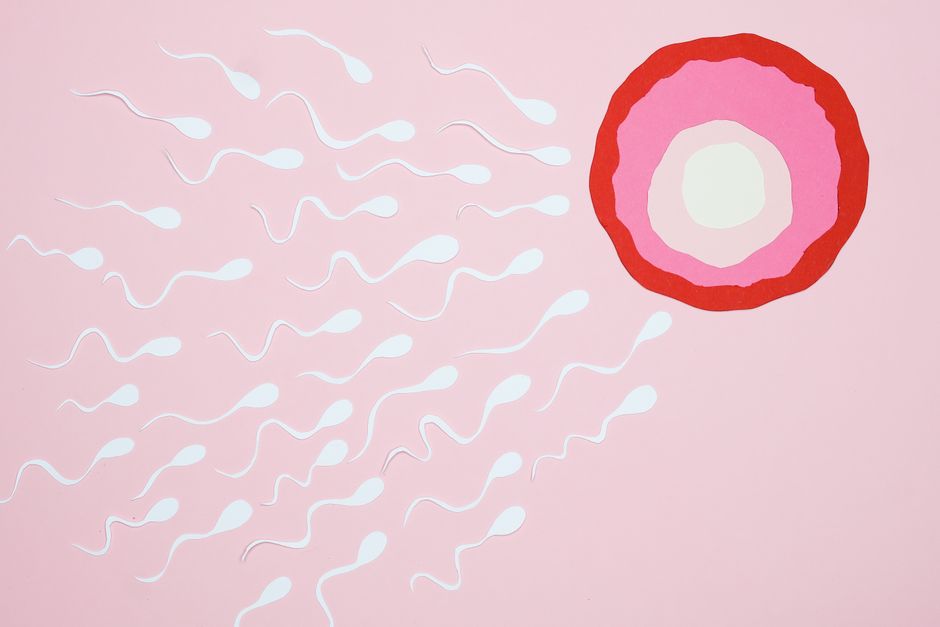
A positive ovulation test tells you your body is getting ready to release an egg, but it does not mean the egg is already out. Ovulation typically happens about 24 to 36 hours after the test turns positive. That window is when you are most fertile, and it is the time to focus on if you are trying to conceive.
What Does a Positive Ovulation Test Actually Measure?
Ovulation predictor kits detect luteinizing hormone (LH) in your urine. LH is produced by the pituitary gland, and it surges right before ovulation. This LH surge is what triggers the ovary to release a mature egg.
The test does not detect ovulation itself. It only detects the hormone that precedes it. The surge usually begins in the morning, but the test may not turn positive until later in the day depending on your hormone levels and how concentrated your urine is.
Once the egg is released, it survives for about 12 to 24 hours. Sperm, however, can live inside the female reproductive tract for up to five days. That difference in survival time is why timing intercourse before ovulation matters more than waiting until after.
When Do You Ovulate After a Positive Ovulation Test?
Ovulation occurs approximately 24 to 36 hours after the LH surge begins. Most clinical guidelines and fertility specialists use this window when advising patients. The surge itself typically lasts about 24 hours on average, though it can be shorter or longer in some women.
Some women ovulate closer to 12 hours after the surge begins. Others may not release the egg until 48 hours later. This natural variation means the 24-to-36-hour estimate is a useful average, not a guarantee for any individual woman.
If you are tracking with both ovulation tests and basal body temperature, you will notice a pattern. The temperature rise happens after ovulation, usually within a day or two. That rise confirms ovulation occurred, but it is too late to act on it for that cycle.
How Long Does the LH Surge Last?
The LH surge is brief. For most women, it lasts between 12 and 24 hours. In some cases it can last up to 48 hours, but that is less common.
This short window is why testing once a day is often not enough. If you test in the morning and your surge begins in the afternoon, you could miss it entirely. Many fertility specialists recommend testing twice daily when you are close to your expected fertile window — typically late morning and early evening.
Urine concentration matters too. Testing with very diluted urine can produce a false negative. Testing first thing in the morning is not always best for LH detection because the surge often begins mid-morning. Waiting a few hours after waking and limiting fluids for a couple of hours before testing gives the most reliable result.



What If You Never Get a Positive Test?
Not every woman detects an LH surge with home ovulation tests. Some women have LH surges that are too brief to catch with twice-daily testing. Others have naturally lower LH levels that never rise high enough to trigger a positive result on the test threshold.
Certain medical conditions can also interfere. Polycystic ovary syndrome (PCOS) can cause elevated baseline LH levels, which makes the test positive all the time or makes it hard to interpret. Women approaching perimenopause may also have irregular LH patterns.
If you track for several cycles and never see a positive result, that does not automatically mean you are not ovulating. But it is a reason to talk with a clinician. Blood tests can measure progesterone in the second half of your cycle, which confirms whether ovulation actually occurred.
Best Days to Have Intercourse After a Positive Test
The most fertile days are the day of the positive test and the day after. Because the egg only survives 12 to 24 hours, sperm needs to be waiting in the fallopian tube when the egg arrives.
Having intercourse on the day of the positive test covers you if you ovulate on the earlier side of the window. Having intercourse the next day covers you if ovulation happens closer to 36 hours after the surge.
Some research suggests that having intercourse on the day before the LH surge also results in high conception rates. Sperm can survive for several days, so intercourse in the two to three days before the surge is not wasted. The key takeaway: do not wait for the positive test to start having intercourse if you are trying to conceive. Regular intercourse throughout the fertile window gives you the best chance.
Can a Positive Ovulation Test Predict the Exact Hour?
No home test can tell you the exact moment of ovulation. The LH surge is a reliable predictor that ovulation is coming, but it does not pinpoint the hour. Even ultrasound monitoring, which is the gold standard for tracking follicle development, cannot predict the exact moment of release with certainty.
Some newer fertility monitors track estrogen as well as LH. Estrogen rises a few days before the LH surge, which can give you more advance notice. These devices can extend your fertile window detection from roughly two days to four or five days. They are more expensive and may not be necessary for everyone, but they are useful for women with irregular cycles who want more lead time.
What Can Delay Ovulation After a Positive Test?
Stress is one factor that can affect ovulation timing. High physical or emotional stress can influence hormone levels and potentially delay or even skip ovulation in a given cycle. Illness, significant sleep changes, and travel across time zones can have similar effects.
Certain medications can also interfere. Some fertility medications, particularly those containing human chorionic gonadotropin (hCG), can cause false positives on ovulation tests because hCG and LH share a similar molecular structure. If you are taking fertility medications, check with your clinician about how they may affect your test results.
Even with a confirmed LH surge, ovulation does not always occur. Some women experience an LH surge without releasing an egg. This condition is called luteinized unruptured follicle syndrome. It is not common, but it is one reason why a positive test does not guarantee pregnancy in that cycle.
How to Confirm Ovulation Actually Happened
Basal body temperature tracking is the most accessible way to confirm ovulation at home. After ovulation, progesterone levels rise, which causes a slight increase in resting body temperature — typically about 0.5 to 1 degree Fahrenheit. This rise usually occurs within a day or two after ovulation and stays elevated until your next period.
The temperature shift only tells you that ovulation happened. It cannot predict when it will happen in the current cycle, which is why it is best used alongside ovulation tests rather than alone.
Cervical mucus changes are another sign. Around ovulation, cervical mucus becomes clear, stretchy, and slippery — similar to raw egg whites. This fertile-quality mucus helps sperm travel through the cervix. After ovulation, mucus typically becomes thicker and cloudier.
Frequently Asked Questions
How many hours after a positive ovulation test do you ovulate?
Ovulation typically occurs 24 to 36 hours after the LH surge begins. The exact timing varies from woman to woman and cycle to cycle.
Can you ovulate the same day as a positive ovulation test?
Yes, some women ovulate within 12 hours of the surge beginning, which can be the same day the test turns positive. This is why having intercourse on the day of the positive test is recommended.
Is one positive ovulation test enough to confirm ovulation?
No, a positive test only confirms that an LH surge is happening, not that an egg has been released. Temperature tracking or a mid-luteal progesterone blood test can confirm ovulation actually occurred.
How long after a positive ovulation test are you fertile?
You are most fertile on the day of the positive test and the following day. Sperm can survive up to five days, so intercourse in the days before the surge also counts toward your fertile window.
