
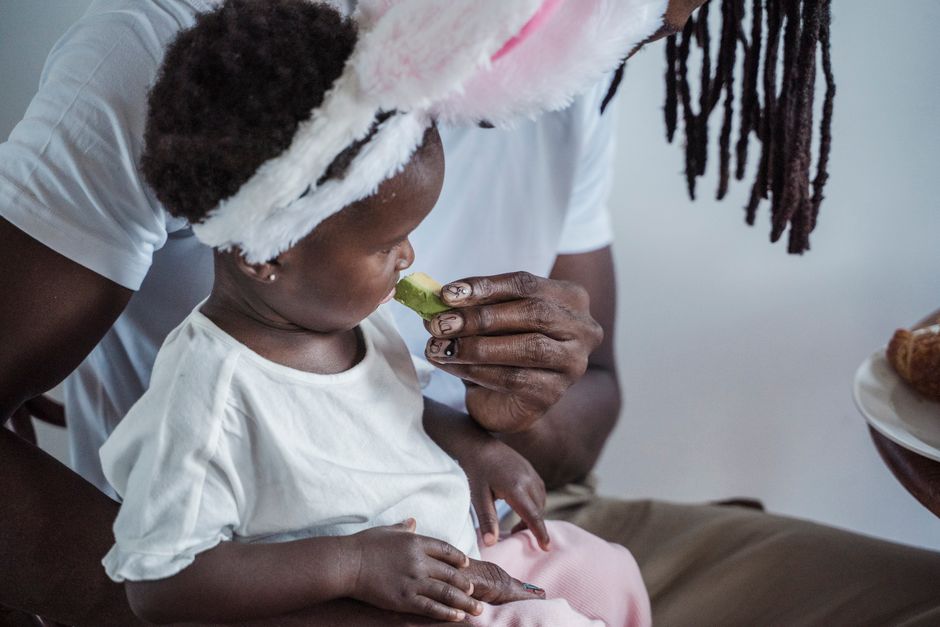
Most babies are ready for purees and first foods around 6 months of age. At that point, they can hold their head up, sit with support, and have usually lost the tongue-thrust reflex that pushes food back out of the mouth. Before 4 months, a baby’s digestive system and swallowing skills are not ready for solid food, so purees should not be started that early.
The American Academy of Pediatrics recommends waiting until about 6 months and watching for specific developmental signs rather than going by age alone. Your baby’s own cues matter more than the calendar.
When Can I Give My Baby Purees Signs And First Foods?
Readiness is about skills, not just a birthday. A baby who is 6 months old but cannot sit upright with support, or who still pushes food out with their tongue, is not ready yet. A baby showing all the signs is ready even if they are a few weeks past the 6-month mark.
Watch for these signs together, not one at a time:
- Sits with support and holds their head steady and upright.
- Good head and neck control — the head does not flop when they turn or reach.
- Lost the tongue-thrust reflex — food stays in the mouth instead of being pushed back out.
- Shows interest in food — watches you eat, reaches for your plate, opens their mouth.
- Can move food to the back of the mouth and swallow rather than letting it dribble out.
The tongue-thrust reflex is worth understanding. Newborns are born with it so they can breastfeed without choking. It fades somewhere between 4 and 6 months. If you offer a spoon before it fades, the baby will push the food right back out — not because they dislike it, but because the reflex is doing its job.
Some parents start purees at 4 months because a baby seems hungry or is waking more at night. Hunger alone is not a sign of readiness. Extra waking is common at this age for many reasons and is not reliable evidence that a baby needs solids.
Why Does Age Matter So Much?
Before about 4 months, a baby’s body is not set up for solid food. The digestive system is still maturing, and the swallowing mechanism is not coordinated enough to safely handle anything thicker than milk or formula.
Starting too early carries real risks. It can replace breast milk or formula, which supply the main nutrition a young infant needs. It can also raise the chance of choking and, in some cases, of food reactions. There is no nutritional benefit to starting solids before a baby is developmentally ready.
Starting too late has its own downsides. Around 6 months, babies need more iron and zinc than breast milk alone can supply. That is one reason first foods often focus on iron-rich options. Delaying solids well past 6 months can make it harder to meet those needs.
So the window is not arbitrary. It lines up with when a baby’s body can handle food and when their nutrient needs start to shift.
What Are Good First Foods?
First foods should be smooth, soft, and easy to swallow. They do not need to be bland or boring — flavor variety early on may help a baby accept more foods later.
Iron matters most at this stage. A baby’s iron stores from birth start running low around 6 months, so first foods should lean toward iron-rich choices.
- Iron-fortified infant cereal mixed with breast milk or formula.
- Pureed meats — beef, chicken, or turkey, thinned with liquid.
- Pureed beans or lentils, well cooked and smooth.
- Pureed vegetables — sweet potato, squash, carrot, peas.
- Pureed fruit — banana, avocado, pear, apple.
Introduce one new food at a time, waiting a few days before the next. This makes it easier to spot a reaction if one occurs. Most reactions to new foods are mild, but spacing them out gives you a clearer picture.
Skip added salt and sugar. A baby’s kidneys are not ready to handle much sodium, and there is no reason to add sweeteners. Honey should never be given to a baby under 12 months because of the risk of infant botulism, even in cooked form.





How Much Should a Baby Eat at First?
Very little. The first feedings are about practice, not calories. A teaspoon or two is a normal starting amount. Breast milk or formula remains the main source of nutrition through the first year.
Think of solids in the first months as a supplement, not a replacement. Milk still provides most of what a baby needs. Over time, as the baby gets better at eating, the balance shifts.
Do not pressure a baby to finish a portion. Signs they are done include turning the head away, closing the mouth, or pushing the spoon aside. Following those cues helps build a healthy relationship with food from the start.
Some babies take to solids quickly. Others need many tries before they accept a new taste or texture. It can take several exposures to a food before a baby accepts it. That is normal and not a sign anything is wrong.
Which Textures Come Next?
Texture progression matters as much as the first bite. Staying on smooth purees too long can make it harder for a baby to accept lumps and chewier foods later.
A rough timeline many clinicians suggest:
- Around 6 months: smooth, thin purees.
- 6 to 8 months: thicker purees and soft mashed foods.
- 8 to 10 months: soft lumps, mashed table foods, small soft pieces.
- 10 to 12 months: soft finger foods and more textured table foods.
These are general guides, not strict rules. Babies move at different speeds. The key is to keep offering a little more texture as the baby shows they can handle it.
Finger foods can start once a baby can sit up and bring things to their mouth. Soft options like well-cooked vegetable sticks or ripe banana pieces work well. Always supervise a baby while they eat, and have them seated upright. Choking is a real risk, and hard, round, or sticky foods are the most common culprits.
Do Purees and Baby-Led Weaning Both Work?
Yes. Both spoon-feeding purees and baby-led weaning — where babies feed themselves soft pieces — are reasonable approaches. The evidence does not clearly show one is better than the other for most outcomes.
Some research suggests baby-led weaning may support self-regulation and variety in eating, but the findings are mixed and not strong enough to call it superior. Many families use a mix of both, offering purees on a spoon and soft pieces the baby can pick up.
What matters more than the method is that the baby gets iron-rich foods, a range of tastes and textures, and enough milk. The approach should fit your baby and your family, not a trend.
When Should You Talk to a Pediatrician?
Ask your baby’s doctor if you are unsure whether your baby is ready, or if feeding brings up concerns. Certain situations call for a closer look.
- Your baby was born prematurely — adjusted age may change the timeline.
- Your baby has trouble swallowing, coughs or gags often, or seems to struggle with food.
- Your baby is not gaining weight as expected.
- You notice a reaction after a new food, such as a rash, vomiting, or trouble breathing.
Feeding problems are easier to address early. A pediatrician can check development and, if needed, refer you to a feeding specialist.
One point worth being clear about: the guidance here reflects broad, well-established recommendations. Every baby is different, and your pediatrician knows your baby’s history. When in doubt, that is the person to ask.
Frequently Asked Questions
What are the signs my baby is ready for purees?
Your baby should sit with support, hold their head steady, have lost the tongue-thrust reflex, and show interest in food. These signs usually appear around 6 months. Age alone is not enough.
Can I start purees at 4 months?
Most babies are not ready at 4 months, and major health organizations recommend waiting until about 6 months. Starting too early can replace milk and raise choking risk. Talk to your pediatrician if you think your baby is ready sooner.
What should I feed my baby first?
Iron-rich foods are a good first choice, such as iron-fortified cereal, pureed meat, or pureed beans. Smooth pureed vegetables and fruits are also fine. Introduce one new food at a time.
How much should a 6-month-old eat?
Start with just a teaspoon or two per feeding, since the first solids are for practice. Breast milk or formula should still be the main source of nutrition through the first year.
