
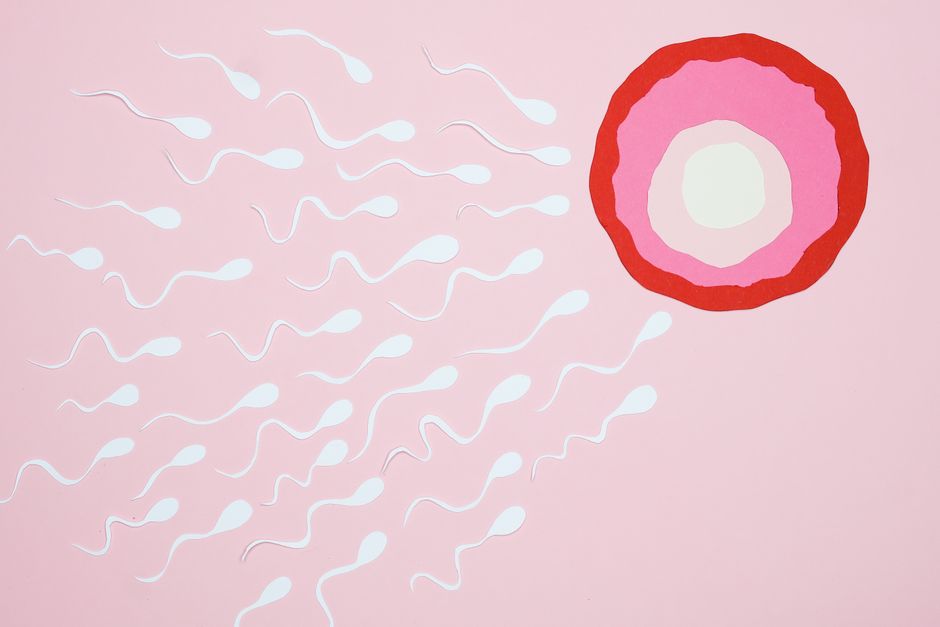
Your fertile window is the six-day span each cycle when pregnancy is possible. It includes the five days before ovulation and the day of ovulation itself. An egg only lives about 12 to 24 hours after release. Sperm can survive inside the body for up to five days. So having sex in the days leading up to ovulation gives sperm time to be ready when the egg arrives. This timing matters more than most people realize for anyone trying to conceive.
How Do You Know When You Are Fertile?
Your body gives signals when you are fertile. The most reliable ones are changes in cervical mucus and a slight rise in basal body temperature. Cervical mucus becomes clear, stretchy, and slippery when estrogen rises before ovulation. It looks and feels like raw egg whites. That texture helps sperm swim toward the egg.
Basal body temperature works differently. It drops slightly before ovulation and then rises about 0.5 to 1 degree Fahrenheit after ovulation. The temperature shift confirms ovulation already happened. It does not predict it. That is why tracking mucus is more useful for knowing when you are fertile in real time.
Some people also feel mild cramping or a twinge on one side of the lower belly during ovulation. This is called mittelschmerz. It happens in about 20 percent of women. It is not reliable enough to use alone but can add to other signs.
What Is the Best Way to Track Ovulation Timing?
Ovulation predictor kits are the most accurate at-home method for predicting ovulation. These kits measure luteinizing hormone in urine. LH surges about 24 to 36 hours before ovulation. A positive test means ovulation is likely within the next two days.
Research published in the journal Fertility and Sterility found that ovulation predictor kits correctly identify the fertile window about 90 percent of the time when used correctly. That is better than calendar tracking or temperature charting alone.
Calendar tracking works best for people with regular cycles. You estimate ovulation by counting back 14 days from when you expect your next period. This method is less reliable for anyone with cycles that vary by more than a few days each month. The CDC reports that about one in three women have irregular cycles at some point. For them, calendar tracking can miss the fertile window entirely.
Fertility tracking apps are popular but not all are equal. A 2018 study in Obstetrics & Gynecology tested app accuracy for predicting fertile days. Only a few apps gave accurate predictions. Most used calendar-based algorithms that did not account for cycle variation. If you use an app, choose one that lets you input mucus and temperature data, not just period dates.
Does Age Affect When You Are Fertile?
Age is one of the biggest factors in fertility timing. Women are born with all the eggs they will ever have. The number and quality of eggs decline with age. This decline speeds up noticeably after age 35.
According to the American College of Obstetricians and Gynecologists, a healthy woman in her 20s and early 30s has about a 25 to 30 percent chance of conceiving each cycle. By age 40, that chance drops to about 5 percent per cycle. The fertile window itself does not change, but the odds of any given egg being viable go down.
Age also affects cycle regularity. Many women in their late 30s and 40s have shorter cycles or start skipping ovulation some months. This makes timing harder. If you are over 35 and have been trying for six months without success, the CDC recommends seeing a fertility specialist. For women under 35, the recommendation is one year of trying before seeking help.




What Are Common Myths About Ovulation Timing?
Many people believe ovulation always happens on day 14 of the cycle. That is true for someone with a perfect 28-day cycle. But cycle lengths vary widely. Ovulation can happen anywhere from day 10 to day 20 in a typical 28 to 32 day cycle. Day 14 is a rough average, not a rule.
Another common myth is that you cannot get pregnant from sex that happens during your period. This is false. Sperm can survive five days. If you have a short cycle and ovulate early, sex on the last day of a longer period could lead to conception. The CDC confirms this is possible.
Some people believe stress completely stops ovulation. That is not accurate. High stress can delay ovulation or occasionally skip it. But most women with regular cycles still ovulate normally even during stressful periods. The effect is usually a few days late, not a complete stop.
| Tracking Method | What It Measures | Predicts or Confirms | Typical Accuracy |
|---|---|---|---|
| Cervical mucus | Estrogen rise | Predicts | High with practice |
| Basal body temperature | Progesterone rise | Confirms | High |
| Ovulation predictor kit | LH surge | Predicts | About 90% |
| Calendar tracking | Cycle length history | Estimates | Low for irregular cycles |
| Fertility app | User-entered data | Depends on method | Varies widely |
When Are You Fertile Ovulation Timing Explained for Irregular Cycles
Irregular cycles make ovulation timing harder but not impossible. The key is to watch for physical signs rather than relying on dates. Cervical mucus is the most useful sign for irregular cycles because it changes with rising estrogen regardless of cycle length.
Ovulation predictor kits still work for many women with irregular cycles. You just need to start testing earlier and test more often. Some women with very long or unpredictable cycles benefit from using a fertility monitor that tracks both estrogen and LH. These monitors cost more but give a clearer picture.
If you have cycles that vary by more than seven days each month, or if you go more than 35 days between periods, talk to a doctor. Conditions like polycystic ovary syndrome cause irregular ovulation. PCOS affects about 6 to 12 percent of women according to the CDC. It is one of the most common causes of infertility. Treatment options exist, but you need a diagnosis first.
What Should You Avoid When Trying to Time Ovulation?
One mistake is having sex too early and then stopping. Some couples have sex every day right after their period ends and then take a break before they think ovulation has passed. That can miss the fertile window entirely. The best approach is to have sex every one to two days starting a few days before you expect ovulation and continuing through the day after.
Another mistake is relying only on fertility apps without checking physical signs. Apps that do not track mucus or temperature are guessing based on averages. They can be wrong by several days. A 2020 study in the Journal of the American Board of Family Medicine found that period-tracker apps predicted fertile days incorrectly in over half of cycles.
Lubricants can also interfere with sperm movement. Many commercial lubricants are toxic to sperm. If you need lubrication, use one that is labeled sperm-friendly or try mineral oil or canola oil. A study in Fertility and Sterility tested common lubricants and found that most significantly reduced sperm motility within minutes.
Frequently Asked Questions
Can you get pregnant if you have sex after ovulation?
It is very unlikely. The egg only lives about 12 to 24 hours after release. If you have sex more than a day after ovulation, the egg is no longer viable.
How many days after your period do you ovulate?
It depends on your cycle length. For a 28-day cycle, ovulation typically happens around day 14. For shorter or longer cycles, the timing shifts accordingly.
Do ovulation predictor kits work for everyone?
They work for most people but not for those with certain medical conditions. Women with PCOS may have consistently high LH levels that give false positives.
Can you ovulate without having a period?
Yes, it is possible. Some women ovulate without bleeding afterward, though this is uncommon. You can also have bleeding that looks like a period without ovulating.
